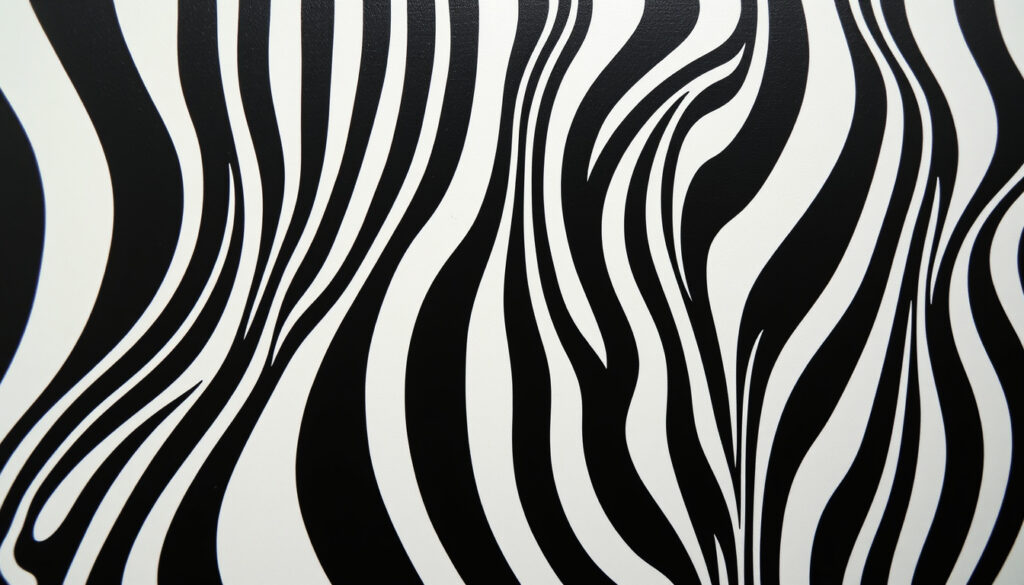
Bridget Riley – The Op Art Pioneer Who Redefined Perception
Bridget Louise Riley is a British painter and printmaker whose geometric abstractions made her one of the defining figures of the Op art movement. Born on April 24, 1931, in Norwood, London, she developed a visual language entirely her own.
Riley’s work explores how optical patterns can create sensations of movement and instability on a flat surface. She rose to international fame in the 1960s and has remained a central figure in contemporary art.
In 2025, Riley remains active, with major exhibitions at Turner Contemporary in Margate and David Zwirner in New York, continuing a career that has spanned over seven decades.
Is Bridget Riley Still Alive?
Quick Facts About Bridget Riley
- Born: 24 April 1931, Norwood, London
- Known for: Op art, geometric abstraction
- Key work: Movement in Squares (1961)
- Current status: Alive and working (as of 2025)
Key Insights
- Bridget Riley is a pioneering British op art painter whose geometric patterns create optical illusions.
- She rose to prominence in the 1960s and continues to influence contemporary art.
- Her work “Movement in Squares” is a seminal piece in the op art movement.
- Riley has maintained a consistent focus on abstract geometric forms throughout her career.
- She was the first woman to win the International Prize for Painting at the Venice Biennale.
- Printmaking has been a parallel practice to her painting for over five decades.
- Her work challenges the viewer’s perception of movement and space on a flat surface.
Bridget Riley Snapshot Facts
| Fact | Detail |
|---|---|
| Full name | Bridget Louise Riley |
| Birthdate | 24 April 1931 |
| Birthplace | Norwood, London, England |
| Nationality | British |
| Art movement | Op art |
| Notable works | Movement in Squares, Blaze, Fall |
| Current residences | London, Cornwall, Vaucluse (France) |
| Official site | bridgetrileyservices.com |
What Is Bridget Riley Known For?
The Op Art Movement
Bridget Riley became central to the international Op art movement in the 1960s. Her early black-and-white works, including Movement in Squares (1961), used precise patterns and contrasts to generate perceptual instability. The 1965 exhibition The Responsive Eye at the Museum of Modern Art in New York cemented her reputation.
Movement in Squares (1961)
Movement in Squares is widely considered a landmark of British Op art. The painting features black-and-white squares that gradually change in proportion, creating the sensation that the image is bending or swelling. Riley has described it as a crucial early step in her development. The Art Story and Art Basel both highlight its significance as a work where optical motion arises from systematic pattern distortion rather than perspective.
Printmaking
Printmaking has run parallel to Riley’s painting for more than five decades. Her screenprints are not simple reproductions; they adapt her investigations of rhythm, repetition, and colour to the conditions of paper and scale. According to her gallery Cristea Roberts, she worked almost exclusively in black and white before moving into colour in the late 1960s. Works based on Movement in Squares remain a significant part of her print editions.
Riley’s work intentionally avoids narrative or symbolism. The subject of her paintings is the act of seeing itself, forcing the viewer to become aware of their own perceptual processes.
Where Is Bridget Riley From?
Early Life and Education
Born in Norwood, London, Riley spent much of her childhood in Cornwall and Lincolnshire. This experience shaped her enduring interest in changing light and landscape. She studied at Cheltenham Ladies’ College, Goldsmiths’ College (1949–1952), and the Royal College of Art (1952–1955), as documented by the Tate museum. Early in her career she worked in advertising and taught art before becoming a full-time artist.
The Connection to Margate
Riley’s childhood included a formative period in Margate, Kent, during World War II. The coastal landscape is often cited as an influence on her sense of pattern and light. In 2025, the Turner Contemporary in Margate hosts the major exhibition “Bridget Riley: Learning to See”, running from November 2025 to May 2026, as reported by Hanguppictures.
The exhibition “Bridget Riley: Learning to See” at Turner Contemporary connects her early coastal influences directly to her latest works, presenting pieces from the 1960s alongside recent paintings.
Riley did not immediately adopt colour. Her first major period was strictly black and white, followed by a grey period, before she introduced vibrant colour arrangements in the late 1960s.
What Are the Key Milestones in Bridget Riley’s Life?
- 1931: Born in Norwood, London.
- 1940s: Childhood in Cornwall and Lincolnshire.
- 1949–1952: Studied at Goldsmiths’ College, London.
- 1952–1955: Studied at the Royal College of Art.
- 1961: Painted “Movement in Squares”, a defining op art work.
- 1965: Exhibited in “The Responsive Eye” at MoMA, New York.
- 1968: First retrospective at the Hayward Gallery, London. Won the International Prize for Painting at the Venice Biennale.
- 1990s: Continued to produce large-scale wall paintings.
- 2011: Founded the Bridget Riley Art Foundation.
- 2025: Active with recent exhibitions at David Zwirner and Turner Contemporary.
What Is Confirmed and What Is Unclear About Bridget Riley?
| Established Information | Information That Remains Unclear |
|---|---|
| Bridget Riley was born on 24 April 1931. | Exact age changes with each passing year. |
| She is alive and active as of early 2025. | Current health status is not publicly detailed beyond being alive and active. |
| She is best known for op art, and Movement in Squares is a central work. | The full extent of her print editions is not always transparent online. |
| Her childhood included time in Margate, Cornwall, and Lincolnshire. | — |
Why Is Bridget Riley Significant in Modern Art?
Bridget Riley emerged in the 1960s as a leading figure in op art, a movement that uses optical illusions to create sensations of movement and vibration. Her systematic approach challenges traditional perception and has influenced design, fashion, and digital media.
Although her images remain abstract, Riley has consistently connected them to natural experience, especially light, water, weather, and landscape. Her career spans several overlapping phases, from early representational studies to the vivid colour curves and stripes of her later work.
Her influence extends into major collections worldwide, including Tate, the Museum of Modern Art in New York, and the National Gallery of Modern Art in Tokyo. She was the first woman and the first contemporary British painter to win the International Prize for Painting at the Venice Biennale. Her official website, bridgetrileyservices.com, documents her ongoing projects and publications.
What Insights Has Bridget Riley Shared About Her Work?
“I believe that the visual experience is the most important thing. It is the only thing that matters.”
Bridget Riley, interview with The Guardian
“My work is not about geometry; it is about the experience of seeing.”
Bridget Riley, Tate interview
What Are the Essential Takeaways About Bridget Riley?
Bridget Riley remains one of the most significant figures in Op art and modern British painting. From her groundbreaking optical experiments in the 1960s to her current exhibitions, her career demonstrates a consistent commitment to perception as art’s central subject. A strong starting point for understanding her techniques is the Op art movement she helped define. Bridget Riley prints and printmaking offer a different dimension to her optical investigations, adapted for paper and edition.
Frequently Asked Questions
What art movement is Bridget Riley associated with?
Bridget Riley is associated with Op Art (optical art), a movement that uses geometric shapes and patterns to create visual illusions of movement and depth.
What is Bridget Riley’s connection to Margate?
Riley spent part of her childhood in Margate, Kent, during World War II. The coastal environment and its patterns may have influenced her artistic eye.
Where can I see Bridget Riley’s works?
Her works are held in major museums such as Tate (UK), MoMA (New York), and are regularly exhibited at David Zwirner (New York/London).
Does Bridget Riley make prints?
Yes, she has produced limited edition prints and screenprints, which are available through galleries and at auctions.
How did Bridget Riley begin her artistic training?
She studied at Goldsmiths’ College (1949–1952) and the Royal College of Art (1952–1955) in London.
What was Bridget Riley’s first major breakthrough?
Her international breakthrough came with the 1965 exhibition “The Responsive Eye” at the Museum of Modern Art in New York.
Is Bridget Riley still painting?
Yes, as of 2025 she remains active and has ongoing exhibitions, including shows at David Zwirner and Turner Contemporary.
More related posts
 Joe Duttine – Biography, Wife, Family and Coronation Street Role
 Phil Wang – Biography, Career, and Latest Tour
 Cassie Ventura – Key Witness in the Diddy Trial
 Emma Mackey – Age, Movies, Barbie Role and Private Life
 Ricky Wilson – The Complete Disambiguation Guide
 My Hero Academia – Guide to Characters Seasons and Watch
 James Forrest – Age, Height, Stats and Family Facts
 James Tarkowski – Career Stats, Personal Life and Heritage