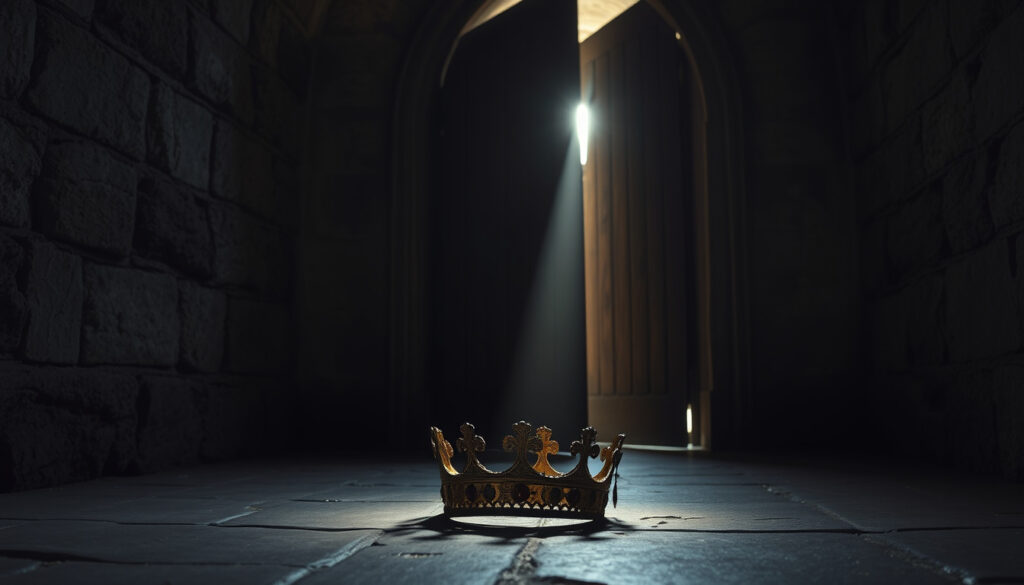
Lady Jane Grey – The Tragic Story of the Nine Days’ Queen
Who Was Lady Jane Grey?
Lady Jane Grey was an English noblewoman proclaimed queen of England and Ireland in July 1553. Her reign lasted only nine days before she was imprisoned and later executed for high treason on 12 February 1554 at the Tower of London. She is remembered as the “Nine Days’ Queen,” a figure whose brief rule was caught in the turbulent politics of Tudor succession.
Jane was born in 1536 or 1537 at Bradgate in Leicestershire, though the exact year remains uncertain. She was the eldest daughter of Henry Grey, Duke of Suffolk, and Frances Brandon, who was herself the niece of Henry VIII. This lineage placed Jane within the royal family, but not directly in the line of succession as it stood under normal circumstances.
Jane’s claim to the throne came through her mother, Frances Brandon, who was the daughter of Mary Tudor, younger sister of Henry VIII. Under the Third Succession Act of 1543, the throne was meant to pass to Henry’s children, then to their descendants, with the Suffolk line next. Jane’s position depended entirely on Edward VI’s decision to alter that order.
How Did Lady Jane Grey Become Queen?
Edward VI, the young Protestant king and son of Henry VIII, grew seriously ill in 1553. Fearing that his Catholic half-sister Mary would reverse the English Reformation if she inherited the crown, Edward drafted a succession plan that bypassed both Mary and his other half-sister Elizabeth. Instead, he named Jane as his successor.
The plan was engineered with the support of John Dudley, Duke of Northumberland, who was the most powerful nobleman in England at the time. Northumberland had arranged the marriage of his son, Lord Guildford Dudley, to Jane in May 1553. The marriage strengthened the political alliance between the Dudley family and the Suffolk line, positioning Jane as the Protestant heir.
When Edward died on 6 July 1553, Jane was proclaimed queen. She was only sixteen years old and, according to contemporary accounts, reportedly reluctant to accept the crown. The historical record suggests she had to be persuaded by her parents and her father-in-law to take the throne. For more on her early life and lineage, see Who Was Lady Jane Grey?.
Why Was Lady Jane Grey Queen for Only Nine Days?
Jane’s reign lasted from 10 July to 19 July 1553. The rapid collapse of her claim came down to political support. While the Privy Council initially proclaimed Jane as queen, support quickly shifted to Mary Tudor, who had escaped to East Anglia and rallied her own supporters there.
Mary’s claim rested on her status as Henry VIII’s eldest surviving daughter. Despite the questions surrounding the legality of her mother’s marriage to Henry VIII, Mary commanded significant public sympathy. Many English people, including Catholics and those uneasy about the rapid Protestant reforms, saw her as the legitimate heir.
The Privy Council abandoned Jane on 19 July 1553, switching allegiance to Mary. Jane’s father-in-law, the Duke of Northumberland, was arrested and later executed. Jane herself was imprisoned in the Tower of London, the same place where she had briefly resided as queen.
What Happened to Lady Jane Grey After She Was Deposed?
After being deposed, Jane remained a prisoner in the Tower. At first, her life was spared. There were discussions about whether she could be released or placed under house arrest, and some accounts suggest that Mary I initially intended to show mercy toward her teenage cousin.
Jane’s father, however, became involved in a rebellion against Mary’s rule. Thomas Wyatt’s rebellion in early 1554 sought to prevent Mary from marrying the Spanish prince Philip, and Jane’s father joined the uprising. This involvement sealed Jane’s fate. She was seen as a potential figurehead for Protestant resistance, and Mary’s government concluded that leaving her alive would remain a threat to the crown.
Under Tudor treason law, accepting and exercising the crown while another claimant held rightful title could itself be construed as an act of treason. Jane’s role as a proclaimed queen, even a reluctant one, was treated as a treasonable act once the succession was settled in Mary’s favour.
What Were Lady Jane Grey’s Last Words?
Jane was executed on 12 February 1554 at the Tower of London. She was beheaded on Tower Green, a private space within the Tower reserved for executions of high-status prisoners. Witness accounts describe her as composed, and she reportedly addressed those gathered before her death.
Her last words survive only through later narrative sources, and multiple versions exist. Attribution is not entirely certain. The most commonly quoted version records her as saying: “I am not so much dismayed as I am comforted, for I know that my sins are forgiven me through the mercy of God.”
Other accounts record variations of that statement, with some versions including a prayer and her acknowledgement of wrongdoing. Because the execution was a public event witnessed by a small crowd, and because the words were written down by chroniclers after the fact, they should be understood as reported tradition rather than a verbatim transcript. No primary text from the execution itself has survived.
Where Was Lady Jane Grey Executed?
The execution took place on Tower Green, inside the walls of the Tower of London. This location was significant. It was not a public scaffold at Tyburn, where common criminals were executed. Instead, private executions within the Tower were reserved for those of noble birth, and the choice of location reflected a concession to Jane’s rank.
Later writers often described the scene drawing on the accounts of witnesses who were present among the small crowd. The Tower of London remains associated with her story today, and historians and visitors continue to connect her imprisonment and death with that location.
How Did Lady Jane Grey Die?
Jane died by beheading. According to the chronicle accounts, she was blindfolded and, in the moments before the axe fell, she reportedly lost her bearings and had to be guided to the block. The executioner’s blow ended her life. She was buried in the Chapel of St Peter ad Vincula within the Tower of London, the same chapel where Anne Boleyn and Catherine Howard, two of Henry VIII’s executed wives, were also buried.
Why Was Lady Jane Grey Accused of Treason?
Jane’s treason charge stemmed from her role as a claimant set up by others after Edward VI’s death. She formally went on trial for high treason on 13 November 1553, several months after she was deposed. At the trial, she pleaded guilty and received a death sentence.
The legal reasoning was tied to Tudor succession law. Accepting the crown when another person held a stronger legal title, and acting as queen even for a short period, was interpreted as a treasonable act under the law as applied by Mary’s government. The fact that she had been placed on the throne by others did not absolve her in the eyes of the court.
Historians generally understand the trial as a political legal process rather than an ordinary criminal proceeding. It was intended to consolidate Mary I’s rule and remove a potential focus for Protestant opposition. The guilty plea and the sentence fitted into that wider political purpose.
Was Lady Jane Grey a Usurper or a Rightful Queen?
The question of whether Jane was a usurper or a rightful queen is a matter of historical interpretation rather than settled fact. From the perspective of Mary I’s government, Jane was not to be regarded as a queen at all, but as a usurper. That view was stated in official documents and reflected the legal position after Mary took the throne.
From the perspective of Jane’s supporters, her claim was legitimate because Edward VI had named her in his succession plan. Edward’s device, drafted in his own handwriting, was intended to override the earlier succession acts. However, the validity of that document was never legally tested in a way that would have settled the matter, and it carried no authority once Mary’s position was secured.
What Is Lady Jane Grey’s Legacy?
Jane’s brief reign and tragic death made her one of the most enduring figures of the Tudor period. Later writers and artists often turned her into a symbol of scholarly virtue, Protestant steadfastness, and political tragedy. She was a young woman caught in a conflict not of her making, and her story has been retold across centuries in books, paintings, and screen dramatisations.
Historical sources describe her as highly intelligent and strongly committed to the Protestant faith. She received a rigorous humanist education, a rarity for aristocratic women of that time. Her learning and her piety were often emphasised by later commentators who portrayed her as a martyr figure.
Books and Films About Lady Jane Grey
Lady Jane Grey is a recurring subject in screen dramatisations and adaptations of Tudor history. The provided sources do not list specific film titles, so exact movie names cannot be verified from the evidence available here. Likewise, the sources identify her as a major Tudor figure in reference works and biographies, but they do not provide a full bibliography of dedicated books.
One notable cultural reference appears in the series of novels by Cynthia Hand, Brodi Ashton, and Jodi Meadows that uses her story, although the details of that work extend beyond the historical record. Those novels are fictionalisations, not historical accounts, and should be distinguished from documentary treatments of her life. To understand the historical person behind these portrayals, refer back to Who Was Lady Jane Grey?.
Paintings and Portraits of Lady Jane Grey
The sources mention portraits and visual representations in general terms, but they do not identify specific paintings by title or artist. The most famous painted image associated with her, Paul Delaroche’s nineteenth-century depiction of her execution, is often referenced in museum contexts, but its historical accuracy in detail cannot be confirmed from the provided material.
Because the authenticity and attribution of many Tudor portraits is uncertain, and because no specific painting titles are named in the supplied sources, it would not be reliable to state with confidence which portraits depict her accurately. The record simply does not allow that level of certainty.
When Did Lady Jane Grey Live?
Lady Jane Grey was born in 1536 or 1537. The exact year is uncertain, and both dates appear in the historical record. She died on 12 February 1554, meaning she did not reach her eighteenth birthday.
Her life unfolded during a period of intense religious and political change in England. The English Reformation under Henry VIII, followed by the Protestant reforms under Edward VI, created a deeply divided society. Jane’s fate was inseparable from those divisions.
What Happened in the Final Months of Her Life?
The last year of Jane’s life moved quickly through a series of dramatic events. In May 1553 she married Lord Guildford Dudley. In July 1553 she was proclaimed queen. Within nine days, she had lost the throne and was imprisoned. In November 1553 she was tried and convicted of high treason. In February 1554 she was executed.
Her husband, Guildford Dudley, was executed on the same day as Jane, although separately. He was beheaded on Tower Hill, the public execution site for commoners and those of lesser noble rank, while Jane was executed within the Tower grounds.
What Remains Uncertain About Lady Jane Grey’s Story?
Several aspects of Jane’s story cannot be stated with certainty. Her exact birth year is not firmly established, and historical sources differ between 1536 and 1537. The authenticity of her last words is also uncertain, because multiple versions exist and they were recorded by different chroniclers after the fact.
The attribution of portraits to Jane is likewise not settled. Many sixteenth-century portraits have been identified as her at different times, but art historians have questioned those identifications. Without authoritative documentation linking a specific painting to her, the visual record remains open to interpretation.
Contemporary accounts provide a general outline of Jane’s life, her brief reign, and her execution. They do not, however, preserve a verbatim transcript of her last words, nor do they settle every question of chronology and attribution. The gaps in the record are part of what makes her story so heavily interpreted by later writers.
Frequently Asked Questions
Why was Lady Jane Grey queen for only nine days?
She was placed on the throne by a Protestant faction after Edward VI died, but support quickly shifted to Mary Tudor, who had a stronger claim as Henry VIII’s daughter. The Privy Council abandoned Jane and proclaimed Mary queen on 19 July 1553.
Why was Lady Jane Grey accused of treason?
Under Tudor law, accepting and exercising the crown when another person held a stronger legal title was itself a treasonable act. Jane was prosecuted for her role as a claimant after Mary had secured the throne.
What happened to Lady Jane Grey after she was deposed?
She was imprisoned in the Tower of London. After her father became involved in Wyatt’s rebellion, the government decided that leaving her alive was too great a threat, and she was sentenced to death.
When was Lady Jane Grey executed?
She was executed on 12 February 1554.
Where was Lady Jane Grey executed?
She was beheaded on Tower Green, within the walls of the Tower of London.
What were Lady Jane Grey’s last words?
Multiple versions survive. The most commonly quoted account records her as saying that she was comforted rather than dismayed because she knew her sins were forgiven through the mercy of God. The exact wording is uncertain because no primary transcript exists.
How did Lady Jane Grey die?
She died by beheading. She was blindfolded and guided to the block, and the executioner’s blow ended her life. She was buried in the Chapel of St Peter ad Vincula at the Tower of London.
Was Lady Jane Grey a usurper or a rightful queen?
Interpretations differ. Mary’s government regarded her as a usurper. Her supporters argued that Edward VI’s succession plan had given her a legitimate claim. The validity of that document was never legally settled.
Who was Lady Jane Grey’s husband?
She married Lord Guildford Dudley in May 1553, just months before she was proclaimed queen. Guildford Dudley was the son of John Dudley, Duke of Northumberland, the political leader who orchestrated Jane’s accession.
What role did the Duke of Northumberland play?
John Dudley, Duke of Northumberland, was the driving force behind Jane’s claim. He arranged her marriage to his son and supported Edward VI’s plan to bypass Mary and Elizabeth. After the scheme collapsed, he was arrested and executed.
What is the Tower of London’s connection to Lady Jane Grey?
Jane was imprisoned in the Tower after being deposed, tried there, and executed on Tower Green. She was also buried in the chapel within the Tower. The site remains closely associated with her story.
Why did Edward VI name Jane as his successor?
Edward VI wanted to prevent his Catholic half-sister Mary from reversing the Protestant Reformation. His succession plan bypassed both Mary and Elizabeth and named the Protestant Jane as his heir, with the backing of the Duke of Northumberland.
Was Lady Jane Grey married before she became queen?
Yes. She married Lord Guildford Dudley in May 1553, approximately two months before she was proclaimed queen. The marriage was arranged by the Duke of Northumberland to strengthen the political alliance behind her claim.
Are there books about Lady Jane Grey?
She is a major figure in Tudor history and appears in reference works, biographies, and historical fiction. The provided sources do not list specific titles, so exact book names cannot be verified from the evidence available here.
Are there movies about Lady Jane Grey?
She is a recurring subject in screen dramatisations of Tudor history. However, the supplied sources do not mention specific film titles, so exact movie names cannot be reliably confirmed from the evidence available here.
More related posts
 Sanjay Kapoor – Biography of Bollywood Actor and Kapoor Family Member
 Mr T – Real Name, Age, Net Worth, and Wife
 Nile Rodgers – Biography, Net Worth, Partner and Tour 2025
 Maria Shriver – Biography, Family, Net Worth and Current Projects
 How to Turn Off Read Receipts iPhone – iPhone 15, 16, 13 Guide
 James Dyson – Biography, Net Worth and Inventions 2025
 Dele Alli – Now a Free Agent After Dramatic Career Decline
 Kiefer Sutherland – Biography, Net Worth, and Music Career