Gautama Buddha – A Complete Guide to His Life and Teachings
Gautama Buddha, also known as Siddhārtha Gautama, is the historical founder of Buddhism. A spiritual teacher from the northeastern Indian subcontinent, he lived sometime in the 6th to 5th centuries BCE. His biography has been preserved mainly through Buddhist texts and later traditions, so the broad outline of his life is widely accepted, but many specific details remain partly legendary rather than strictly historical.
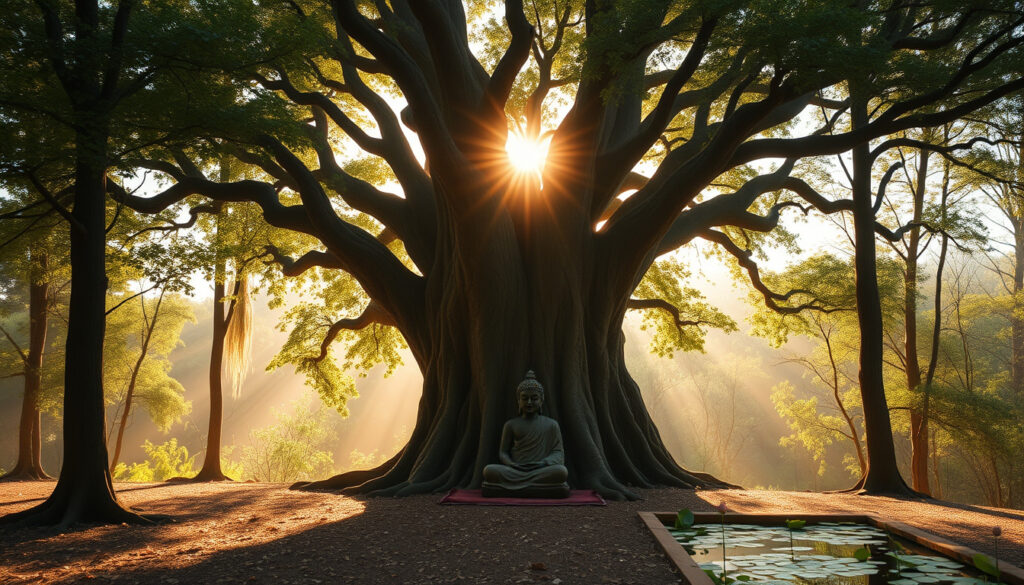
The traditional story moves from an insulated princely youth in the Shakya clan to a wandering ascetic in search of truth, and finally to decades of teaching after his awakening beneath the Bodhi tree. Buddhist tradition honors him as Shakyamuni, “the sage of the Shakyas,” and as the Buddha, “the awakened one.”
Few figures in world history have left a deeper mark on spiritual life. Sorting out what is historically established from what belongs to religious memory and later storytelling is the central challenge of understanding Gautama Buddha.
When Was Gautama Buddha Born and Died?
The traditional dates for the Buddha’s life are 563–483 BCE, but scholars continue to debate them. The Encyclopaedia Britannica notes that the precise dating of his life is controversial; many researchers place him later, with some suggesting a broader window in the 6th–4th centuries BCE. What is widely accepted is that he lived and taught in the 6th to 5th centuries BCE in the northeastern Indian subcontinent.
Birthplace & Date: Lumbini (Nepal), c. 563 BCE or 480 BCE (debated)
Enlightenment: Bodh Gaya (India), age 35
Core Teachings: Four Noble Truths, Eightfold Path
Death (Parinirvana): Kushinagar (India), age 80
Several insights frame how historians approach the Buddha’s life:
- The historical Buddha’s life is cloaked in legend; exact dates remain uncertain, but the widely accepted range is the 6th–5th century BCE.
- His teachings, known as the Dharma, are preserved in the Pali Canon and later Mahayana sutras; which parts are “original” remains a matter of scholarly debate.
- The most commonly cited list of 10 teachings often includes the Four Noble Truths, the Eightfold Path, and the Five Precepts, but variations exist.
- His message remains globally influential, with more than 500 million followers today and growing interest in mindfulness and meditation.
- Tradition places his birth in Lumbini, present-day Nepal, and his death at Kushinagar, in the region associated with the Malla republic.
- Traditional accounts name Yasodhara as his wife and Rahula as his son before his renunciation.
The following table summarizes the traditional portrait:
| Fact | Detail |
|---|---|
| Full Name | Siddhartha Gautama (also known as Shakyamuni Buddha) |
| Birth | Lumbini, present-day Nepal (c. 563–480 BCE) |
| Death | Kushinagar, present-day India (c. 483–400 BCE) |
| Spouse | Yasodhara |
| Children | Rahula (son) |
| Key Events | Renunciation, Enlightenment, First Sermon, Parinirvana |
| Major Schools | Theravada, Mahayana, Vajrayana |
| Sacred Texts | Tripitaka (Pali Canon), Mahayana Sutras |
What Are the Core Teachings of Gautama Buddha?
The Buddha’s teaching, known in the tradition as the Dharma, begins with a diagnosis of human suffering and proposes a path toward its end. According to Britannica’s summary of the Buddha, the sources consistently identify the Middle Way, the Four Noble Truths, the Eightfold Path, nirvana, and the Three Jewels as central to his message.
What Are the 10 Teachings of Buddha?
No single list of “10 teachings of the Buddha” appears in the early scriptures. Popular modern lists typically combine several core elements of the tradition — most often the Four Noble Truths, the Eightfold Path, and the Five Precepts — but the exact grouping varies between authors and schools.
What Are the Teachings of Buddha in Points?
A commonly used summary condenses the doctrine into five key points:
- Four Noble Truths: suffering exists; it has a cause; it can cease; and there is a path leading to its cessation.
- Eightfold Path: right view, intention, speech, action, livelihood, effort, mindfulness, and concentration.
- Five Precepts: abstain from killing, stealing, sexual misconduct, lying, and intoxicants.
- Three Universal Truths: impermanence, suffering, and non-self.
- Middle Way: avoid the extremes of sensual indulgence and severe self-mortification.
What Is the Four Noble Truths?
The Four Noble Truths form the foundation of Buddhist thought. As recorded in the early discourses: suffering exists; suffering has a cause; suffering can cease; and a path leads to its cessation. The EBSCO research overview of the Buddha identifies these truths, together with the Eightfold Path, as essential to his teaching.
What Is the Eightfold Path?
The Eightfold Path is the practical discipline the Buddha prescribed for ending suffering. Its eight factors — right view, right intention, right speech, right action, right livelihood, right effort, right mindfulness, and right concentration — are often grouped into three areas: ethical conduct, mental discipline, and wisdom.
The Buddha’s own journey shaped this teaching: after years of luxury and later extreme asceticism, he concluded that both extremes were unhelpful. The Middle Way, first presented in his sermon at Sarnath, steers between sensual indulgence and self-mortification as the practical route to awakening.
What Are the Original Teachings of Buddha?
The Buddha did not leave behind personal writings. What we know of him comes primarily from Buddhist texts composed and transmitted by followers, with the earliest written versions appearing centuries after his death. The “original teachings” are therefore not autograph works but early canonical traditions passed down orally before being committed to writing.
What Is the Best Book About Gautama Buddha?
Popular biographical works include The Life of the Buddha by Bhikkhu Ñāṇamoli, Buddha by Karen Armstrong, and Old Path White Clouds by Thich Nhat Hanh. For the teachings themselves, the Dhammapada — a collection of verses from the Pali Canon — is widely recommended as an accessible starting point.
Where Can I Find the Teachings of Buddha in PDF?
Several openly accessible digital libraries offer reliable translations. SuttaCentral hosts a broad range of early Buddhist texts in translation, including the Pali Canon. Access to Insight focuses on Theravada scriptures and study materials. 84000 is engaged in translating the Tibetan Buddhist canon into English.
Are the Pali Canon the Original Teachings?
The Pali Canon, or Tipiṭaka — especially the Sutta Pitaka — preserves many discourses attributed to the Buddha and is considered the most important early textual tradition. Scholars differ, however, on how directly these texts represent the historical Buddha’s own words, since they were shaped by generations of oral transmission.
Because the Buddha wrote nothing himself, there is no single “original book” of his teachings. The earliest textual layers circulated orally for generations before being written down centuries later, which is why modern editions and translations carry the weight of a long transmission history.
Buddha History: A Comprehensive Overview
The traditional account begins in Lumbini, in present-day Nepal, where the Buddha was born into the Shakya clan. Later biographies describe a youth spent in comfort and seclusion, sheltered from the realities of aging, sickness, and death. The Asia Society places this early life within the context of the Shakya realm, where his father served as ruler or chief.
When he finally encountered an old person, a sick person, and a corpse, the experience is said to have transformed his view of the world. He left his wife Yasodhara, his son Rahula, and his princely life to seek spiritual truth as a wandering ascetic.
How Did the Buddha Become Enlightened?
For about six years, he practiced severe austerities and meditation with various teachers. Extreme self-mortification proved insufficient for liberation. At Bodh Gaya, meditating beneath the Bodhi tree, he attained awakening at around age 35, grasping the causes of suffering and the way to its end. Tricycle: The Buddhist Review treats this period of austerity and breakthrough as a central element of his biography.
What Happened After the Buddha’s Enlightenment?
After his awakening, the Buddha began teaching. His first sermon, delivered at Sarnath to his former companions, is recorded in tradition as the Dhammacakkappavattana Sutta, setting out the Middle Way, the Four Noble Truths, and the Eightfold Path. He spent the rest of his life traveling through northern India, teaching, and building the monastic community known as the Sangha. Traditional accounts place his death at Kushinagar at the age of 80.
Many details of the Buddha’s life, especially the miraculous episodes in later biographical literature, are considered legendary rather than strictly historical. Scholars generally accept the broad biographical outline but caution that the narrative was shaped by devotional traditions over centuries.
What Is the Timeline of Buddha’s Life?
The traditional chronology follows the arc from birth to final passing. The BBC Teach timeline stresses that the precise dating of the Buddha’s life is controversial, and World History Encyclopedia presents the traditional markers with similar caveats.
- c. 563 BCE (or 480 BCE): Birth in Lumbini.
- c. 29 years old: Renunciation of palace life after encountering aging, sickness, and death.
- c. 35 years old: Enlightenment under the Bodhi tree at Bodh Gaya.
- c. 35–80 years old: Teaching ministry across northern India, beginning with the first sermon at Sarnath.
- c. 80 years old: Death (Parinirvana) in Kushinagar.
These dates are approximate and contested. Some scholars place the Buddha’s life in the 5th century BCE based on the chronology of early Indian kingdoms and Buddhist councils.
What Is Certain and What Remains Uncertain About the Buddha?
Scholars generally agree that the Buddha was a real historical figure who lived and taught in northern India. History and Culture treats him as a genuine historical person, a view echoed across academic reference works. What remains more difficult to pin down is the level of detail.
| Established Information | Information That Remains Unclear |
|---|---|
| The Buddha was a historical figure who lived in ancient India/Nepal and founded what became Buddhism. | The exact year of his birth and death; traditional dates vary between 563–483 BCE and 480–400 BCE. |
| He taught the Four Noble Truths and the Eightfold Path. | Many biographical details, including miraculous birth stories, were added by later traditions. |
| The broad outline of his life is preserved in early Buddhist textual traditions. | The “original teachings” are reconstructed from early texts; no single “original book” exists. |
Lion’s Roar notes that traditional accounts of the Buddha’s life were composed within a devotional framework, which means biography, memory, and legend are closely interwoven.
Why Does the Buddha’s Story Still Matter Today?
Gautama Buddha’s life story functions as a powerful archetype of spiritual awakening that transcends Buddhism itself. For more than two millennia, the historical figure of Siddhartha Gautama has been central to Asian culture and philosophy. His core message — that suffering arises from attachment and can be ended through ethical living, mental discipline, and wisdom — remains highly relevant to modern audiences.
The contemporary mindfulness movement draws heavily on meditation techniques rooted in the Buddha’s teaching. At the same time, the way his story has been remembered and reshaped by later communities illustrates how historical legacies evolve over time. Comparable dynamics appear in the stories of other major historical figures whose lives continue to be examined long after their own era, such as Nicholas II – His Death, Family and Enduring Legacy.
Which Sources Preserve the Buddha’s Life and Teachings?
Information about the Buddha comes from several layers of tradition: early canonical texts, biographical narratives, and modern scholarship. The Internet Encyclopedia of Philosophy offers an academic overview of the Buddha’s life and thought, while reference works such as Biography.com collect the traditional biographical details. Wikipedia likewise presents the traditional account while emphasizing the limits of the historical record.
“The mind is everything. What you think you become.”
Attributed to the Buddha, from the Dhammapada
“The historical Buddha, also known as Gotama Buddha, was born in Lumbini…”
Internet Encyclopedia of Philosophy
“The precise dating of his life is controversial.”
BBC Teach timeline
Preserving a life story always involves selection and emphasis. The ongoing interest in Phil Lynott – The Life, Death, and Legacy of a Rock Icon shows how a public figure’s story can be kept alive through recordings, interviews, and memory — much as the image of the Buddha has been shaped by sermons, biographies, and generations of devotion.
What Is the Lasting Legacy of Gautama Buddha?
Gautama Buddha is both a historical figure from the 6th–5th century BCE and a universal symbol of awakening. His teachings on suffering, ethical conduct, and the disciplined training of the mind have shaped civilizations across Asia and now speak to a global audience. The documentary record has gaps and uncertainties, yet the broad outline of his life and the central message of his teaching remain the foundation of one of the world’s major religions.
Frequently Asked Questions About Gautama Buddha
What is the difference between Shakyamuni Buddha and other Buddhas?
Shakyamuni is the historical Buddha of our era. Mahayana Buddhism also recognizes other Buddhas, such as Amitabha and the Medicine Buddha, who represent different aspects of enlightenment and compassion.
Did Buddha claim to be a god?
No. He insisted that he was a human being who had discovered the path to awakening, not a deity or divine messenger.
What does the word “Buddha” mean?
“Buddha” means “the awakened one.” It is a title rather than a personal name, used for someone who has attained complete awakening.
Where was Gautama Buddha born?
According to tradition, he was born in Lumbini, in present-day Nepal, into the Shakya clan, where his father was a ruler or chief.
Who was the Buddha’s wife?
Traditional accounts identify Yasodhara as his wife and Rahula as his son. He left them both when he renounced palace life to pursue awakening.
How old was the Buddha when he attained enlightenment?
Traditional accounts place his awakening at around age 35, while meditating beneath the Bodhi tree at Bodh Gaya.
What is nirvana in Buddhism?
Nirvana is liberation from suffering and from the cycle of rebirth. In the Buddha’s teaching, it is the final goal of the Eightfold Path.
More related posts
 Megan Skiendiel – Biography, Career and 2026 Updates
 Skin Care – UK Routine, Products, and Expert Tips
 Paula Yates – Biography, Death, and Her Children’s Tragic Story
 Jessica Capshaw – Biography, TV Career and Family Life
 Rachel Reeves – Full Biography, Age, Husband and Net Worth
 Moses Basket and Stand – Complete 2025 UK Buyer’s Guide
 Joe Lycett – Biography, Age, Career, and Personal Life
 Admiral Car Insurance Phone Number – Contacts, Hours & Tips