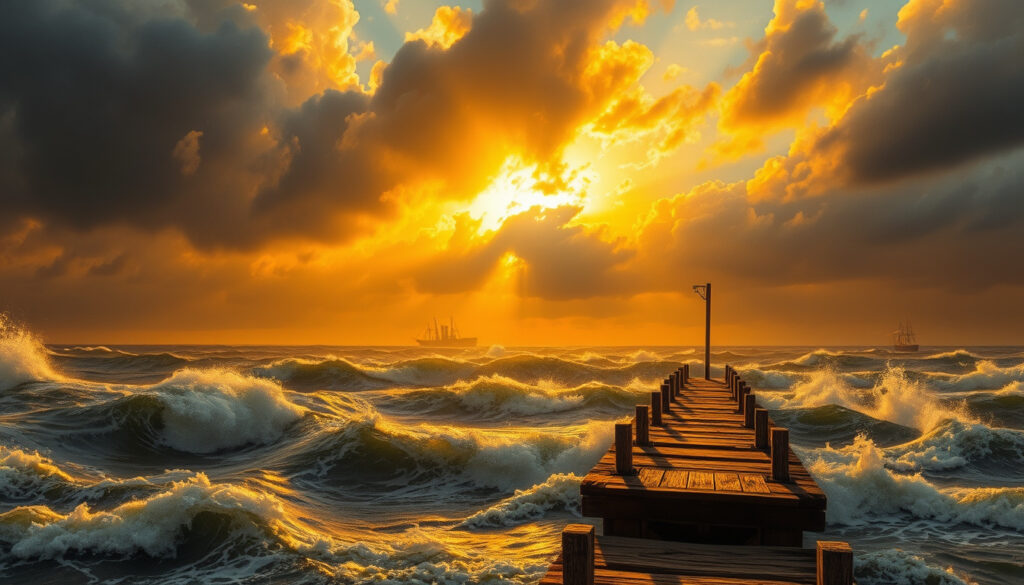
JMW Turner – Life, Paintings, and Margate Connection
Joseph Mallord William Turner, known as JMW Turner, was one of Britain’s most significant artists. Born in London in 1775, he transformed landscape painting through his masterful use of light, colour, and atmosphere. His work bridged English Romanticism and the early stirrings of Impressionism, earning him the enduring nickname “the painter of light.”
Turner was the son of a barber and wig-maker from Covent Garden. He entered the Royal Academy Schools at the age of 14 and quickly established himself as a prodigious talent. Over his long career, he produced approximately 550 oil paintings and more than 2,000 watercolours, along with countless drawings and engravings. His output was vast, and his influence on later generations of artists has been profound.
This article covers Turner’s full name, his most famous works, where to see them today, his personal life, and his lasting connection to the Kent coastal town of Margate. It draws on authoritative museum and encyclopedia sources to provide a clear, factual overview.
What is JMW Turner’s full name?
Full name
Joseph Mallord William Turner
Lifespan
1775–1851, London
Known for
English Romantic landscape painting; ‘painter of light’
Where to see
Tate Britain and National Gallery, London
- Turner was a working-class Londoner who entered the Royal Academy schools at a young age and became central to British art.
- He expanded landscape painting from topographical record to emotional and atmospheric drama.
- His loose brushwork and bright light effects made him a precursor to Impressionism.
- 2025 marks 250 years since Turner’s birth, creating a strong current-affairs angle.
- His bequest to the nation gives the Tate the world’s largest collection of his work.
| Field | Value |
|---|---|
| Full name | Joseph Mallord William Turner |
| Born | 1775, London |
| Died | 1851, London |
| Movement | English Romanticism |
| Known for | Landscape and watercolor painting |
| Major works | The Fighting Temeraire; Rain, Steam and Speed; The Slave Ship |
| Primary collection | Tate Britain, London |
Was there a photograph of JMW Turner?
Turner lived before photography was widely established. No known photographic portrait of him exists from his lifetime. The likenesses that survive are painted self-portraits and portraits by contemporaries. Images labelled as “photographs of Turner” are generally later pictures of places connected to him, such as his homes, studios, and memorial sites, rather than photographs of the artist himself. This is a common point of confusion, and authoritative sources such as Britain Express and Britannica confirm that no reliable photographic portrait is documented.
What are JMW Turner’s most famous paintings?
What are J.M.W. Turner paintings?
Turner’s work is defined by its dramatic treatment of light, weather, and the natural world. His subjects range from serene Venetian canals to violent storms at sea. Among his most frequently cited major works are The Fighting Temeraire (1839), Rain, Steam and Speed – The Great Western Railway (1844), The Slave Ship (1840), Snow Storm – Steam-Boat off a Harbour’s Mouth (1842), Dido Building Carthage (1815), The Grand Canal, Venice (1835), and Peace – Burial at Sea (1842). These paintings are held in high regard for their technical innovation and emotional power. The National Gallery describes him as a painter who elevated landscape to a level of drama and expression rarely seen before.
Turner’s loose brushwork and bold use of light were unconventional for his time. He often built up layers of translucent colour, creating a sense of atmosphere that dissolves solid forms. This approach made him a key precursor to the Impressionist movement, as noted by scholars at the Metropolitan Museum of Art.
Where can I see JMW Turner paintings on view?
Where is a JMW Turner painting on view today?
The largest collection of Turner’s work is held at Tate Britain in London. Turner bequeathed a vast body of work to the nation, and the majority of his paintings are now housed there. The bequest was transferred to the National Gallery of British Art (now Tate) in 1897, and the dedicated Clore Gallery opened at Tate Britain in 1987 to display the collection. The Tate holds the world’s most comprehensive Turner archive, including oils, watercolours, and sketchbooks.
The National Gallery in London also holds several important Turner works, including The Fighting Temeraire. His paintings regularly appear in major museums worldwide, including the Metropolitan Museum of Art in New York. Exhibition schedules change, so checking museum websites is recommended for current displays. The year 2025, marking the 250th anniversary of his birth, may bring special exhibitions. For those planning a visit, a London museums guide can help locate key Turner holdings.
Why is JMW Turner associated with Margate?
What is the JMW Turner Margate connection?
Turner’s connection to Margate in Kent began in 1786, when he was sent there as a boy. The coastal landscape left a deep impression on him. He returned to Margate many times throughout his life, drawn by the quality of the light, the sea, and the skies. He later had a relationship with his Margate landlady, Sophia Booth, and spent extended periods in the town. The Margate years are closely linked to his lifelong fascination with marine subjects, sunsets, boats, fishermen, and dramatic coastal light. Sources such as Discover Britain and the BBC highlight how Margate shaped his artistic imagination.
The constantly changing light and weather along the Kent coast gave Turner endless material for his studies of atmosphere. Many of his seascapes and storm scenes are thought to have been inspired by his observations in and around Margate.
Did JMW Turner have daughters?
Who were JMW Turner’s daughters?
Turner never married. However, he had a long relationship with Sarah Danby, and the couple had two daughters. Their names are usually given as Evelina and Georgiana, though some sources vary on the spelling. The relationship and the details of Turner’s family life remain a subject of historical interpretation, as the artist was notably private about his personal affairs. Information about his daughters comes from biographical sources such as Biography.com and Encyclopedia.com.
Turner was a private man, and some details of his personal life are not fully documented. The names of his daughters and the nature of his relationship with Sarah Danby are drawn from historical records that may be incomplete or open to interpretation.
What were the key milestones in JMW Turner’s life?
- 1775 – Born in London.
- 1789 – Admitted to the Royal Academy Schools.
- 1799 – Elected Associate of the Royal Academy.
- 1802 – Elected Royal Academician.
- 1819 – First visit to Italy.
- 1839 – The Fighting Temeraire exhibited at the Royal Academy.
- 1844 – Rain, Steam and Speed exhibited at the Royal Academy.
- 1851 – Died in Chelsea, London.
What facts about Turner are established and what remains unclear?
| Established information | Information that remains unclear |
|---|---|
| Full name is Joseph Mallord William Turner. | The nickname “painter of light” is a popular description, not an official title. |
| He was born in London in 1775 and died in 1851. | The exact number of works in the Turner bequest is often rounded; Tate commonly cites around 300 oil paintings and 30,000 works on paper. |
| He is a central figure in English Romantic landscape painting. | Turner’s two daughters are widely documented, but details of the relationship with Sarah Danby remain a subject of historical interpretation. |
| Tate holds the national collection of his work. | No widely accepted photographic portrait of Turner is known; painted portraits are the main likenesses. |
What is the broader context of Turner’s work?
Turner belonged to the Romantic movement, which emphasised emotion, the sublime power of nature, and individual experience. His work often evokes the sublime through dramatic storms, vast landscapes, and intense light. He was also a keen observer of the industrial revolution, painting steamships, railways, and bridges that reflected a changing Britain. Rain, Steam and Speed is a direct visual response to the coming of the railway age. His technical innovations in watercolour and oil, particularly his use of translucent glazes and vibrant colour, set him apart from his contemporaries and earned him the lasting label of “painter of light.” To understand the movement he helped shape, explore the broader context of Romanticism in art.
Turner’s bequest to the nation, now housed at Tate Britain, is one of the most significant single-artist collections in the world. It ensures that his work remains accessible to the public and continues to be studied and exhibited. The Clore Gallery, opened in 1987, was purpose-built to display the Turner collection and is a key destination for visitors to London.
What do authoritative sources say about Turner?
“Turner is perhaps the best-loved English Romantic artist. He became known as ‘the painter of light’.”
— National Gallery
“J.M.W. Turner (1775-1851) was an English Romantic landscape painter, considered by many as the father of watercolor landscape painting.”
— Britannica
“Joseph Mallord William Turner known in his time as William Turner, was an English Romantic painter. He elevated the status of landscape painting.”
— Wikipedia
What is JMW Turner’s lasting significance?
JMW Turner’s legacy is that of an artist who redefined landscape painting. His fearless experimentation with light, colour, and composition paved the way for Impressionism and modern abstraction. His works remain among the most admired in British art, drawing millions of visitors to Tate Britain and the National Gallery each year.
Frequently asked questions about JMW Turner
Are JMW Turner paintings for sale?
Turner’s works are mostly held by museums. Sales occur mainly through major auction houses and accredited dealers. Provenance and authenticity are critical when considering a purchase.
How many paintings did JMW Turner create?
Sources describe an output of about 550 oil paintings and over 2,000 watercolours, along with many drawings and engravings.
What is the 2025 anniversary for Turner?
2025 marks 250 years since Turner’s birth in 1775. Special exhibitions and events are expected at museums that hold his work.
Did Turner ever marry?
No, Turner never married. He had a long relationship with Sarah Danby and later with Sophia Booth, his Margate landlady.
What movement is Turner associated with?
Turner is associated with English Romanticism. His work is also seen as a precursor to Impressionism due to his loose brushwork and emphasis on light.
Where was Turner born?
Turner was born in London in 1775, commonly identified as Covent Garden on Maiden Lane.
How did Turner die?
Turner died in 1851 in Chelsea, London. The exact cause is not widely detailed in standard biographical sources.
What is the Clore Gallery?
The Clore Gallery is a purpose-built extension at Tate Britain, opened in 1987, dedicated to displaying the Turner bequest.
What is Turner’s most famous painting?
The Fighting Temeraire (1839) is often cited as Turner’s most famous work. It hangs in the National Gallery in London.
More related posts
 Joe Wicks – Net Worth, Workout, App, Books & Family
 Bargain Hunt Presenters – Complete Guide to Current and Former Hosts
 Everest Base Camp Trek – Cost Duration Altitude and Itinerary
 Chevy Chase – Biography, Net Worth, Movies and Family
 Leylah Fernandez – Ranking, Parents, Age and Career Highlights
 John Travolta – Complete Biography and 2025 Update
 Sue Perkins – Biography, Relationship, and Health Facts
 Richard Madeley – Age, Net Worth, Wife, and Latest Career News