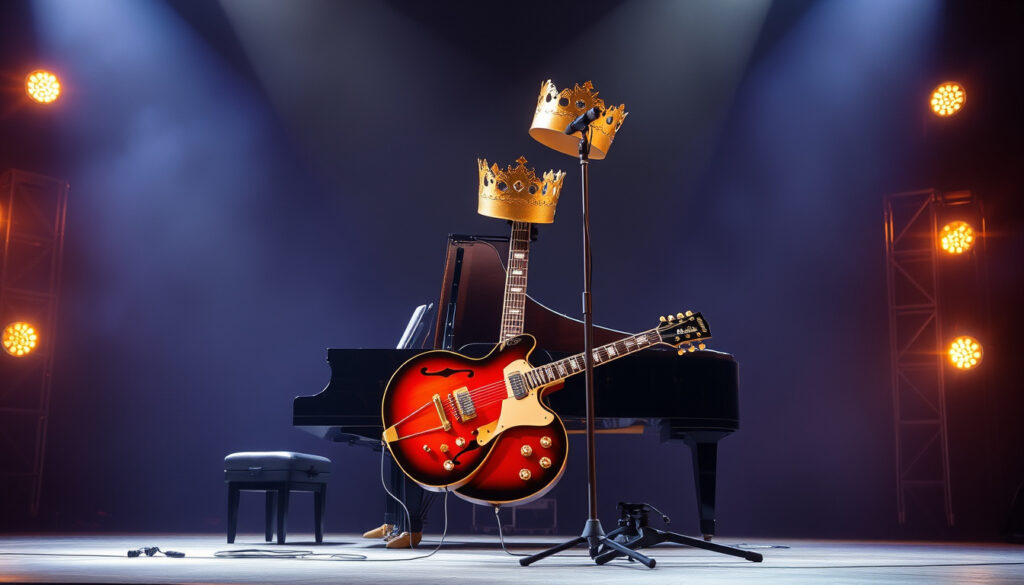
Queen Band – Members, History, Songs and Current Lineup
Queen are one of the most recognisable names in rock music. Formed in London in 1970, the band built a legacy defined by theatrical performances, genre-blending recordings, and songs that have become part of global culture. For many, the name Queen brings to mind a single image: four musicians — Freddie Mercury, Brian May, Roger Taylor, and John Deacon — at the height of their powers. But the story of the band did not stop there. Today, Queen continues to tour and record, albeit with a different configuration.
Understanding who was in the original lineup, how the band evolved, and who performs as Queen now requires a look at five decades of music, loss, reinvention, and enduring popularity. The answers are not always straightforward, partly because the word “Queen” can refer to the original four-piece band, the legacy brand, or the current Queen + Adam Lambert touring project.
This article covers the members, the history, the essential songs, and the current status of Queen — based on verified sources and official channels.
Who Are the Members of Queen?
The question of Queen’s membership is the most common search query related to the band. The answer depends on whether one is asking about the classic lineup, the current touring lineup, or the band as a continuing legal entity.
Queen
Freddie Mercury, Brian May, Roger Taylor, John Deacon
London, 1970
Bohemian Rhapsody
Key Insights at a Glance
- Queen’s classic four-member lineup was stable from 1971 until Freddie Mercury’s death in 1991.
- Brian May and Roger Taylor continue to perform as Queen, most prominently with Adam Lambert as Queen + Adam Lambert.
- John Deacon retired from performing and public activity after Freddie Mercury’s death and is not part of recent tours.
- Bohemian Rhapsody remains Queen’s most culturally defining song and has driven sustained search interest for decades.
- Official channels are the best source for current Queen news, tours, and releases.
Queen Band Snapshot Facts
| Attribute | Detail | Source |
|---|---|---|
| Formed | 1970 | Queen official site; Wikipedia |
| Origin | London, England | Wikipedia |
| Classic Lineup | Freddie Mercury (vocals, piano), Brian May (guitar, vocals), Roger Taylor (drums, vocals), John Deacon (bass) | Wikipedia; Queen official site |
| Current Live Lineup | Brian May, Roger Taylor + Adam Lambert | Official Queen tour announcements |
| Most Famous Song | Bohemian Rhapsody | Cultural consensus |
| Status | Active as a legacy touring brand; no full original lineup | Official Queen channels |
Freddie Mercury
Freddie Mercury was the lead vocalist and pianist for Queen, and one of the band’s founders. He was known for his extraordinary vocal range, flamboyant stage presence, and songwriting contributions that included “Bohemian Rhapsody,” “Somebody to Love,” and “We Are the Champions.” Mercury died in 1991, a loss that fundamentally changed the band’s trajectory. According to Britannica, he remains one of the most celebrated frontmen in rock history.
Brian May
Brian May is the guitarist, a co-founder, and an active member of Queen. He is also an astrophysicist and solo artist. May’s distinctive guitar sound, often achieved with his homemade “Red Special” instrument, is a hallmark of the band’s music. He continues to tour with Queen + Adam Lambert and is a primary decision-maker for the band’s ongoing projects.
Roger Taylor
Roger Taylor, the drummer and a co-founder, is also a vocalist and songwriter. He contributed hits such as “Radio Ga Ga” and “A Kind of Magic.” Alongside Brian May, Taylor remains one of the two active core members of the band and performs on all Queen + Adam Lambert tours.
John Deacon
John Deacon joined Queen in 1971, completing the classic lineup. He played bass and wrote several major hits, including “Another One Bites the Dust” and “I Want to Break Free.” After Freddie Mercury’s death, Deacon gradually withdrew from public life. He retired from the band in 1997 and has not participated in any subsequent Queen tours or recordings. BBC Music notes that his departure was quiet but definitive.
How Did Queen Form and Become One of Rock’s Biggest Bands?
Queen’s origin story begins with an earlier band called Smile, which featured Brian May and Roger Taylor. Freddie Mercury, then known as Farrokh Bulsara, was a fan of the group and soon joined as vocalist. The trio renamed the band Queen in 1970, and John Deacon signed on the following year. The AllMusic biography describes the early years as a period of rapid artistic growth.
Why Is the Band Called Queen?
The name “Queen” was chosen by the band members themselves. It was intended to be memorable, provocative, and gender-neutral. In a 1970s interview, Freddie Mercury explained that the name was bold and instantly recognisable. It also reflected the theatrical, regal aesthetic the band wanted to project.
When Was Queen Formed and Where Did They Come From?
Queen was formed in London in 1970. The city’s vibrant music scene provided the backdrop for the band’s early development. All four members were based in or near London at the time of the band’s formation. The band’s sound was shaped by a mix of British hard rock, glam rock, and progressive influences.
Queen began life as the band Smile, formed by Brian May and Roger Taylor. Freddie Mercury joined later and the group was renamed. John Deacon completed the lineup in 1971. This four-person configuration — Mercury, May, Taylor, Deacon — is universally recognised as the classic Queen lineup.
What Are Queen’s Most Famous Songs and Albums?
Queen’s discography spans 15 studio albums, numerous live recordings, and a catalogue of songs that remain in heavy rotation worldwide. The band’s most famous track, “Bohemian Rhapsody,” was released in 1975 on the album A Night at the Opera. The song broke conventional radio format rules with its six-minute structure and operatic middle section.
Bohemian Rhapsody
“Bohemian Rhapsody” is widely considered Queen’s signature piece. It was a commercial triumph and has since been recognised as one of the most influential recordings in popular music. The 2018 biopic of the same name reintroduced the song to a new generation and drove renewed streaming and search interest.
We Will Rock You and We Are the Champions
These two songs, often played back-to-back at sporting events, are among Queen’s most recognisable anthems. “We Will Rock You” is built around a stomping, clapping rhythm, while “We Are the Champions” is a power ballad about triumph and perseverance. First for Women notes that these tracks are frequently cited as the band’s most culturally significant hits.
What Is Queen’s Most Successful Album?
Greatest Hits, released in 1981, is the best-selling album in Queen’s catalogue and one of the best-selling albums of all time in the United Kingdom. Among studio albums, A Night at the Opera and News of the World are typically regarded as the band’s commercial and artistic peaks.
Is Queen Still Performing Today?
Queen does not perform as a four-piece band, but the name remains active. Brian May and Roger Taylor continue to tour under the Queen banner, most notably with vocalist Adam Lambert. The collaboration, known as Queen + Adam Lambert, began in 2011 and has since become a major touring operation.
Who Sings with Queen Now?
Adam Lambert has been the frontman for Queen’s live performances since 2011. He was chosen by Brian May and Roger Taylor after a performance on the television show American Idol. Lambert does not replace Freddie Mercury — the band is clear that no one can — but he brings his own vocal style and stage presence to the classic songs.
Why Is John Deacon Not in Queen Now?
John Deacon retired from the band and from public life in 1997. He has not participated in any Queen performances since Freddie Mercury’s death. May and Taylor have stated that Deacon chose to step away entirely and that they respect his decision. No official statement has indicated that Deacon will return.
Queen is not active as a full four-piece rock band. Any current live activity is led by Brian May and Roger Taylor, with touring musicians. The original lineup cannot be reassembled due to Freddie Mercury’s death in 1991 and John Deacon’s retirement in 1997. Queen + Adam Lambert is a separate touring project, not a reunion of the classic band.
When Was Queen Formed and What Key Events Shaped Their Journey?
- 1970 — Queen formed in London with Freddie Mercury, Brian May, and Roger Taylor.
- 1971 — John Deacon joined, completing the classic lineup.
- 1973 — Debut album Queen released.
- 1975 — A Night at the Opera released; “Bohemian Rhapsody” became a global hit.
- 1985 — Queen’s Live Aid performance became legendary.
- 1991 — Freddie Mercury died.
- 1995 — Final studio album with Mercury, Made in Heaven, released.
- 1997 — John Deacon retired from the band.
- 2011 — Queen + Adam Lambert collaboration began, and the lineup later toured extensively.
- 2018 — Bohemian Rhapsody biopic renewed global interest in the band.
What Is Certain and What Remains Unclear About Queen’s Lineup?
| Established Information | Information That Remains Nuanced |
|---|---|
| Queen was formed in London in 1970. | The word “Queen” can refer to the original band, the legacy brand, or the Queen + Adam Lambert touring lineup. |
| The classic lineup was Freddie Mercury, Brian May, Roger Taylor, and John Deacon. | Queen is not active as a full four-piece rock band; any current live activity is led by May and Taylor. |
| Freddie Mercury died in 1991. | No official statement confirms a full Queen reunion because the original lineup is no longer possible. |
| John Deacon retired from the band and public performing. | — |
| Brian May and Roger Taylor still perform as Queen, often with Adam Lambert. | — |
What Is the Meaning Behind Queen’s Name and Legacy?
The difference between the classic lineup and the current touring lineup often prompts curiosity. The band’s legacy extends beyond its recordings: Queen has become a cultural institution, with songs that are played at major sporting events, films, and celebrations worldwide. The official website provides information on current projects, while historical context is well documented elsewhere. The 2018 biopic Bohemian Rhapsody brought the band’s story to a new generation, reinforcing the enduring appeal of both the music and the personalities behind it.
Where Can You Find Authoritative Information About Queen?
“Queen are a British rock band formed in London in 1970 by Freddie Mercury (lead vocals, piano), Brian May (guitar, vocals), and Roger Taylor (drums, …)”
— Wikipedia, “Queen (band)”
“Queen’s story began in 1970, when guitarist Brian May, drummer Roger Taylor and vocalist Freddie Mercury joined forces to create a band that were destined to …”
“QUEEN is Freddie Mercury, Brian May, Roger Taylor and John Deacon and they play rock n’ roll”
— Official Queen Facebook page
What Makes Queen One of the Most Enduring Bands in Rock History?
Queen’s combination of exceptional songwriting, virtuosic musicianship, and theatrical showmanship created a formula that few bands have matched. The classic lineup of Mercury, May, Taylor, and Deacon produced a body of work that continues to attract new listeners. Today, the band’s legacy is carried forward by Brian May and Roger Taylor through the Queen + Adam Lambert tours, while the music itself remains timeless. For a deeper look at the band’s members and current status, see the Band Queen – Members, Songs, History and Current Status guide. Fans of iconic rock frontmen may also find interest in the story of Chester Bennington – Life, Death, Family and Lasting Legacy.
Frequently Asked Questions
What does Queen’s name stand for?
The name “Queen” was chosen by the band in 1970. It was deliberately provocative, memorable, and gender-neutral, reflecting the theatrical image the band wanted to project.
What was Queen’s first hit song?
“Seven Seas of Rhye” from 1974 was an early breakthrough. The band’s global dominance came later with “Bohemian Rhapsody” in 1975.
How many albums did Queen release?
Queen released 15 studio albums from 1973 to 1995, including Made in Heaven after Freddie Mercury’s death.
Was Freddie Mercury the lead singer of Queen?
Yes, Freddie Mercury was the lead vocalist and pianist. Brian May, Roger Taylor, and John Deacon provided vocals and instrumental support.
Who is the current lead singer of Queen?
There is no full-time lead singer replacing Freddie Mercury. Adam Lambert performs as frontman for Queen + Adam Lambert tours.
Is Queen in the Rock and Roll Hall of Fame?
Yes, Queen was inducted into the Rock and Roll Hall of Fame in 2001.
When did Freddie Mercury die and why?
Freddie Mercury died in 1991 from complications related to AIDS. He was 45 years old.
What is the Queen + Adam Lambert project?
Queen + Adam Lambert is the touring project featuring Brian May, Roger Taylor, and Adam Lambert as lead vocalist. It began in 2011.
Did Queen play Live Aid?
Yes, Queen performed at Live Aid in 1985. Their set is widely regarded as one of the greatest live performances in rock history.
Where can I buy Queen tickets or merchandise?
The official Queen website at queenonline.com is the best source for tour dates, tickets, and official merchandise.
More related posts
 Shoe Insoles – Complete UK Guide for Flat Feet, Boots and Sizing
 Harriet Cowan – Biography, Farm Purchase, and Life on the Farm Book
 Rey Mysterio – Mask, Son, Net Worth, and 619 Career Facts
 Kyrie Irving – Biography, Stats, Contract and Injury Updates
 Suzi Ruffell – Age, Parents, Book, Tour, and TV Appearances
 Roland Manookian – Biography, Career and EastEnders Role
 Teresa Giudice – Biography, Net Worth, and Family
 Kyle Clifford – Whole-Life Orders for Crossbow Murder and Rape