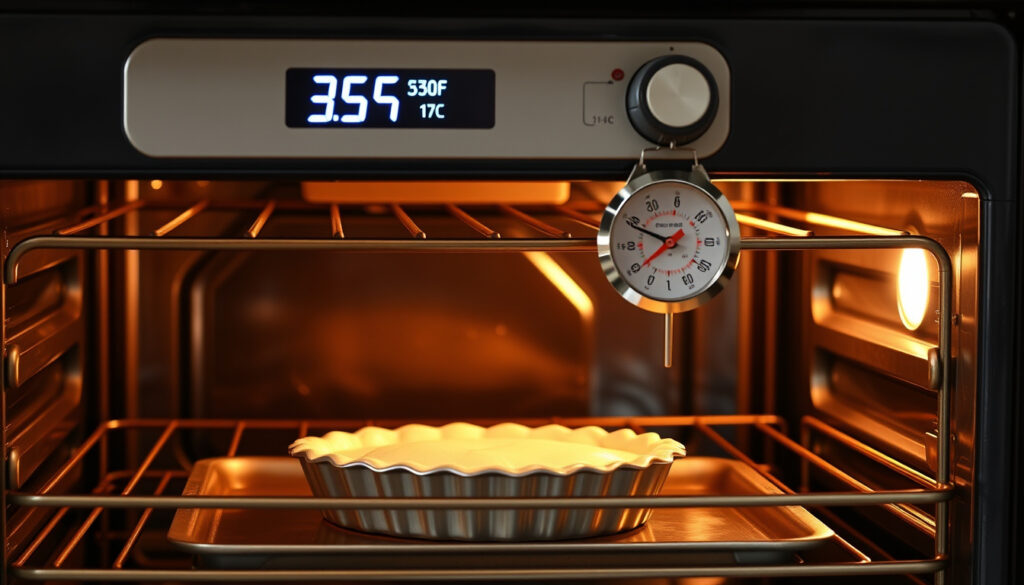
350 F in C – Accurate Oven Temperature Conversion Guide
Whether you are following an American recipe in a European kitchen or simply trying to get the temperature right for a familiar dish, converting 350°F to Celsius is one of the most common cooking questions. The precise answer is 176.667°C, but most practical guides round it to 180°C for conventional ovens. Understanding the conversion, the adjustments needed for fan ovens, and the gas mark equivalent can help avoid overcooked or underbaked results.
This guide walks through the exact calculation, the common temperature equivalents, and the reasons 350°F became a baking standard. All figures are taken from established conversion charts and official sources.
If you only need a quick reference: 350°F equals 180°C in a conventional oven, approximately 160°C in a fan oven, and corresponds to gas mark 4.
What is 350 Degrees Fahrenheit in Celsius?
The direct conversion is mathematically fixed. Using the formula (F − 32) × 5/9, 350°F becomes 176.667°C. That value appears in textbooks and scientific references. In cooking, most recipe writers and oven manufacturers round to 180°C because the difference of about 3°C has negligible effect on baking outcomes. Sources such as the CK‑12 Foundation and RapidTables confirm the exact number and the common rounding practice.
The following insights summarise the key points:
- 350°F is the most referenced temperature in baking recipes.
- The exact Celsius conversion is 176.667°C, but most recipes round to 180°C.
- Fan ovens cook faster; adjust by reducing temperature by 20°C or 25°F.
- Gas Mark 4 corresponds to 350°F / 180°C.
- Understanding conversion prevents overbaking and undercooking.
For a broader view, the table below shows common Fahrenheit temperatures and their Celsius and gas mark equivalents, including fan oven adjustments.
| Fahrenheit | Celsius (conventional) | Fan Oven Celsius | Gas Mark |
|---|---|---|---|
| 325°F | 162.778°C | ~142°C | 3 |
| 350°F | 176.667°C | ~156°C | 4 |
| 375°F | 190.556°C | ~170°C | 5 |
| 400°F | 204.444°C | ~184°C | 6 |
| 425°F | 218.333°C | ~198°C | 7 |
How to Convert 350°F to Celsius (Formula & Calculation)
The conversion relies on a straightforward linear formula. To convert Fahrenheit to Celsius, subtract 32 and then multiply by 5 divided by 9. For 350°F the steps are:
- 350 − 32 = 318
- 318 × 5 = 1,590
- 1,590 ÷ 9 = 176.667°C
An equivalent shortcut is (F − 32) ÷ 1.8 = C, which gives the same result. The formula is standardised by national measurement institutes. The U.S. National Institute of Standards and Technology (NIST) and sources like Metric Conversions provide authoritative references. For reverse conversion from Celsius to Fahrenheit, use (C × 9/5) + 32 = F. For example, 180°C × 9/5 = 324, plus 32 gives 356°F, which is very close to 350°F and explains why 180°C is used as the practical equivalent.
For a rough estimate without a calculator, subtract 30 from Fahrenheit and then halve the result. For 350°F: 350 − 30 = 320, halved = 160°C. This is close enough for many everyday cooking situations, especially when margin for error exists.
What is the formula for Fahrenheit to Celsius conversion?
The standard formula is C = (F − 32) × 5/9. It is exact and applies to any temperature. The BBC Good Food oven temperature guide and other culinary references use the same calculation to produce rounded oven charts.
How do I convert 350°F manually?
Write down the subtraction, multiplication, and division as shown above. A calculator makes it quick, but the arithmetic can be done by hand. The result, 176.667°C, is the true Celsius temperature before rounding.
What is 350°F in a Fan Oven?
Fan ovens (also called convection ovens) circulate hot air, cooking food more evenly and often faster. To convert a conventional oven temperature for a fan oven, reduce the temperature by about 20°C. For 350°F (180°C conventional), the fan oven setting becomes approximately 160°C. Some recipes suggest 150°C for delicate items, but the 20°C reduction is a widely accepted rule of thumb. This adjustment is confirmed by multiple sources including Flawless Food, Which?, and Beko.
The 20°C reduction is a general guideline. Actual fan oven performance can differ by ±10°C depending on the model, age, and calibration of the appliance. Checking with an oven thermometer is the most reliable method to ensure accurate temperatures.
What is the fan oven equivalent of 350°F?
The equivalent is 160°C. For recipes that call for 350°F in a conventional oven, set a fan oven to 160°C (or gas mark 4 if your fan oven also uses gas marks).
How do I adjust 350°F for a fan oven?
Subtract 20°C from the conventional Celsius temperature. If the recipe gives only Fahrenheit, first convert to Celsius then subtract. Some oven manufacturers provide a conversion table in the user manual; consulting it can improve accuracy.
What is 350°F in Gas Mark?
Gas marks are a UK standard used primarily on gas ovens. 350°F (180°C) corresponds to gas mark 4. This equivalence is consistent across official conversion tables from Which?, Beko, and flawlessfood.co.uk. The gas mark scale is linear but not exact for every temperature; the table provided earlier shows the nearest marks for common baking temperatures.
The gas mark system is standardised in the UK. Gas mark 4 always means 180°C in conventional ovens. Some European and US gas ovens use different numbering; always check the manufacturer’s chart if the gas mark numbers do not match.
What is the gas mark for 350°F?
Gas mark 4. For fan ovens, the gas mark remains the same because the mark refers to the conventional temperature used in the recipe. The fan oven setting is then reduced by the usual 20°C.
Common Oven Temperature Conversions: 325°F to 425°F
The range from 325°F to 425°F covers most baking and roasting needs. The table in the first section provides the exact rounded values. For quick reference: 325°F ≈ 165–170°C conventional (fan ~145°C), 375°F ≈ 190°C conventional (fan ~170°C), 400°F ≈ 200°C conventional (fan ~180°C), and 425°F ≈ 218°C conventional (fan ~198°C). These figures are drawn from Industry Kitchens and the other cited sources.
How Did the Fahrenheit and Celsius Scales Originate?
- 1724: Daniel Fahrenheit proposes a scale with 32°F as freezing point of water and 212°F as boiling point.
- 1742: Anders Celsius proposes a centigrade scale with 0°C as boiling point and 100°C as freezing point (later reversed to the modern form).
- 20th century: 350°F becomes the standard baking temperature because it sits at a point where the Maillard reaction accelerates (above 300°F) and the interior of baked goods cooks evenly without burning the surface.
- Present: Global recipes use both scales; conversion tools and charts are essential for adapting international cookbooks.
What Is Certain and What Varies When Converting 350°F to Celsius?
| Established information | Information that remains unclear or variable |
|---|---|
| 350°F = 176.667°C using the formula C = (F − 32) × 5/9 | Fan oven reduction of 20°C is typical but may need ±10°C depending on oven efficiency and recipe |
| Gas mark 4 is the official equivalent for 350°F/180°C (British Standard) | Some older or non‑UK gas ovens may use different numbering |
| Rounding to 180°C is standard in cooking charts | Individual oven calibration can introduce minor variation |
Why Is 350°F the Standard for Baking?
The choice of 350°F as a universal baking temperature is not arbitrary. At this heat, the Maillard reaction – responsible for browning and flavour development – accelerates significantly (it begins around 300°F). Meanwhile, the interior of cakes, cookies, and casseroles cooks through without the exterior burning. The temperature is also a balanced midpoint for most home ovens, which typically range from 250°F to 500°F. European recipes often use 180°C, which is very close to 176.667°C, making 350°F and 180°C effectively interchangeable in practice.
Caramelisation of sugars starts at approximately 320°F, so 350°F provides enough energy for golden browning without pushing past into burnt flavours. This combination of even cooking and controlled browning is why recipe developers have settled on 350°F for decades.
Where Do the Conversion Figures Come From?
The figures used in this guide are sourced from educational, retail, and consumer advocacy organisations. Below are direct quotes from two of the primary references.
“350°F (degree Fahrenheit) is 176.667°C (degree Celsius).”
“Subtract 32 from the temperature in Fahrenheit, then multiply the result by 5/9.”
“Standard oven temperature conversion table including gas marks, fan ovens, and conventional.”
The same data is reflected in UK government‑linked resources and in manufacturer guides such as those from Beko and Which?.
The Essential Takeaway for Converting 350°F to Celsius
The exact Celsius equivalent of 350°F is 176.667°C, rounded to 180°C for most practical cooking. For fan ovens, reduce by about 20°C to 160°C. The gas mark is 4. These values are consistent across authoritative sources and are sufficient to adapt recipes accurately. For broader ranges, the conversion table in this article covers the most common baking temperatures from 325°F to 425°F.
For a more detailed reference, visit the Oven Temperature Conversion F to C article or the Oven Temperature Conversions guide.
Frequently Asked Questions About 350°F to Celsius
Is 350°F equal to 180°C?
Technically 350°F is 176.667°C, but many recipes round up to 180°C for simplicity. The difference (3.333°C) is negligible for most baking.
How do I convert Fahrenheit to Celsius without a calculator?
Use the formula: subtract 32, then multiply by 5/9. For quick estimation: subtract 30 and halve (e.g., 350−30=320, /2=160°C – approximate).
What temperature should I use if my oven only shows Celsius?
For 350°F, set your oven to 180°C (rounding) or 176°C if your oven allows decimals.
What is the fan oven equivalent of 350°F?
Reduce by about 20°C: set fan oven to 160°C. Some recipes recommend 150°C for delicate items.
What is the gas mark for 350°F?
Gas Mark 4.
More related posts
 Marianne Faithfull – As Tears Go By Singer Dies at 78
 Dominik Szoboszlai – Profile, Role, Gear and Latest News
 Iman Shumpert – Net Worth, Wife, Height, NBA Stats, and Acting
 Jade Traitors – Age, PhD, Ethnicity and Finale Facts
 Valerie Mahaffey – Emmy-Winning Actress Dies at 71
 Don Warrington – Biography, Career and Famous Roles
 David Caruso – Where Is He Now, Net Worth, and Biography