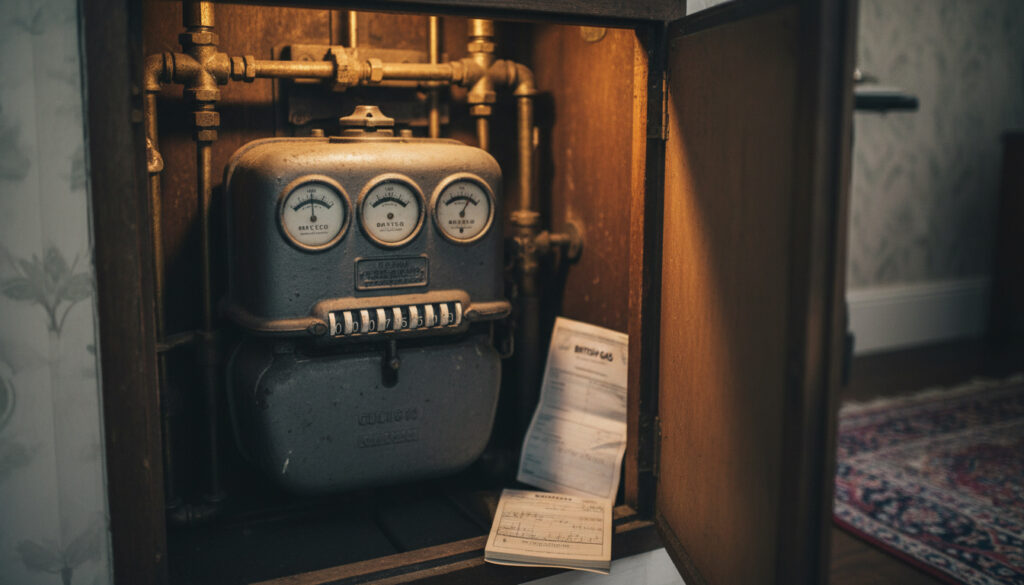
British Gas Meter Reading – Step-by-Step Guide to Accurate Billing
Accurate meter readings form the foundation of fair energy billing for millions of British Gas customers across the United Kingdom. Whether your property relies on traditional analogue displays or modern smart metering systems, understanding how to extract and report these figures prevents the financial uncertainty associated with estimated charges.
British Gas supplies energy to residential and business properties equipped with diverse metering technologies, ranging from imperial gas meters marked in cubic feet to digital electricity displays tracking kilowatt-hours. Each variant demands specific reading techniques to ensure the data captured reflects actual consumption rather than approximations.
This examination draws upon official British Gas documentation, regulatory guidance from Ofgem, and consumer advice frameworks to establish clear protocols for meter identification, reading methodologies, and submission pathways.
How do I read my British Gas meter?
Digital Metric
Five-digit displays showing cubic metres (m³). Record all five numbers including leading zeros.
Analogue Imperial
Four-digit odometer-style readings marked in cubic feet (ft³). Ignore red decimal sections.
Dial Meters
Clock-face dials rotating in alternating directions. Read left-to-right, using lower figures when between numbers.
Smart Meters
Automated transmission devices with manual override via integrated buttons for verification purposes.
Key Insights for Accurate Readings
- Read all digits from left to right, including preceding zeros that establish the full value
- Disregard any digits displayed in red or appearing after a decimal point
- For dial meters, note that adjacent dials rotate in opposite directions; always select the lower number when pointers sit between values
- Verify unit labels—imperial meters display ft³ while metric versions show m³—to confirm measurement scale
- Smart meters automatically transmit readings, though manual verification remains available through designated buttons
- Photograph meters after reading to create timestamped evidence for billing disputes
- Economy 7 tariffs require recording both day and night rate displays separately
| Meter Category | Unit Display | Digits Required | Example Reading | Elements to Ignore |
|---|---|---|---|---|
| Imperial Gas | ft³ | 4 | 1860 | Red decimals |
| Metric Gas | m³ | 5 | 00544 | Post-decimal digits |
| Electronic Gas | m³ | 5 | 00697 | Red numbered sections |
| Dial Gas | m³ | 4-5 left dials | 7241 | Red dials, 100-per-rev markings |
| Single Rate Electric | kWh | 5 | 75085 | Red digits |
| Two Rate Electric | kWh | 5 per display | 25404 / 54250 | Red digits |
| Smart Gas (Manual) | m³ | 5 | Variable | Initial cycling screens |
| Smart Electric (Manual) | kWh | 5 | Variable | Initial cycling screens |
Identifying Gas Meter Variants
British Gas installations typically feature four distinct gas meter configurations. Imperial meters, recognizable by the “ft³” marking, present four-digit sequences resembling vehicle odometers. Metric alternatives display five digits followed by cubic metre indicators. Electronic variants offer five-digit LCD presentations, while dial configurations utilize four to six clock-face mechanisms rotating in alternating clockwise and anticlockwise patterns. Business documentation confirms these categories apply equally to residential contexts.
Reading Electricity Meters
Single-rate digital electricity meters require recording five black or white digits, excluding any red numerals. Two-rate systems, commonly associated with Economy 7 tariffs, present either dual-row displays or sequential readings accessible through button presses. Dial-based electricity meters follow identical protocols to their gas counterparts, demanding left-to-right interpretation with downward rounding when pointers hover between integers. Citizens Advice guidance corroborates these procedures across UK suppliers.
Smart Meter Functionality
Smart meters installed by British Gas, including Mk7B/C and Mk10A business variants, automatically transmit consumption data, eliminating routine manual submissions. However, verification remains possible: gas meters display readings after pressing the red A button through cycling screens, while electricity meters reveal figures via the green A button. The in-home display (IHD) provides real-time usage monitoring but does not serve as a billing submission mechanism. Technical specifications detail these automated processes.
How do I submit a meter reading to British Gas?
Online and App Submission
British Gas operates a dedicated online portal accommodating both account holders and family members acting on their behalf. The British Gas mobile application offers equivalent functionality, allowing photographic evidence upload and immediate confirmation. Video tutorials demonstrate the interface navigation for both platforms.
Phone and Alternative Methods
Alternative submission routes include telephone hotlines staffed by customer service operatives who manually record vocalized figures. This channel proves essential for customers experiencing digital access barriers or technical malfunctions with online systems.
Submit readings during the final week of your billing cycle to minimize estimated calculations. British Gas systems process submissions instantly, updating account balances within 24 hours for non-smart meter customers.
How often should I submit meter readings to British Gas?
Monthly submissions represent the optimal frequency for maintaining billing accuracy, though quarterly minimums satisfy regulatory baselines. British Gas prompts customers via email or postal correspondence when readings fall overdue. Regular submissions prevent the accumulation of estimated debts or credits, ensuring consumption patterns reflect actual rather than projected usage. Official guidance emphasizes that smart meter customers need not adhere to manual schedules unless communication failures occur.
What if I can’t read my British Gas meter?
Troubleshooting Access Issues
Physical obstructions, condensation-covered glass, or damaged displays may prevent accurate reading. British Gas recommends contacting customer services immediately when meters prove inaccessible, as estimated billing may commence after repeated failed attempts. Emergency engineers address mechanical faults preventing display visibility.
Prepayment Meter Considerations
British Gas-specific documentation regarding prepayment meter reading procedures remains limited within public sources. General industry practice suggests checking credit balances and consumption totals through keypad displays or card insertion interfaces. Smart prepayment variants automatically track usage, though manual verification follows standard smart meter protocols. Third-party guidance offers supplementary techniques for these devices.
Common mistakes include recording red decimal digits (which represent fractions of units), selecting higher numbers when dial pointers fall between integers, and omitting leading zeros on metric meters. These errors typically inflate bills by recording consumption that has not occurred.
Ofgem regulations permit estimated billing when customers fail to submit readings within specific timeframes. Regular monthly submissions override estimation algorithms, ensuring charges reflect measured rather than algorithmically projected consumption.
When Should You Submit British Gas Meter Readings?
- : Ideal frequency to maintain accurate account balances and avoid estimation
- : Respond immediately to British Gas email or letter requests to prevent estimated bills
- : Submit 2-3 days before statement generation to ensure inclusion
- : Submit initial readings within 48 hours of new meter activation to establish baseline
- : Provide readings when moving into or out of British Gas-supplied properties
- : Manual submission required if automated transmission fails for 30+ days
Established Facts vs. Common Confusions
| Verified Information | Remaining Uncertainties |
|---|---|
| All British Gas meters require left-to-right reading sequences | Specific keypad sequences for prepayment meter manual readings lack official documentation |
| Red digits and decimal points must be excluded from submissions | Exact intervals between smart meter automated transmissions vary by network conditions |
| Monthly submissions prevent estimated billing under Ofgem regulations | Photographic evidence standards for dispute resolution remain undefined in public guidelines |
| Dial meters rotate in alternating directions; lower numbers apply when between integers | Business-specific meter reading protocols may differ from residential procedures in edge cases |
Why Accurate British Gas Meter Readings Matter
Precise consumption reporting protects consumers from the financial volatility of estimated billing algorithms. Ofgem-mandated accuracy standards require suppliers to base charges on actual usage where possible, with estimations serving only as fallback mechanisms. Regular submissions enable British Gas customers to identify anomalous consumption patterns indicative of appliance malfunctions or property inefficiencies. The business support framework extends these principles to commercial entities, emphasizing that accurate data underpins carbon reporting and sustainability audits.
Official Guidance on Meter Readings
“Read the numbers from left to right, including any zeros, but ignoring any numbers after the decimal point or shown in red.”
— British Gas Business Blog
“If the pointer is between two numbers, write down the lower number. If it’s between 9 and 0, write down 9.”
— Citizens Advice Energy Guidance
Essential Actions for British Gas Meter Management
Maintaining accurate energy accounts requires identifying your specific meter type—whether imperial, metric, dial, or smart—recording digits from left to right while excluding red decimals, and submitting figures monthly through the Submit meter readings portal or mobile application. For detailed identification assistance, consult the How to read your meter resource. These practices ensure billing reflects actual consumption rather than algorithmic estimates, providing financial predictability and regulatory compliance.
Frequently Asked Questions
How do I know if my British Gas meter reading is correct?
Verify by checking you excluded red digits and decimals, included all leading zeros, and read dials left-to-right using lower numbers when between integers. Cross-reference with previous readings for unusual spikes.
How to take photo of British Gas meter reading?
Capture the full meter face ensuring all digits are legible, the timestamp is visible, and the photo includes the unit label (ft³ or m³). Store these images for 12 months to resolve potential billing disputes.
British Gas prepayment meter reading guide
Insert your key or card to display credit balance and consumption data. Smart prepay variants show usage on the in-home display. For manual readings, follow standard smart meter button protocols, though specific British Gas prepayment documentation remains limited.
What if my smart meter isn’t sending readings?
Manually read the meter using the A button (red for gas, green for electricity) and submit via the online portal. Contact British Gas if the issue persists beyond 30 days.
Can I submit readings for someone else’s British Gas account?
Yes, the British Gas meter reading portal accommodates submissions from family members or caregivers without requiring account holder login credentials.
Why is my British Gas bill estimated despite submitting readings?
Estimates may apply if submissions arrived after the billing cut-off date or if the system flagged anomalous readings requiring verification. Submit 2-3 days before your billing date to ensure inclusion.
How do I read a dial meter when the pointer sits exactly on a number?
Record the number itself, then check the dial immediately to the left. If that left dial reads 9, subtract one from the current dial’s number. This accounts for the mechanical carry-over mechanism.
More related posts
 Chester Bennington – Life, Death, Family and Lasting Legacy
 Things to Do in New York – Free Attractions, Events & Nightlife
 Jason Bateman – Biography, Net Worth, Height and Career Facts
 Michelle Collins – Actress vs Comedian Age Husband and Career
 Andy Murray – Grand Slams, Net Worth, and Career Timeline
 James Nelson-Joyce – M&S Campaign, TV Roles and Bond Odds
 Oscar Bobb – Age, Parents, Club Career and Fulham Transfer