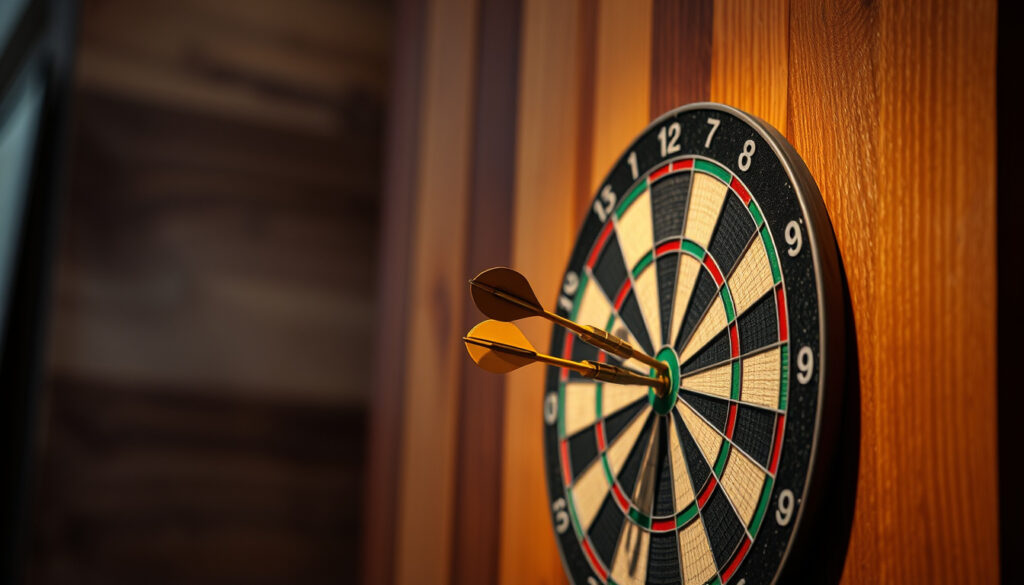
Dart Board – The Complete Buying Guide
The first decision when buying a dart board is format, not brand. Electronic soft-tip boards and sisal bristle boards serve different players, and independent reviews consistently point to the same split: electronic models for families, beginners and casual social play; bristle boards such as the Winmau Blade 6 and Unicorn Eclipse range for realistic, tournament-style practice.
That split matters because the two formats are not interchangeable. Electronic boards score automatically and use plastic soft-tip darts. Bristle boards use compressed natural fibres and steel-tip darts, and each format has its own strengths, drawbacks and maintenance habits.
The UK market reflects both traditions. Specialist retailers, established brands and a strong pub-league culture keep bristle boards in demand, while home entertainment trends continue to push electronic models forward. Knowing how each type behaves makes the choice considerably easier.
What is the Best Electronic Dartboard? Soft Tip Darts and Blade 6 Compatibility Explained
Types of dartboards explained
- Electronic board: Automatic scoring, soft-tip darts and multiple built-in games. Best for social play, families and home entertainment.
- Cabinet dartboard: A bristle board housed in a door-fronted wooden frame. Doubles as furniture and protects the wall.
- Standard bristle board (Winmau, Unicorn): The professional standard. Uses high-density sisal and steel-tip darts.
- Dart board set with stand or darts: An all-in-one package for beginners, usually including a stand or cabinet and a bundle of darts.
Key insights
- Electronic boards suit children, beginners and groups because scoring is automatic.
- Sisal bristle boards are the only format used in professional steel-tip competition.
- UK reviews consistently name the Winmau Blade 6 as the strongest all-round board for serious home practice.
- The Unicorn Eclipse Pro is the closest direct rival to the Blade 6.
- Cabinet setups protect walls and store accessories; stands suit rented homes but need floor space.
- Soft-tip darts are for electronic boards; steel-tip darts are for sisal boards.
- The standard tournament board diameter is 17.75 inches (45.1 cm).
Quick dartboard facts
| Dartboard fact | Detail |
|---|---|
| Standard diameter | 17.75 inches (45.1 cm) |
| Professional material | High-density sisal bristle |
| Electronic board darts | Soft-tip (universal) darts usually required |
| Cabinet board | Doubles as furniture, often with scoreboard doors |
| Popular UK brands | Winmau, Unicorn, Mission, Harrows |
| Self-healing surface | Sisal fibres close around dart holes after removal |
| Blade 6 Single Core | Best value for serious home practice |
| Blade 6 Double Core | Multi-layer sisal for frequent players |
| Blade 6 Triple Core Carbon | Very dense sisal for heavy use |
| Unicorn Eclipse Pro | Staple-free bullseye and slim wire system |
Electronic boards are built around convenience. Plastic segments hold soft-tip darts in place, sensors record every throw, and the display removes the need for a manual scoreboard. Most models offer a selection of built-in games, which makes them a natural fit for households where players of different skill levels want to play together. They are also typically quieter than bristle boards and use lighter, safer plastic darts.
The Winmau Blade 6 is often grouped with electronic boards, but it is actually a sisal bristle board. The sixth generation of Winmau’s Blade series is designed for steel-tip darts and comes in three constructions: Single Core, Double Core and Triple Core, with a Triple Core Carbon version at the top of the range. Winmau’s product information describes the range as built for high-volume use, with progressively denser sisal improving dart retention in the higher-tier models.
The phrase “universal” darts belongs to the electronic side of the market. Universal soft-tip darts have plastic tips that fit the holes in an electronic segment. They are not intended for sisal bristle boards such as the Blade 6, which require steel-tip darts. Steel darts should not be used on ordinary soft-tip segments unless the manufacturer explicitly provides a conversion option, because they can damage the electronic scoring mechanism.
Cabinet Dartboard vs Dart Board with Stand: Which Setup is Best for You?
A dart board is rarely bought alone. Most players choose between a cabinet that frames the board on the wall and a stand that holds it in place without drilling. The right option depends on the room, the wall type and whether the setup needs to move.
What is a cabinet dartboard?
A cabinet is a wooden enclosure with fold-out doors that surrounds a bristle board. It protects the wall from stray darts, stores darts and accessories, and often includes a scoreboard behind the doors. Because it is wall-mounted, it gives a permanent, finished appearance to a home bar or games room. The trade-off is bulk: the cabinet must be large enough for its doors to open without obstructing the throwing area.
When does a dart board with stand make more sense?
A stand is a freestanding frame that holds the board at the correct height without requiring wall fixings. That makes it the most practical option in rented accommodation and in rooms where a permanent installation is not desirable. A stand can also be moved between locations. Its weaknesses are floor space and stability; a lightweight base can transmit movement with every impact, so a heavy, stable stand with adjustable feet is preferable.
How do the two setups compare?
For a permanent games room, a properly fixed wall mount generally produces the steadier setup. For portability or rented homes, a stand is the more flexible answer. Both are compatible with bristle boards, and neither changes the dart type required by the board itself.
Cabinet doors need clearance to open fully, and a stand needs floor space for the throwing area. A wall-mounted board fixed to a solid surface is generally steadier than any stand.
What is a Unicorn Dartboard? Complete Set vs Bare Board Guide
What makes the Unicorn Eclipse range different?
Unicorn is one of the longest-established names in darts, and its Eclipse series is the flagship range. The Eclipse Pro and Eclipse Pro 2 use a slim wire system and a staple-free bullseye, both highlighted in independent board reviews, to reduce bounce-outs. The playing surface is self-healing sisal, giving the boards the same professional characteristics as other tournament-grade models. Unicorn’s official site remains the most reliable source for current specifications.
Winmau Blade 6 vs Unicorn Eclipse: which is better?
Buying guides generally agree that the Winmau Blade 6 is the stronger all-round recommendation for UK home practice. It combines tournament-oriented wiring with the Rota-Lock mounting system, which helps level the board on uneven walls. Its Triple Core models use progressively denser construction intended to improve dart retention and withstand intensive play. The Unicorn Eclipse Pro is the closest direct rival, offering its own slim wire system and staple-free bullseye. In practice, both ranges reduce bounce-outs and provide a professional playing surface, so the choice often comes down to price, mounting preference and brand loyalty.
What comes in a dart board with darts set?
Complete sets bundle a board with a stand or cabinet and usually a set of darts, giving beginners everything needed in one purchase. The critical detail is the dart type: steel-tip darts belong with bristle boards, while soft-tip darts are required for electronic models. Checking that detail before ordering avoids the most common compatibility mistake.
Both the Winmau Blade 6 and Unicorn Eclipse Pro are designed to reduce bounce-outs and offer a professional playing surface. The decision between them is driven more by price, the mounting system and brand preference than by a clear gap in quality.
Electronic vs Bristle Dartboard: Which is Better?
How do sisal bristle boards work?
Sisal boards are made from compressed natural fibres. Steel-tip darts push into the fibres, which are described as self-healing because they close around the holes after removal. The effect is gradual rather than complete, so regular rotation of the board remains important for even wear. This is the format used in professional competition.
When do electronic boards make sense?
Electronic boards use plastic segments with holes that hold soft-tip darts. They calculate scores automatically and offer multiple game modes, which makes them especially suitable for children, beginners and groups. The plastic darts are safer, and the overall experience is closer to social entertainment than to tournament practice.
Which dart type can you use?
The key compatibility rule is the dart type. Steel-tip darts are intended for sisal bristle boards. Soft-tip darts are intended for electronic boards. As dartboard comparison guides note, some electronic boards may support steel-tip conversion only if the manufacturer specifically permits it; steel darts should not be used on ordinary soft-tip segments.
When is each format the better choice?
Sisal bristle is the better choice when:
- Practising for pub leagues or steel-tip competition.
- Using standard steel-tip darts.
- Seeking realistic board dimensions, sound and dart response.
- Playing frequently enough to benefit from a durable surface.
Electronic is the better choice when:
- Automatic scoring matters more than tournament realism.
- Several players have different skill levels.
- Safety is a priority.
- The board will be used mainly for casual games.
Universal soft-tip darts are the correct choice for electronic boards, while steel-tip darts belong on sisal bristle boards like the Winmau Blade 6. Using steel darts on ordinary soft-tip segments can damage the scoring mechanism.
How Has the Dartboard Evolved Over Time?
The dartboard has changed shape and material repeatedly over the past century. Each shift tracked new playing habits, manufacturing techniques and the growth of organised competition.
- Early 1900s: Wooden boards, often cut from elm tree sections, were used in pubs.
- 1930s: Rolled paper boards were introduced as a cheaper alternative.
- 1960s: Sisal bristle boards became the tournament standard, a position they still hold today.
- 2000s: Electronic dartboards gained popularity in home settings, adding automatic scoring and digital games.
- 2010s to present: The Winmau Blade series and Unicorn Eclipse range pushed forward materials, wiring and mounting systems.
The tournament standard used by the Professional Darts Corporation remains the sisal bristle board, confirming the material’s staying power.
Dartboard Facts: What is Established and What Still Needs Clarification?
Some aspects of dartboards are firmly established. Others are frequently misunderstood or depend entirely on the buyer’s situation.
| Established information | Information that remains unclear |
|---|---|
| Sisal bristle boards from Unicorn and Winmau are the standard for competitive play. | The performance difference between steel-tip and soft-tip darts is often misunderstood. |
| Electronic boards use soft-tip darts and are not designed for steel-tip darts. | Whether a cabinet board or a board with a stand is “better” depends entirely on user space and décor preference. |
| The standard board diameter for professional play is 17.75 inches (45.1 cm). | The long-term durability of lower-cost electronic boards compared with high-end bristle boards is not well documented. |
Why Does the UK Market Shape Dartboard Choices?
The UK has unusually strong demand for both traditional competitive brands such as Winmau and Unicorn and for modern electronic boards. Specialist retailers carry wide ranges because the audience spans home bar owners, families and league players, each with different priorities.
Professional darts has also gained new visibility in recent years, helped by the emergence of players such as Luke Littler. That attention has brought new viewers to the sport and, with them, new questions about the boards players use.
This diversity is visible online, where specialist darts retailers dominate search results and their buying guides carry considerable weight. For shoppers, that means detailed product information is easier to find than it is for many other categories.
Where to Buy a Dartboard Online in the UK and How to Verify Quality
UK buyers have several dependable routes. Specialist retailers such as Premier Darts publish detailed buying guides alongside their product ranges, and dedicated darts shops remain the strongest source of technical advice. Official brand sites provide the most authoritative specifications for current models.
Winmau describes its Blade 6 range as designed for high-volume use, with progressively denser construction intended to improve dart retention.
— Winmau product information
Sisal fibres are described as self-healing because they close around dart holes after removal, although the effect is gradual rather than complete.
— Expert Reviews dartboard guide
Governing bodies add another layer of verification. Organisations such as the British Darts Council publish rules and standards that cover tournament board specifications. Board diameter, materials and playing-surface format follow established norms, so the meaningful differences between models are mostly in wiring, mounting and durability.
What is the Best Dartboard for UK Buyers?
For a UK buyer seeking one durable, serious board, the Winmau Blade 6 Single Core is the safest value recommendation. The Double Core makes more sense for frequent players, and the Triple Core Carbon justifies its premium under heavy daily use. The Unicorn Eclipse Pro remains a credible tournament-style alternative, particularly for those who prefer its staple-free bullseye and Unicorn’s design. An electronic board is the better purchase only when automatic scoring, soft-tip safety and built-in games matter more than the conventional steel-tip experience. A cabinet is worthwhile for a permanent room setup; a stand is better for portability or rented homes. The right choice matters at every level. From a first board in a family games room to the professional game played by players such as Justin Hood, a dependable dartboard keeps the sport consistently enjoyable.
Frequently Asked Questions About Dartboards
What size dartboard do I need for a home bar?
A standard 17.75 inch dartboard is recommended for proper gameplay. Cabinet boards are typically standard sized but housed in a larger frame, so they require more wall space.
Are electronic dartboards worth the money?
Yes, if you value automatic scoring and digital display features. They are generally less about competitive practice and more about social entertainment.
Can I use steel tip darts on an electronic dartboard?
No. Electronic dartboards require soft-tip (universal) darts to protect the scoring mechanism. Steel-tip darts are intended for sisal bristle boards.
What is the best dartboard for beginners?
A complete dart board set with darts or a standard bristle board from Winmau or Unicorn is an excellent starting point.
How do I mount a cabinet dartboard?
Cabinet dartboards typically come with wall mounting hardware. The wall must be able to support the weight before installation.
What is a sisal bristle dartboard?
A dartboard made from compressed natural sisal fibres, designed for steel-tip darts. The surface is self-healing and remains the standard for competitive play.
Are universal darts compatible with Blade 6 boards?
No. The Winmau Blade 6 is a sisal bristle board that uses steel-tip darts. Universal soft-tip darts are designed for electronic boards, not for the Blade 6.
What is the difference between a cabinet dartboard and a standard one?
A cabinet dartboard houses a bristle board in a door-fronted wooden frame with storage and often a scoreboard. A standard board is just the playing surface, usually mounted directly on the wall.
More related posts
 Artful Dodger – Season 2 Updates, Cast, and Meaning
 Lamar Odom – Alive, Net Worth, Documentary and Life After NBA
 Michael Jordan Basketball – Biography, Stats, and Net Worth
 Ann Ming – The Mother Who Changed the Double Jeopardy Law
 Zooey Deschanel – Biography, Family, Career, and Net Worth
 Kenneth Noye – Biography, Crimes, and Where He Is Now
 Dimebag Darrell – Death, Bands, Guitar & Legacy
 Teagan Croft – Age, Height, Movies and Upcoming Tangled Role