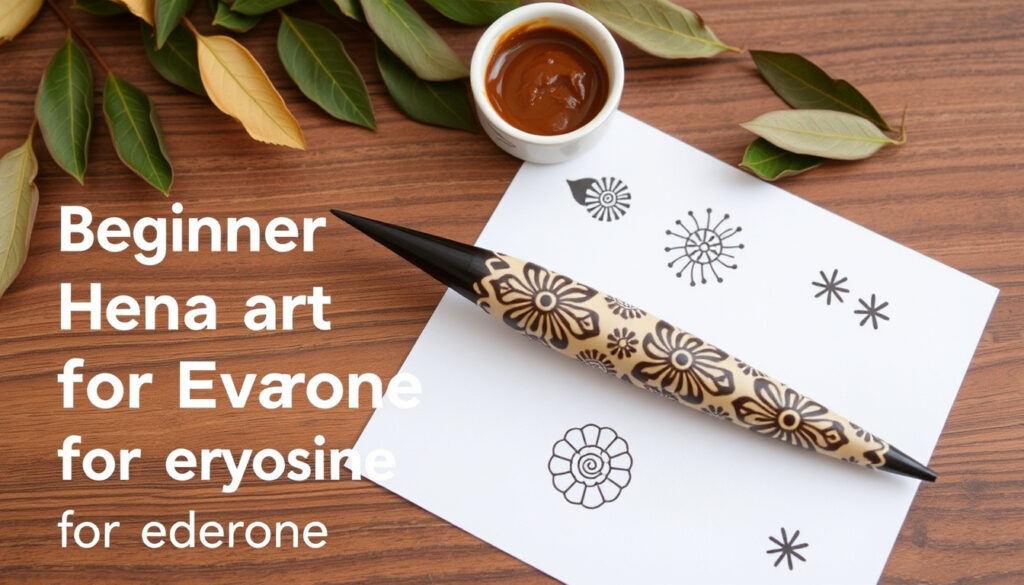
Henna Designs – Easy Ideas for Beginners, Girls, Boys & Kids
Henna, or mehndi, has been used for centuries to create temporary body art. Whether you are looking for a simple floral motif for your hand or a minimal geometric design, the key to success is starting small. This guide covers easy henna designs for beginners, along with age-specific ideas for girls, boys, and kids, and explains how to find local artists near you.
Simple designs are the most searched henna category, driven by a large beginner audience. Many tutorials recommend building a pattern from one central element—a dot, circle, or petal—rather than attempting a full complex layout on the first try.
Below is a breakdown of the easiest starter designs, a step‑by‑step hand tutorial, and answers to the most common questions about henna for different age groups and genders.
What are simple and easy henna designs for beginners?
Quick overview of beginner‑friendly henna designs
- Beginner‑Friendly – Start with simple floral and geometric designs built from dots, circles, petals, swirls, vines, and short lines.
- For Girls & Women – Bridal, intricate, floral, and peacock motifs are popular choices.
- For Boys & Men – Minimalist, tribal, geometric, and tattoo‑style patterns work well.
- Find Local Artists – Search on Google Maps or Instagram using queries like “henna near me.”
For a complete starting point, refer to our guide on simple henna designs for beginners.
Key insights from current henna design trends
- Simple henna designs are the most searched category, indicating a strong beginner audience.
- There is a clear demand for age‑ and gender‑specific design inspiration.
- Local search intent reveals a need to connect users with henna artists nearby.
- Floral motifs are repeatedly recommended as the easiest starter design.
- Finger accents (thin lines, dots, small arcs) add detail without increasing difficulty.
Snapshot: Henna design basics for 2025
| Category | Detail |
|---|---|
| Henna source | Lawsonia inermis plant paste |
| Stain color | Orange‑brown, darkens over 24‑48 hours |
| Duration | 1‑3 weeks depending on skin type, aftercare, and design complexity |
| Most popular motifs | Flowers, paisleys, mandalas, peacocks |
| Top ranking searches | Simple hand designs (front hand) rank highly in search volume |
| Best practice | Practice on paper first: trace a hand outline and draw basic shapes |
| Beginner building blocks | Dots, circles, petals, swirls, vines, short lines |
| Recommended first design | A centered circle with surrounding petals |
| Application tip | Start with one focal point, then extend outward |
| Drying time | About 20 minutes to several hours, depending on paste thickness |
What are the best henna designs for girls, boys, and kids?
Henna designs for girls and women
Many tutorials for girls lean toward floral and cute motifs. Common choices include small flowers on the back of the hand with dots around them, heart‑and‑dot styles, and simple Arabic‑style floral strips. These designs are quick to apply and ideal for beginners.
A small flower on the back of the hand with a ring of dots around it is one of the fastest and most popular beginner patterns. You can also add a thin line or vine leading toward the fingers.
Henna designs for boys and men
For boys, the most adaptable beginner options are minimal geometric, dot, or line‑based patterns. These are easy to apply and keep subtle. While there is no strict gender rule, geometric and tribal‑style motifs are often used for a more understated look.
Henna designs for kids
Kids’ designs are usually kept small, fast, and simple. Typical ideas include a tiny wrist band made of two lines and dots, finger‑tip or finger‑line accents, and simple floral or heart motifs. Multiple YouTube tutorials demonstrate these quick patterns for children who may not sit still for long.
Always use natural henna (which produces a brown/orange stain) and avoid black henna, which often contains harmful chemicals such as PPD. The American Academy of Dermatology advises caution with black henna.
Where can I find henna designs near me?
Searching for local henna artists
To find henna artists nearby, use Google Maps or Instagram location tags with queries such as “henna near me.” Yelp and wedding directories are also useful for discovering reviewed professionals. The exact availability of nearby artists depends on your location.
Tips for choosing a henna artist near you
When selecting an artist, review their portfolio for design quality and range. Ask about hygiene practices (single‑use cones, clean workspace), pricing, and availability. For cultural events, ensure the artist is familiar with the relevant traditions and design styles.
Evolution of henna design popularity
- Ancient origins – Henna use began in South Asia, the Middle East, and Africa.
- 2000s – Western popularization through festivals and bohemian culture.
- 2010s – Social media boom brings inspiration to a global audience.
- 2020s – Demand for minimalist and gender‑neutral designs rises.
- 2025+ – Continued growth with how‑to content dominating search results.
Addressing common misconceptions about henna
Some aspects of henna are well documented, while others rely on regional practices and individual expertise.
| Established information | Information that remains unclear |
|---|---|
| Henna stains orange‑brown and darkens over 24‑48 hours. | Exact design trends vary by region; local artist preference matters. |
| Black henna often contains harmful chemicals (PPD) — avoid it. | The long‑term safety of certain commercial henna pastes is not fully documented. |
| Natural henna is safe for kids when applied properly. | The optimal drying time for the darkest stain is not universally established. |
Cultural context and analysis of henna design trends
Henna (mehndi) holds deep cultural significance in weddings and festivals across South Asia, the Middle East, and Africa. The recent rise in demand for simple, minimalist designs reflects a broader trend toward personal expression and gender‑neutral body art. When evaluating an artist’s portfolio, look for clean lines, symmetry, and consistent paste consistency—signs of skill and professionalism.
Sources and credibility
The information in this guide draws from multiple beginner‑friendly tutorials and reputable organisations. The American Academy of Dermatology provides guidance on henna safety, while industry standards from the International Mehndi Artists Guild offer additional benchmarks. Academic journals and user reviews on Google Maps and Yelp also inform this guide.
What to try next with henna designs
For those who have mastered the basics, the next step is exploring more elaborate motifs or attempting a full hand design. As search trends indicate, step‑by‑step video tutorials and interactive guides are becoming increasingly popular. Keep an eye on minimalist and male‑targeted designs, which are expected to grow in demand through 2025 and beyond. For a complete starting point, refer to our guide on simple henna designs for beginners.
Frequently asked questions about henna designs
How long does henna last?
Typically 1‑3 weeks, depending on skin type, aftercare, and design complexity.
Is henna safe for kids?
Yes, if natural henna (brown/orange stain) is used. Avoid black henna.
What is the best henna paste for designs?
Natural henna cones or fresh paste from reputable brands are recommended.
Can I do henna at home?
Yes, with practice. Start with simple designs and use a cone or jac bag.
What do I need for henna application?
Henna cone, tissues/paper towels, design references, and lemon‑sugar solution for sealing.
How to remove henna fast?
Scrubbing, oil, or lemon juice can help fade, but it’s permanent until skin sheds.
What is the difference between henna and mehndi?
They are essentially the same; “mehndi” is the traditional term in South Asia.
More related posts
 Adam Norris – Net Worth, Biography and Family Life
 Trisha Paytas – Biography, Career, Podcast and Music Videos 2025
 Rachel Reeves – Full Biography, Age, Husband and Net Worth
 Ilona Maher – Verified Bio, Family, and Rugby Career
 Al Pacino – Biography, Movies, Net Worth and Personal Life
 Nicholas II – His Death, Family and Enduring Legacy
 French Montana – Biography, Net Worth, and the Truth Behind the Rumors
 Michael Craig-Martin – The Artist Who Shaped the YBAs