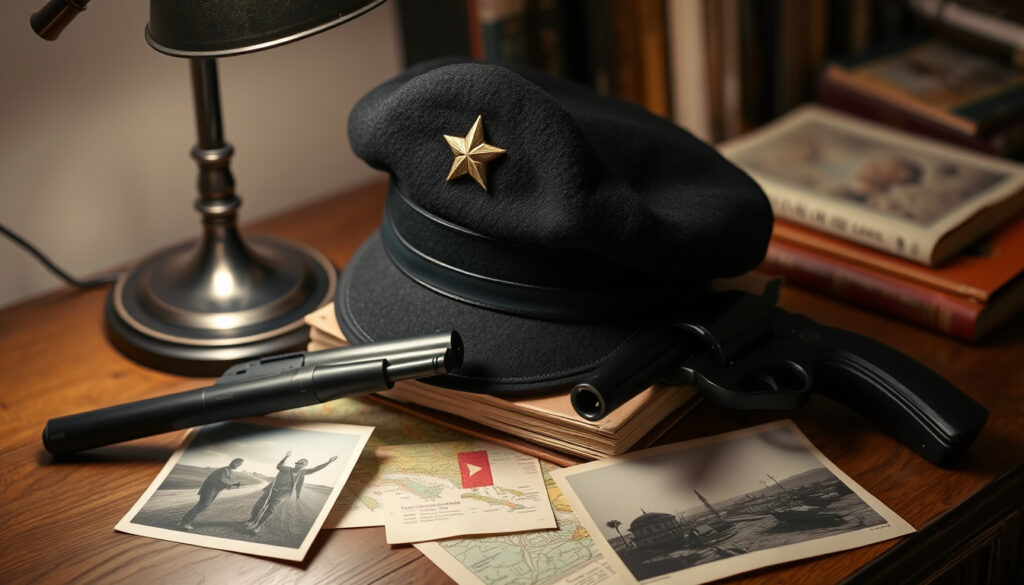
Che Guevara: Life, Death, and Enduring Legacy — A Fact-Based Guide
Few figures of the 20th century provoke as much fascination, admiration, and fierce debate as Ernesto “Che” Guevara. An Argentine Marxist revolutionary, physician, guerrilla leader, author, and diplomat, he played a crucial role in the Cuban Revolution and became a global political icon. His journey from a medical student to a revolutionary icon, his life, death, and enduring legacy are subjects of intense study and polarized opinion.
His life is a story of transformation and conviction, marked by his powerful alliance with Fidel Castro, his leadership in guerrilla warfare, and his controversial execution in Bolivia. Yet, the image of Che Guevara, particularly the famous “Guerrillero Heroico” photograph, has transcended his biography to become a symbol of rebellion, often detached from his specific political context.
This guide provides a comprehensive, fact-based overview of Che Guevara, drawing on authoritative sources to answer the most common questions about his identity, his revolutionary activities, his death, his writings, and his contested legacy. It aims to present a balanced picture of a man who remains a potent and contradictory figure in global political culture.
Who Was Che Guevara? Biography and Early Life
Ernesto “Che” Guevara de la Serna was born in Rosario, Argentina, on May 14, 1928, though some sources list June 14, 1928, as the date recorded on his birth documents according to Encyclopaedia Britannica. His full name is often given as Ernesto Guevara, and some records use the longer form Ernesto Rafael Guevara de la Serna.
Ernesto ‘Che’ Guevara de la Serna
Key figure in the Cuban Revolution, Marxist guerrilla leader
The nickname “Che” is a familiar Spanish interjection, akin to “hey” or “mate,” which became his permanent byname after he moved to Cuba. He was Argentine by birth but became a central figure in the Cuban revolutionary state and later an international left-wing symbol.
Key Insights into Che Guevara’s Life:
- Guevara’s ideological drive (Marxism) defined his actions, but his legacy is filtered through a powerful commercialized image.
- His exact role in the Cuban Revolution is debated, from military strategist to political figure and diplomat.
- His religious background (Catholic nominal) contrasts with his later anti-religious Marxist ideology.
He trained as a doctor before becoming a revolutionary activist, a point that often surprises those who only know him as a guerrilla commander. His extensive travels across Latin America, documented in part by the BBC History, profoundly shaped his anti-imperialist political views.
| Full Name | Ernesto ‘Che’ Guevara de la Serna |
| Nationality | Argentine |
| Role | Marxist Revolutionary, Guerrilla Leader, Author |
The Cuban Revolution and Role as a Guerrilla Leader
Che Guevara’s life is most closely associated with the Cuban Revolution (1956–1959), where he emerged as one of the movement’s key commanders and strategists alongside Fidel Castro. His role as a communist figure and his theories on guerrilla warfare are central to his historical importance.
In 1955, Guevara met Fidel Castro in Mexico and joined the 26th of July Movement. Guevara, a trained doctor, quickly became a trusted military commander within the rebel army. For a broader perspective on revolutionary figures of this era, the story of Leon Trotsky – Revolutionary Leader, Exile and Assassination offers an insightful comparison.
Role in the New Government
After the revolution’s victory in 1959, Guevara held significant leadership roles in the new Cuban government. He served as Minister of Industries and as a diplomat, representing Cuba globally. In these positions, he advocated for rapid industrialization and the spread of revolution throughout Latin America.
Guevara’s economic policies as Minister of Industries have been criticized by some economists for their focus on rapid industrialization, which struggled to be effective. This period of his life highlights the complexities of translating revolutionary ideals into practical governance.
In 1965, Guevara disappeared from public view to support revolutionary movements abroad, first in the Congo and then in Bolivia. His guerrilla campaign in Bolivia would prove to be his final undertaking.
How Did Che Guevara Die?
The death of Che Guevara is one of the most documented events in his life. After a year-long guerrilla campaign in Bolivia, he was captured on October 8, 1967, by Bolivian forces. The circumstances of his capture and subsequent death are well-documented in historical records.
Sources consistently describe his death as an execution by firing squad or an ordered execution. He was executed the following day, October 9, 1967. His body was displayed to prove his death, and his burial place was kept secret for three decades. The role of U.S. intelligence and the CIA in the operations leading to his capture has been the subject of much historical analysis, as detailed in documents declassified by the National Security Archive.
Che Guevara Timeline:
- 1956-1959: Played a key role in the Cuban Revolution; became a major figure in the new government.
- 1965: Disappeared from public view to support revolutionary movements abroad.
- 1967: Captured and executed in Bolivia.
His remains were discovered in Bolivia in 1997 and returned to Cuba, where they are interred in the Che Guevara Mausoleum in Santa Clara, as reported by The Guardian.
Books, Writings, and Famous Quotes
Che Guevara is recognized as an author who wrote extensively on revolution, guerrilla warfare, and political thought. His writings are a key part of his legacy, offering insight into his ideology, which was firmly rooted in Marxism.
While a detailed list of his books requires a separate, sourced compilation, he is definitively known as a writer. His most famous work, “Guerrilla Warfare,” outlines his foco theory of revolution, arguing that a small, dedicated group of armed fighters can spark a popular insurrection. His personal diary from the Bolivian campaign also provides crucial primary source material. The complete collection of his writings is maintained by the Marxists Internet Archive.
Several quotes are famously attributed to Che Guevara, though verifying their exact origin can be difficult. Some of the most widely cited include:
“The revolution is not an apple that falls when it is ripe. You have to make it fall.”
“I am not a liberator. Liberators do not exist. The people liberate themselves.”
Personal Life: Religion, Family, and Medical Background
The provided research does not document Che Guevara’s personal religious beliefs in detail. While he likely came from a nominally Catholic background, his political evolution led him to adopt an anti-clerical and materialist worldview, though a specific, sourced statement on his personal religion is not available in the provided materials.
Guevara married twice and had at least five children. His first wife was Peruvian economist Hilda Gadea, and his second wife was Cuban revolutionary Aleida March. His family life was often secondary to his revolutionary activities.
Before becoming a revolutionary, Guevara was a medical doctor. He graduated from the University of Buenos Aires with a degree in medicine in 1953. His medical training influenced his early views on social injustice, which he witnessed during his travels through Latin America.
Why Is Che Guevara an Icon? T-Shirts, Photographs, and Legacy
Perhaps the most striking aspect of Che Guevara’s modern presence is the global use of his image, particularly on T-shirts and posters. This phenomenon raises a key cultural tension: the connection between his revolutionary ideology and his ubiquitous status as a pop-culture symbol.
Guevara is intensely polarizing. He is viewed by many as a heroic revolutionary who fought for social justice and anti-imperialism, while critics condemn him for his role in the execution of alleged war criminals and his advocacy of armed violence. This division is a central feature of his legacy.
Che’s most famous image is the “Guerrillero Heroico” portrait, a head-and-shoulders photograph taken by Cuban photographer Alberto Korda on March 5, 1960. This single image has been reproduced countless times, transforming him into a global symbol of rebellion. The photograph’s power lies in its composition and the intense expression on Guevara’s face, which has allowed it to be adopted by a wide variety of movements, often detached from his specific Marxist political context.
Che Guevara’s legacy is intensely contested. According to Encyclopaedia Britannica, he is remembered by supporters as a revolutionary hero and anti-imperialist icon, while critics view him as a ruthless executioner and failed ideologue. The standardization of his image into a commodity can be seen as a final irony in his story, given his opposition to consumer capitalism.
How Did Che Guevara Compare to Eva Perón as a Political Figure?
Both Che Guevara and Eva Perón are iconic Argentine figures who left a profound mark on Latin American politics, but their methods and impacts were vastly different. Guevara was a Marxist revolutionary committed to armed insurrection and international socialist revolution. Eva Perón, in contrast, operated within the existing political system as a champion of labor rights and social justice from within the government of her husband, Juan Perón.
While both are revered by their followers, their approaches to power and social change could not be more distinct. Guevara sought to destroy the state and class system through violence, while Perón sought to reform it from within through populist policies.
This comparison highlights a central theme in Latin American history: the tension between revolutionary and populist paths to social justice. The legacy of both figures continues to be fiercely debated, and the symbols associated with them remain potent forces in political discourse. More broadly, understanding Guevara’s impact requires understanding the global context of the Cold War, which shaped U.S. foreign policy toward Latin America and fueled the revolutionary movements of the era. An analysis of these dynamics is available from the CIA’s Center for the Study of Intelligence.
Unresolved Questions and Historical Debates
While the broad strokes of Che Guevara’s life are well-documented, a few specific details remain debated or uncertain among historians.
| Fact | Status |
|---|---|
| His death in Bolivia on October 9, 1967, is a confirmed historical fact. | Confirmed |
| His central role in the success of the Cuban Revolution is universally acknowledged. | Confirmed |
| The origin of his nickname ‘Che’ is generally accepted as Argentine slang, but personal preferences for it are debated. | Debated |
| His status as a Marxist and supporter of armed insurrection is clear. | Confirmed |
What Is the Historical and Political Context of Che Guevara’s Life?
Guevara’s story is inseparable from the Cold War and the struggle for power in Latin America. The Cuban Revolution, which he helped lead, was a direct challenge to U.S. hegemony in the Western Hemisphere and became a beacon for revolutionary movements worldwide.
His economic policies as Minister of Industries in Cuba have been widely criticized by economists for their lack of effectiveness, and his strategy of guerrilla warfare ultimately failed in Bolivia, raising questions about the applicability of his methods outside of the unique conditions of the Cuban Revolution.
Despite the failure of his final military campaign, Guevara remains a relevant figure in contemporary politics and protests. His image continues to be invoked by a diverse range of social movements, from student protests to anti-globalization activists, underscoring the enduring power of his symbolic legacy.
Summary: The Enduring Enigma of Che Guevara
In summary, Che Guevara was an Argentine Marxist revolutionary whose life and image continue to spark intense debate. He was a key commander and strategist in the Cuban Revolution, a theorist of guerrilla warfare, and a symbol of rebellion whose iconic photograph has transcended its origins. His execution in Bolivia cemented his martyrdom, while his contested legacy—a hero to some, a villain to others—ensures he remains a potent and relevant figure in global political culture.
Frequently Asked Questions
Who was Che Guevara?
He was an Argentine Marxist revolutionary, physician, guerrilla leader, author, and diplomat who played a crucial role in the Cuban Revolution.
What was Che Guevara’s profession before the revolution?
He was a medical doctor, having graduated from the University of Buenos Aires in 1953 with a degree in medicine.
How old was Che Guevara when he died?
He was 39 years old at the time of his execution on October 9, 1967.
What is “Guerrillero Heroico”?
It is the name of the famous photograph of Che Guevara taken by Alberto Korda, which became a global symbol of rebellion.
Was Che Guevara a doctor?
Yes, he graduated with a degree in medicine in 1953.
What role did the CIA play in Che Guevara’s death?
U.S. intelligence and CIA advisors were involved in the counterinsurgency efforts against Guevara’s guerrilla movement in Bolivia, though the execution itself was carried out by Bolivian forces.
What is Che Guevara’s legacy today?
His image has been commodified into a universal symbol of rebellion, often adopted by pop culture and commercial interests, detached from his specific political ideas.
What was Che Guevara’s profession before the revolution?
He was a medical doctor, having graduated from the University of Buenos Aires in 1953 with a degree in medicine.
How many children did Che Guevara have?
Yes, he had at least five children.
Where is Che Guevara buried?
His remains are interred in the Che Guevara Mausoleum in Santa Clara, Cuba.
For those seeking the most reliable account of his life, the definitive biography is often considered to be ‘Che Guevara: A Revolutionary Life‘ by Jon Lee Anderson, praised for its deep research and balanced perspective.
More related posts
 Clare Calbraith – From Accountant to Downton Abbey Star
 Chris Martin Coldplay – Age, Net Worth, and Personal Life
 Aaron Paul – Net Worth, Wife and His Breaking Bad Journey
 Matt Berry – Biography, TV Shows, Music and Distinctive Voice
 Athletic Club vs Arsenal – Substitutes Seal Impressive UCL Win
 Government Gateway User ID – Complete Guide to Find and Recover
 Maggie O’Neill – Biography, Age, TV Shows and Current Projects
 William Moseley – Biography, Age, Net Worth and 2026 Projects