Fine Line Tattoo – Complete Guide to Cost, Pain and Aftercare
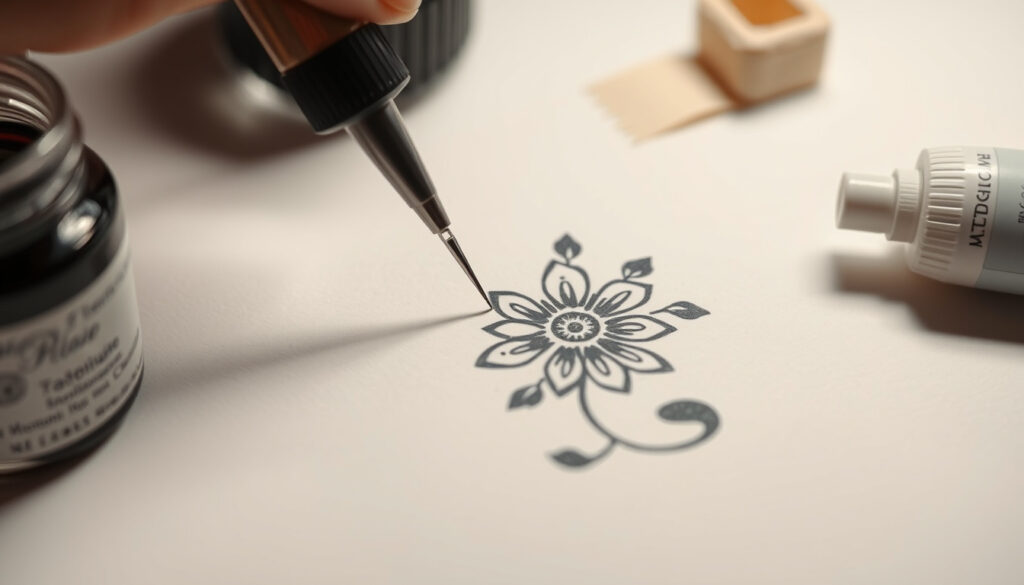
Fine line tattoos are minimalist tattoos built around thin, precise strokes, usually with limited shading, delicate detail, and substantial negative space. The result looks closer to a fine pen drawing than to a traditional bold tattoo. Artists may use a single needle or very small needle groupings, but fine line is a style description rather than a universal technical standard.
The style gained widespread attention around 2015, when Instagram helped popularize micro tattoos and a minimalist aesthetic. Since then, fine line work has become a common choice for first tattoos, subtle personal symbols, and larger pieces that keep a light, airy look.
Practical questions matter just as much as aesthetics. Artist selection, design scale, pricing, pain, healing, fading, and touch-ups all influence whether a fine line tattoo works well over time.
What Is a Fine Line Tattoo?
Fine line is not defined by one machine or needle size. The style depends on thin, precise strokes, restricted shading, and meaningful empty space around the design. One tattoo studio’s explainer describes it as a style in its own right, and the visual effect is subtle and lightweight rather than bold. Common subjects include botanical drawings, tiny animals, faces, celestial symbols, lettering, geometric forms, ornaments, and single-line figures.
Definition
Fine line tattoos use ultra-thin needles, often a single needle, to create delicate, minimalist designs that resemble fine pen drawings.
Pain Level
Generally less painful than bold tattoos because less tissue trauma is involved, but personal pain tolerance and placement matter.
Longevity
With proper aftercare, fine line tattoos can last many years, though fine lines may fade slightly faster than thick lines.
Cost
Small designs commonly fall in the $50–$200 range in many studios, with larger pieces costing significantly more. Artist expertise greatly affects the price.
Key insights
- Fine line tattoos have surged in popularity since 2015, driven by Instagram and minimalist aesthetics.
- The technique requires high precision; artist experience is critical to avoid blowouts and uneven lines.
- Fine line tattoos are permanent but may require touch-ups after 5–10 years.
- Many clients choose fine line for a first tattoo because of the lower pain and subtle appearance.
- Sun protection and gentle moisturizing are especially important to prevent fading.
- Fine line is a style description, not a universal technical standard; artists may use single needles or very small groupings.
- Extremely tiny details can merge or blur as skin ages, so negative space between lines improves longevity.
Fine Line Tattoo at a Glance
| Category | Details |
|---|---|
| Needle Type | Single needle or very fine grouping (e.g., 3RL, 5RL) |
| Typical Size | Small to medium (fits on wrist, forearm, ankle) |
| Healing Time | 2–4 weeks for surface healing; 2–3 months for full settling |
| Touch-Up Interval | Every 5–10 years depending on placement and sun exposure |
| Popular Placements | Forearm, wrist, collarbone, ribcage, ankle |
| Visual Style | Subtle, lightweight, with substantial negative space |
| Common Subjects | Botanical drawings, tiny animals, faces, celestial symbols, lettering, geometric forms, ornaments |
| Longevity Estimate | Roughly 1–10 years before substantial maintenance may be needed |
| More Durable Placements | Upper arm, shoulder, chest, back |
| Less Durable Placements | Fingers, palms, hands, feet |
Fine line tattoos are permanent. The ink sits in the dermis in the same way as any other tattoo, even though the lines are thinner and may soften with time.
Where to Find Fine Line Tattoo Artists Near You
A search for “fine line tattoo artist” together with a city or neighborhood is usually more useful than a general tattoo search, because not every studio offers this style. The checklist below applies to any location.
How to Choose a Fine Line Tattoo Artist
Choose an artist who regularly specializes in fine line, and inspect healed work rather than fresh tattoos only. Photos taken at least 4–8 weeks after the session, ideally several months later, reveal fading, blowout, patchiness, and line retention more honestly than same-day photos.
Healed work tells a different story than fresh ink. When reviewing a portfolio, look for photographs taken at least four to eight weeks after healing, and preferably several months later, to see how the fine lines have settled.
What to Verify Before Booking
Confirm the artist’s location, licensing or health-regulation compliance, portfolio, healed examples, hygiene practices, minimum charge, and touch-up policy before committing.
Fine Line Tattoo London and Edinburgh
“Fine line tattoo London” and “fine line tattoo Edinburgh” are common search phrases. The same selection criteria — specialization, healed portfolios, hygiene standards, and clear pricing — remain the most reliable way to compare candidates.
Best Fine Line Tattoo Design Ideas for Men and Women
The style suits a wide range of subjects. Popular motifs include botanical drawings, tiny animals, faces, celestial symbols, lettering, geometric forms, ornaments, and single-line figures.
Small and Minimal Fine Line Tattoo Ideas
For smaller pieces
- Small flowers, leaves, vines, herbs, or botanical illustrations
- Fine line animals, birds, insects, or pets
- Constellations, moons, stars, and other celestial motifs
- Minimal portraits or single-line faces
- Initials, short dates, or carefully sized words
For larger or paired pieces
- Tiny architectural landmarks, maps, or travel symbols
- Abstract shapes, geometric ornaments, and delicate bands
- Matching tattoos with simple, non-dense symbols
Simple, recognizable pop-culture characters are another source of fine line inspiration; Hello Kitty – The Official Guide to History, Shows and More explores one of the best-known examples of that clean, minimal visual language.
Fine Line Tattoo Sleeve and Forearm Ideas
Larger compositions such as sleeves or forearm pieces often combine abstract shapes, geometric ornaments, delicate bands, architectural landmarks, and single-line figures. Because the style depends on substantial negative space, a fine line sleeve tends to read as lighter and airier than a densely packed traditional sleeve.
Design Limitations to Keep in Mind
Extremely tiny details can merge, blur, or disappear as skin ages. Designs hold up better when they are large enough to preserve gaps between lines, use recognizable silhouettes, and avoid overcrowded micro-detail.
For longevity, avoid shrinking a design until lines nearly touch. Leaving meaningful negative space between strokes gives the ink room to age; if a reference looks crowded at the intended size, enlarging it or simplifying it usually produces better long-term results.
How Much Do Fine Line Tattoos Cost and Do They Hurt Less?
Fine Line Tattoo Pricing Guide
Pricing depends more on the artist’s minimum, design complexity, placement, and appointment time than on the amount of ink. Small tattoos are often still subject to a shop minimum; one industry guide places common minimums around $50–$100 and many small pieces around $50–$200, while an Ireland-focused guide reports approximately €80–€250 for small designs.
Why Fine Line Tattoos Can Cost More
The style demands steady hands, high-quality equipment, and a specialized portfolio. Because precision is the core skill, artists who focus on fine line may charge above a standard shop minimum, and custom design time can add to the total.
Do Fine Line Tattoos Hurt Less Than Bold Tattoos?
Fine line tattoos are often perceived as less painful because they generally use smaller needle groupings and involve less shading. In practice, pain depends primarily on placement, session length, individual sensitivity, and the artist’s technique. Ribs, spine, hands, feet, ankles, knees, and areas close to bone can remain painful despite the delicate style.
Ask whether the consultation is included, whether custom design time is charged, what the minimum price is, whether deposits are refundable, whether a first touch-up is included, and whether the quoted price covers placement changes or revisions.
How Long Do Fine Line Tattoos Last and How to Care for Them
Do Fine Line Tattoos Fade Faster?
Fine line tattoos generally soften sooner than bold tattoos because they contain less pigment and have less visual weight to withstand gradual spreading and fading. A broad estimate is roughly 1–10 years before substantial maintenance may be needed, but placement, ink depth, skin, sun exposure, friction, and aftercare produce major variation.
- More durable: upper arm, shoulder, chest, and back placements with relatively little friction and sun exposure.
- Less durable: fingers, palms, hands, feet, and frequently sun-exposed or high-movement areas.
- Main threats: UV radiation, repeated rubbing, washing, bending, and poorly planned tiny details.
- Expected aging: slight spreading and softening are normal and do not necessarily indicate a failed tattoo.
How to Heal a Fine Line Tattoo Properly
Follow the tattooer’s specific instructions, especially if they use a bandage or second-skin product. General aftercare guidance includes:
- Wash gently with mild, fragrance-free soap after the recommended bandage period.
- Pat dry; do not rub.
- Apply a thin layer of suitable, fragrance-free moisturizer rather than heavy ointment.
- Do not pick flakes or scabs.
- Avoid swimming pools, hot tubs, baths, and prolonged soaking while healing.
- Reduce friction, tight clothing, excessive sweating, and direct sun exposure during healing.
- Once fully healed, use broad-spectrum, water-resistant sunscreen of at least SPF 30; UV exposure can fade tattoo ink.
Fine line tattoos can look dull, cloudy, or lighter during early healing before the skin settles. Losing even a small scab prematurely can remove enough pigment to create a visible gap in a delicate line. Seek medical advice for worsening redness, spreading warmth, severe swelling, pus, fever, or escalating pain rather than normal healing discomfort.
Can Fine Line Tattoos Be Touched Up?
A Barcelona studio notes that a touch-up should be considered only after the tattoo has fully healed, because early patchiness can resolve as the skin settles. Some studios offer a complimentary or discounted correction within a defined period; policies vary.
Touch-ups may be useful when a line healed patchy or disappeared in an isolated spot, the tattoo has visibly faded, a high-friction placement needs refreshing, or natural aging has softened the original design. Typical timing varies: some studio guidance suggests checking high-wear pieces after one or two years, while other sources suggest maintenance around three to five years or a lighter refresh around four to eight years. A touch-up is routine maintenance, not proof that the original tattoo was done badly.
How Did Fine Line Tattoos Become So Popular?
Industry coverage of the style tracks its rise through several clear milestones. Fine line tattoos moved from a niche technique to a mainstream aesthetic over roughly a decade.
- 2010s — Single-needle realism emerges in high-end tattoo shops.
- 2015 — Instagram influencers popularize “micro tattoos” and the fine line aesthetic.
- 2017 — Dedicated fine line studios open in London, New York, and Los Angeles.
- 2020 — Fine line becomes mainstream and appears in fashion magazines.
- 2023–2025 — Demand grows for fine line cover-ups and for combinations with other styles.
What Is Certain and What Is a Myth About Fine Line Tattoos?
| Established | Unclear or commonly misunderstood |
|---|---|
|
|
Common myths and their reality
- Myth: Fine line means painless. Reality: needle style can influence sensation, but placement and personal pain tolerance matter more.
- Myth: Single-needle tattoos never blur. Reality: all tattoo pigment can spread gradually beneath the skin; fine lines may reveal that change sooner.
- Myth: Smaller is always better. Reality: designs that are too small can lose internal detail and develop merged lines; appropriate scale improves longevity.
- Myth: Fine line tattoos disappear within months. Reality: poor placement, weak application, friction, sun, or inadequate aftercare can cause early loss, but well-executed pieces may remain legible for many years.
- Myth: Heavy ointment heals tattoos faster. Reality: general aftercare guidance favors gentle cleaning and a thin moisturizer layer; excessive products can irritate or obstruct the skin.
- Myth: Sunscreen can be applied immediately to a fresh tattoo. Reality: during healing, protect the tattoo from direct sun according to the artist’s instructions; use sunscreen once the skin has fully healed.
- Myth: A touch-up should happen immediately. Reality: wait until the tattoo has fully healed, because early patchiness can resolve on its own.
Why Do Fine Line Tattoos Matter in Modern Body Art?
Fine line tattoos represent a shift from traditional bold lines to delicate, art-focused body marking. They appeal to younger demographics and first-timers who want subtle yet meaningful designs rather than heavy visual statements.
The rise of social media has accelerated demand for photogenic, “dainty” tattoos that look good on camera. From a technical perspective, fine line work requires steady hands and high-quality equipment to avoid blurring, and the precision involved can push the cost per piece above a standard shop minimum.
The style also appears in combination with other approaches, including watercolor effects, micro-realism, and negative space layouts, which keeps the aesthetic evolving within contemporary tattooing.
What Do Artists and Industry Sources Say About Fine Line Tattoos?
“A fine-line tattoo is thinner, subtler, and more delicate than traditional tattoos, often favoring clients with a preference for minimalistic design.”
— beautyandink.org
“Single needle tattoos use one single, ultra-fine needle to create incredibly delicate, detailed, and minimalist designs that resemble fine-line drawings.”
— finelinetattoos.uk
“Fine line tattoos are supposed to be dainty, subtle and soft once healed. Fine line doesn’t mean temporary. It just means delicate.”
Is a Fine Line Tattoo Right for You?
A fine line tattoo suits people who want a subtle, minimal design that reads like a delicate drawing. It is permanent, generally less painful than bolder work, and can last many years with sensible placement and sun protection, though thin lines will soften and may need a touch-up sooner than traditional tattoos. The most important step is choosing an artist who specializes in the style and can show healed examples. For a deeper look at pain, cost, aftercare, and longevity, see the Fine Line Tattoo – Pain, Cost, Aftercare & Longevity Guide.
Frequently Asked Questions About Fine Line Tattoos
Are fine line tattoos more expensive than regular tattoos?
Often yes, because the style requires high precision and experienced artists. Small designs commonly start around $50–$200, and intricate pieces can cost significantly more. Confirmed pricing and shop minimums are worth asking about before booking.
Can I get a fine line tattoo on dark skin?
Yes, but the artist must adjust needle depth and ink color for visibility. Long-term retention across different skin types is not yet well documented, so an artist experienced with diverse skin tones is important.
How do I find a reputable fine line tattoo artist?
Look for artists with a dedicated portfolio of fine line work, read reviews, and check healed photos from months after the session, not only fresh photos. Verify licensing, hygiene practices, and touch-up policy before booking.
Do fine line tattoos blur over time?
Some blurring is natural as skin ages because pigment can spread gradually beneath the skin. High-quality work and proper placement minimize it, and fine lines may expand slightly after ten or more years.
Can fine line tattoos be covered up by a larger tattoo?
Yes. Because fine line tattoos use less ink and have more negative space, they are generally easier to cover than dense traditional tattoos. A cover-up artist can assess the design and propose options.
How long does a fine line tattoo take to heal?
Surface healing usually takes about two to four weeks, while the skin can take two to three months to fully settle. During that time, follow the artist’s aftercare instructions and protect the tattoo from sun and friction.
Are fine line tattoos permanent?
Yes. The ink sits in the dermis just like any other tattoo, so fine line tattoos do not disappear on their own. They may soften and spread slightly over time, but they are permanent.
More related posts
 Cast of Maid Miniseries – Full Guide to Every Actor and Role
 Shira Haas – Facts, Rumors and Career Milestones
 E45 Itch Relief Cream – Relieve Itch from Eczema and Dry Skin
 Thelo Aasgaard – Biography, Stats, Rangers Career and Ethnicity
 Martin Scorsese – Complete Career and Life Guide
 Joe Duttine – Biography, Wife, Family and Coronation Street Role
 Wil Wheaton – Biography, Net Worth, Movies and TV Shows
 Dexter Resurrection Episode Guide – Season 1 Schedule, Cast and Dates