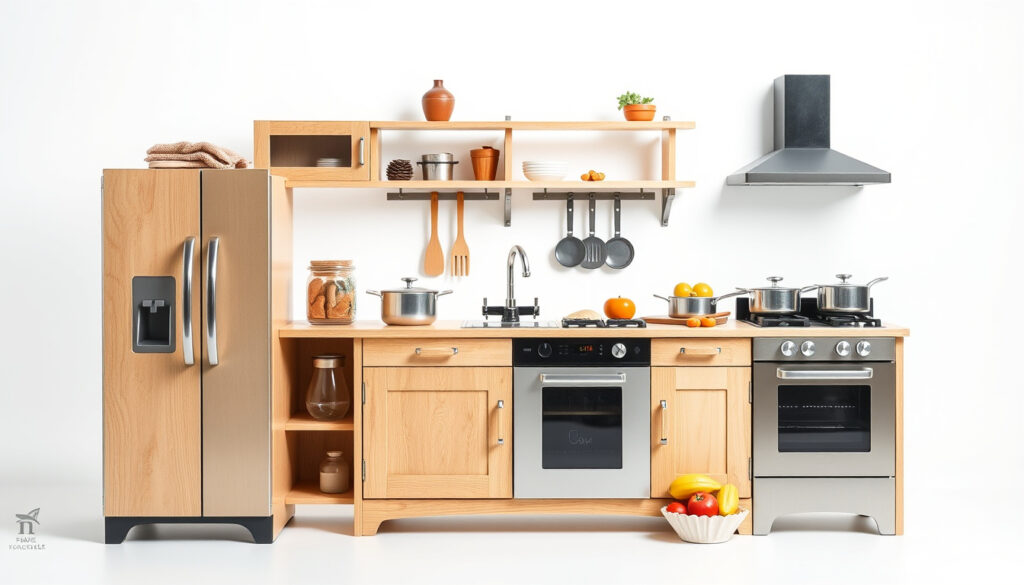
Play Kitchen 2025 – Complete Buying Guide With Top Brands
Play kitchens remain one of the most popular toys for young children, blending fun with developmental benefits. Whether you are looking for a budget-friendly option or a premium wooden centrepiece for the playroom, the 2025 market offers a wide variety of choices. This guide covers the best brands, age recommendations, safety advice, and everything else you need to make an informed decision.
What Are the Best Play Kitchen Brands for 2025?
IKEA Duktig play kitchen – wooden, customisable, excellent value
Little Tikes Super Kitchen – interactive, realistic effects
Little Dutch Wooden Kitchen – high-quality, stylish, durable
Aldi Play Kitchen – limited-time offers, great value
- Play kitchens are more than toys – they support cognitive, social, and motor skill development.
- Wooden kitchens (IKEA, Little Dutch) dominate the premium segment, but plastic options (Little Tikes) offer more interactive features.
- Aldi and Smyths provide affordable, often seasonal options that sell out quickly.
- IKEA’s Duktig kitchen is the #1 most hacked and customised play kitchen, offering unmatched versatility.
- Safety: Most reputable brands meet EN71 standards, but parents should avoid small parts for children under 3.
| Feature | Low-End (e.g., Aldi) | Mid-Range (e.g., IKEA) | Premium (e.g., Little Dutch) |
|---|---|---|---|
| Material | MDF/plastic | Particle board/wood veneer | Solid wood |
| Interactive sounds/lights | Usually no | Optional accessories | Often no (classic look) |
| Age range | 2-5 | 2-6 | 3-7 |
| Price range | £30-£50 | £60-£90 | £100-£200 |
| Assembly difficulty | Easy | Moderate | Moderate to high |
What Age Is Appropriate for a Play Kitchen?
Is a Play Kitchen Safe for a 2-Year-Old?
Most play kitchens from reputable brands are safe for children aged 2 and up, provided they meet EN71 toy safety standards. Wooden models without small removable parts are often recommended for younger toddlers. The IKEA DUKTIG and Little Dutch kitchens are made from solid wood and do not include small electronic components that could pose choking hazards.
What Is the Best Play Kitchen for a 3-Year-Old?
By age 3, children can handle more interactive features. The Step2 Play Kitchen, with its 26-piece accessory set and built-in lights and sounds, is a popular choice for this age group. For families who prefer wooden kitchens, the KidKraft Farm to Table model includes light-up burners and water sounds that appeal to preschoolers.
Can a 4-Year-Old Still Enjoy a Play Kitchen?
Yes. Many children continue to play with toy kitchens until age 7 or older. Premium wooden kitchens such as Little Dutch are designed to last through years of use, and older kids often enjoy more complex role-play scenarios. The longevity of a play kitchen depends largely on the child’s interest in pretend play.
For toddlers under 3, experts recommend kitchens without sounds or lights to avoid overstimulation and encourage open-ended imagination. The Little Dutch kitchen is specifically designed for this purpose.
Which Play Kitchens Have Sounds and Lights?
What Are the Best Toy Kitchens with Realistic Effects?
Models from Step2, Little Tikes, KidKraft, and Theo Klein include lights and sounds. The KidKraft Farm to Table produces water sounds and has light-up burners, while the Theo Klein Miele kitchen mimics real Miele appliance sounds with clicking and sizzling effects.
Do Little Tikes Play Kitchens Include Sounds?
Little Tikes kitchens are known for bubbling and sizzling sound effects, which some parents find noisy. According to a buyer’s guide, these sound features may not suit quieter homes.
Are Battery-Operated Play Kitchens Safe?
Yes, as long as the battery compartment is secured with a screw. Reputable brands follow safety regulations governing electronic toys. Parents should always supervise play and check for loose parts.
Wooden kitchens from IKEA, Little Dutch, Tidlo, and Lidl Playtive intentionally omit electronics to focus on imaginative play. This is often preferred by Montessori-inspired families.
How to Choose the Best Wooden Play Kitchen?
What Is the Best Wooden Play Kitchen for Durability?
Solid wood kitchens like Little Dutch and Tidlo offer the highest durability. The IKEA DUKTIG uses painted wooden panels and is built to withstand years of use, though it is slightly less sturdy than solid wood. For more on choosing durable toys, see our Denim Jacket Guide for insights on long-lasting materials.
Are Wooden Play Kitchens Better Than Plastic?
Wooden kitchens are generally more durable, eco-friendly, and aesthetically pleasing. They are safer for toddlers because they lack small electronic parts that can break off. Plastic kitchens are lighter, easier to clean, and often include more interactive features.
How to Clean a Wooden Play Kitchen?
Wipe with a damp cloth and mild soap. Avoid harsh chemicals or soaking the wood. For stubborn marks, a gentle wood cleaner can be used. Re-oiling or repainting may be necessary after extended use.
When buying a wooden kitchen from online marketplaces, check that it meets UK or EU safety standards (EN71). Counterfeit items may use unsafe paints or unstable construction.
How Have Play Kitchens Evolved Over Time?
- 2000s: Plastic play kitchens dominate (Little Tikes, Step2).
- 2010: IKEA Duktig launched – becomes a modern classic.
- 2015: Wooden kitchen rise (Le Toy Van, Little Dutch) – focus on aesthetics.
- 2020: Pandemic boom – parents invest in home play kitchens.
- 2023: Aldi launches very affordable play kitchens – sell out within days.
- 2025: Trend continues: customisable, sustainable materials, smart features (sounds/apps).
What Is Certain and Uncertain About Play Kitchens?
Established Information
- Play kitchens are safe when purchased from reputable brands that follow EN71 safety standards.
- Wooden kitchens are generally more durable than plastic ones.
- Interactive sounds and lights add engagement but require batteries.
Information That Remains Unclear
- Long-term durability of budget-friendly plastic kitchens (e.g., Aldi) compared to premium brands.
- Whether all expensive wooden kitchens provide better play value than mid-range options.
- The exact age at which children lose interest – varies by child.
Why Are Play Kitchens So Popular?
Play kitchens are one of the top-selling toy categories in the UK, especially for ages 2-6. They encourage role-play, mimicry, and social interaction – aligning with Montessori and Reggio Emilia philosophies. The market has split between aesthetic wooden kitchens (for parent appeal) and interactive plastic kitchens (for child engagement). Seasonal releases from retailers like Aldi and Smyths create scarcity and drive urgent purchases.
What Do Experts Say About Play Kitchens?
“Play kitchens are not just toys; they are tools for learning. Children practice sequencing, vocabulary, and cooperation while pretending to cook.”
— Early Childhood Education specialist
“The IKEA Duktig is the most hackable play kitchen on the market – parents can paint, add accessories, or even attach a fabric curtain.”
— Parenting blog
What’s Next for Play Kitchens?
Expect more eco-friendly materials and plastic-free packaging from top brands. Interactive technology such as voice prompts and app integration may appear in premium models. Limited-edition collaborations, for example between Little Dutch and design studios, could drive collector interest. Parents will increasingly seek play kitchens that match home decor – neutral tones and minimalist designs are on the rise. For more buying advice, explore our TV Wall Bracket Buying Guide.
Common Questions About Play Kitchens
How to clean and maintain a wooden play kitchen?
Wipe with a damp cloth; avoid harsh chemicals. Re-oil or repaint if needed.
Can play kitchens be used outdoors?
Only if explicitly marked for outdoor use. Most are for indoor play to avoid weather damage.
What accessories should I buy separately?
Play food sets, utensils, pots and pans, and extra storage baskets are popular add-ons.
How to assemble a play kitchen quickly?
Lay out all parts, follow step-by-step instructions, use a screwdriver (not power driver) to avoid stripping holes.
Do play kitchens come with play food?
Some sets include basic food items, but many require separate purchase – check product description.
For official UK toy safety information, visit the Gov.uk toy safety page. Independent reviews are available at Which?. The NHS provides guidance on the importance of play. For product recalls, check the EU Safety Gate. Additional safety tips from Safe Kids Worldwide.
More related posts
 Farrah Abraham – Teen Mom Star, Net Worth, and Political Run
 Sophie Khan Levy – Biography, Age, and Career Facts
 Audrey Hobert – Bio, Age, Family, and Debut Album
 Patrick Mahomes – Career, Stats, Contract & Net Worth
 Glynis Johns – Death, Career, and Legacy of Mary Poppins Star
 Michael Ealy – Actor Biography, Filmography, and Net Worth
 Thelo Aasgaard – Biography, Stats, Rangers Career and Ethnicity
 Jennifer Carpenter – Biography, Net Worth, Movies and TV Shows