Elizabeth Bowes-Lyon – Biography, Family, and Hidden Nieces
Elizabeth Bowes-Lyon, later known as Queen Elizabeth the Queen Mother, was one of the most recognised figures in British public life for much of the 20th century. Born Elizabeth Angela Marguerite Bowes-Lyon on 4 August 1900, she died on 30 March 2002 at the age of 101. She was the wife of King George VI and the mother of Queen Elizabeth II.
Her life touched two World Wars, the abdication crisis and decades of social change. The broad outline of her public career is well known, yet the people closest to her — her parents, siblings and the wider Bowes-Lyon family — often receive less attention.
The established details of her family origins, marriage and early life are extensive. The story of two relatives, Nerissa and Katherine Bowes-Lyon, remains only partly documented.
Who were Elizabeth Bowes-Lyon’s parents?
Elizabeth Angela Marguerite Bowes-Lyon
4 August 1900, London, England
Prince Albert, Duke of York (later King George VI) on 26 April 1923
30 March 2002, Royal Lodge, Windsor, aged 101
- Elizabeth Bowes-Lyon was the first Queen Consort of the United Kingdom to have been born a commoner, though of noble birth.
- She played a pivotal role in boosting public morale during World War II, famously refusing to evacuate London.
- Her marriage to George VI transformed her from a Scottish aristocrat into a global symbol of stability.
- She was the youngest daughter and the ninth of ten children in the Bowes-Lyon family.
- The controversy surrounding her nieces Nerissa and Katherine Bowes-Lyon raises questions about the royal family’s handling of disability.
- Her life intersected with both World Wars, the abdication crisis, the dissolution of the British Empire and the transformation of the monarchy.
| Category | Detail |
|---|---|
| Full Name | Elizabeth Angela Marguerite Bowes-Lyon |
| Title | Queen Consort of the United Kingdom and the Dominions of the British Commonwealth (1936–1952) |
| Spouse | King George VI (married 1923–1952) |
| Children | Elizabeth II and Princess Margaret |
| Parents | Claude Bowes-Lyon, 14th Earl of Strathmore and Kinghorne; Cecilia Cavendish-Bentinck |
| Siblings | One of ten children (nine siblings) |
| Reign as Queen Consort | 11 December 1936 – 6 February 1952 |
| Born | 4 August 1900, London, England |
| Died | 30 March 2002, Royal Lodge, Windsor, aged 101 |
Elizabeth’s father, Claude George Bowes-Lyon, later became the 14th Earl of Strathmore and Kinghorne. Her mother, Cecilia Nina Cavendish-Bentinck, is also rendered as Nina Cecilia Bowes-Lyon in some sources. At the time of Elizabeth’s birth, the family was known by the courtesy titles Lord and Lady Glamis.
Biographical summaries from the Royal Household describe Elizabeth as the youngest daughter of that family. When her father inherited the earldom in 1904, she became Lady Elizabeth Bowes-Lyon.
Who was Cecilia Bowes-Lyon, Countess of Strathmore and Kinghorne?
Cecilia Nina Cavendish-Bentinck was Elizabeth’s mother. After her husband inherited the earldom, she became Countess of Strathmore and Kinghorne. The couple had ten children, with Elizabeth as the youngest daughter.
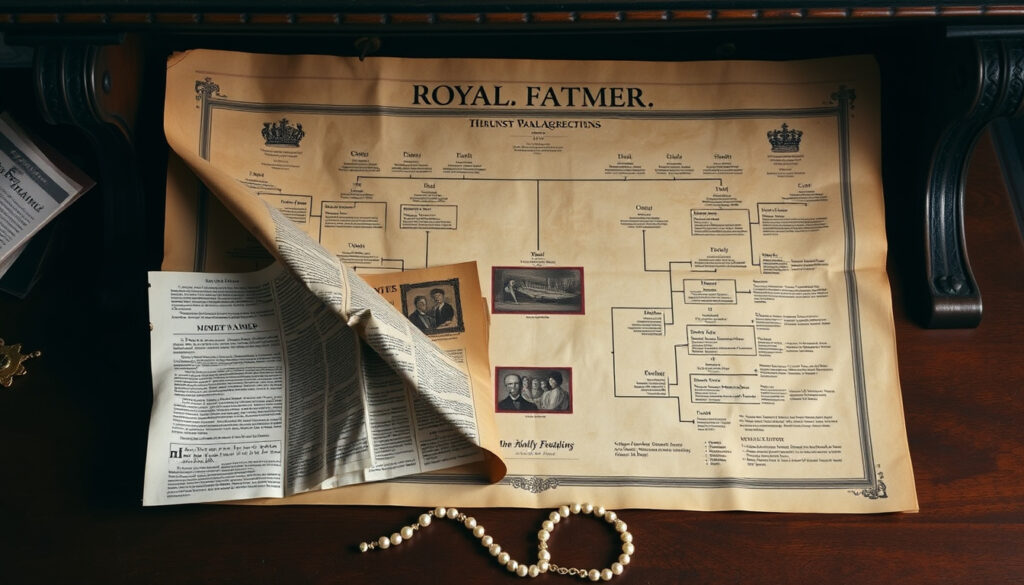
What is Elizabeth Bowes-Lyon’s family tree?
The most clearly documented branches of the family tree are Elizabeth’s parents, her nine siblings, her husband George VI and their daughters, Elizabeth and Margaret. A fuller generation-by-generation ancestor chart for the Bowes-Lyon family is not readily available in the standard public sources.
Who were Elizabeth Bowes-Lyon’s siblings?
Sources agree that Elizabeth had nine siblings, making her one of ten children and the youngest daughter. The size of the family is consistent across biographical accounts and peerage references.
The Bowes-Lyon household contained ten children, with Elizabeth as the ninth child and youngest daughter. The historical record concentrates on Elizabeth, so most of her siblings appear only briefly in published sources.
Who was John Bowes-Lyon?
John Bowes-Lyon was one of Elizabeth’s siblings, named in family summaries alongside his sister Violet Bowes-Lyon. Individual biographical portraits of John are not common in standard reference works.
Who was Elizabeth Bowes-Lyon’s husband?
Elizabeth Bowes-Lyon married Prince Albert, Duke of York, on 26 April 1923. The date is recorded consistently in biographical reference works. In December 1936, the abdication crisis changed the royal succession: Albert became King George VI, and Elizabeth became Queen Consort.
Reference works such as Britannica identify her as his wife and queen consort from 1936 to 1952. The marriage ended with George VI’s death on 6 February 1952, after which she was known as Queen Elizabeth The Queen Mother.
At the wedding on 26 April 1923, Elizabeth’s husband was Prince Albert, Duke of York. It was only after the abdication crisis of 1936 that he became King George VI and she became Queen Consort.
What was Elizabeth Bowes-Lyon like as a young woman?
Elizabeth was born on 4 August 1900 at Belgrave Mansions in London. At the time, her father was known as Lord Glamis and her mother as Lady Glamis. When her father inherited the earldom in 1904, she became Lady Elizabeth Bowes-Lyon.
The official Glamis Castle account describes her as the youngest daughter of Lord and Lady Glamis. Her early life is recorded in family biographies and in the castle’s own archives.
What was Elizabeth Bowes-Lyon’s full name?
Her full name was Elizabeth Angela Marguerite Bowes-Lyon. The full form is recorded consistently in official biographical summaries and reference works. Some older sources spell the family surname as Bowes Lyon, without a hyphen.
What happened to Nerissa and Katherine Bowes-Lyon?
Nerissa Katherine Bowes-Lyon and Katherine Bowes-Lyon belonged to the broader Bowes-Lyon family. Many accounts describe them as Elizabeth’s nieces, and their institutionalisation is the central fact on which sources agree.
Beyond that, the picture is less complete. The family’s knowledge and intentions are debated, and primary sources such as private letters and hospital records have not been made fully public.
Who was Katherine Bowes-Lyon?
Katherine Bowes-Lyon is usually mentioned alongside her sister Nerissa. Publicly available sources do not provide a full biography of Katherine or a detailed explanation of her relationship to Elizabeth.
Institutionalisation is confirmed, but the family’s knowledge and intentions are debated. Whether Elizabeth Bowes-Lyon visited Nerissa and Katherine, and how much the royal household knew, remains unclear.
What were the key dates in Elizabeth Bowes-Lyon’s life?
- – Born on 4 August at Belgrave Mansions, London.
- – Father inherits earldom; she becomes Lady Elizabeth Bowes-Lyon.
- – Marries Prince Albert, Duke of York (future George VI).
- – Birth of daughter Elizabeth (future Queen Elizabeth II).
- – Birth of daughter Margaret.
- – Abdication Crisis; Albert becomes King George VI, Elizabeth becomes Queen Consort.
- – – World War II; remains in London, visits bomb sites.
- – Death of George VI; becomes Queen Mother.
- – Dies on 30 March at age 101.
These dates are recorded in the Royal Household’s official biography and in standard reference works.
What is certain about Elizabeth Bowes-Lyon’s life, and what remains unclear?
Most of Elizabeth Bowes-Lyon’s biography rests on solid documentation. One area, however, continues to invite uncertainty.
| Established information | Information that remains unclear |
|---|---|
| Parents and siblings are well documented in peerage records and biographies. | Details about the family’s knowledge of the institutionalisation of Nerissa and Katherine are debated. |
| The marriage to George VI and her role as Queen Consort from 1936 to 1952 are confirmed by official records. | Whether Elizabeth Bowes-Lyon visited Nerissa and Katherine is not established. |
| Her early childhood is recorded in family biographies and Glamis Castle archives. | The extent of any effort to shield the two women from public view remains unclear. |
Why does Elizabeth Bowes-Lyon’s story still matter?
Elizabeth Bowes-Lyon’s life intersected with both World Wars, the abdication crisis, the dissolution of the British Empire and the transformation of the monarchy. She remained a popular public figure through decades of change, and her carefully crafted persona as Queen Mother helped steady the institution during difficult transitions.
Biographical writing on the 20th century continues to interest readers, whether the subject is a monarch or a president such as Richard Nixon – Biography, Watergate Scandal and Legacy. Her long life offers a single thread through some of the century’s most dramatic shifts.
The story of her nieces also touches on wider societal issues of disability stigma and institutionalisation in early 20th-century Britain, and it continues to prompt discussion about how the royal family handled disability in private.
Where do accounts of Elizabeth Bowes-Lyon’s life come from?
The biographical record draws on official royal summaries, institutional histories and peerage references.
She was born the Honourable Elizabeth Angela Marguerite Bowes-Lyon… When her father inherited his Earldom in 1904, she became Lady Elizabeth Bowes-Lyon.
The Royal Household (royal.uk)
Lady Elizabeth Bowes-Lyon was born on 4th August 1900 in London, a daughter of Lord and Lady Glamis.
On 4th August 1900 Lady Elizabeth Angela Marguerite Bowes Lyon, the youngest daughter of Lord and Lady Glamis was born.
Glamis Castle Official Site
What is Elizabeth Bowes-Lyon remembered for?
Elizabeth Bowes-Lyon is remembered for her long public life, her refusal to leave London during World War II and the stability she brought to the monarchy after the abdication crisis. She was the mother of Queen Elizabeth II and lived to the age of 101. Biographies and television portrayals keep her in public memory, and the same curiosity that sustains interest in cultural biographies such as Gustav Klimt – Biography Paintings Death and Complete Guide continues to draw readers to her story.
What else do people ask about Elizabeth Bowes-Lyon?
How many children did Elizabeth Bowes-Lyon have?
Two daughters: Elizabeth (later Queen Elizabeth II) and Princess Margaret.
Where is Elizabeth Bowes-Lyon buried?
In St George’s Chapel, Windsor Castle, alongside her husband King George VI.
Did Elizabeth Bowes-Lyon have any other titles?
Yes, after her husband’s death she was known as Queen Elizabeth The Queen Mother.
When did Elizabeth Bowes-Lyon become Queen Consort?
On 11 December 1936, when her husband became King George VI after the abdication crisis.
How old was Elizabeth Bowes-Lyon when she died?
She was 101 when she died on 30 March 2002.
Where was Elizabeth Bowes-Lyon born?
She was born on 4 August 1900 in London, at Belgrave Mansions.
More related posts
 Ai Chatting – Best Free Apps and Online Chat Tools in 2025
 Holliday Grainger – Biography, Movies, TV Shows, Career
 Desmond Doss – The Unarmed Hero of Hacksaw Ridge
 Ethan Slater – Biography, Ariana Grande Split and Career
 Down Jacket – UK Brands, Clearance, and Buying Tips
 Henry Pollock – Age, Height, Salary & Family Profile
 Tino Livramento – Profile, Injury, Family and Career Facts
 Paula Patton – Biography, Net Worth and Personal Life