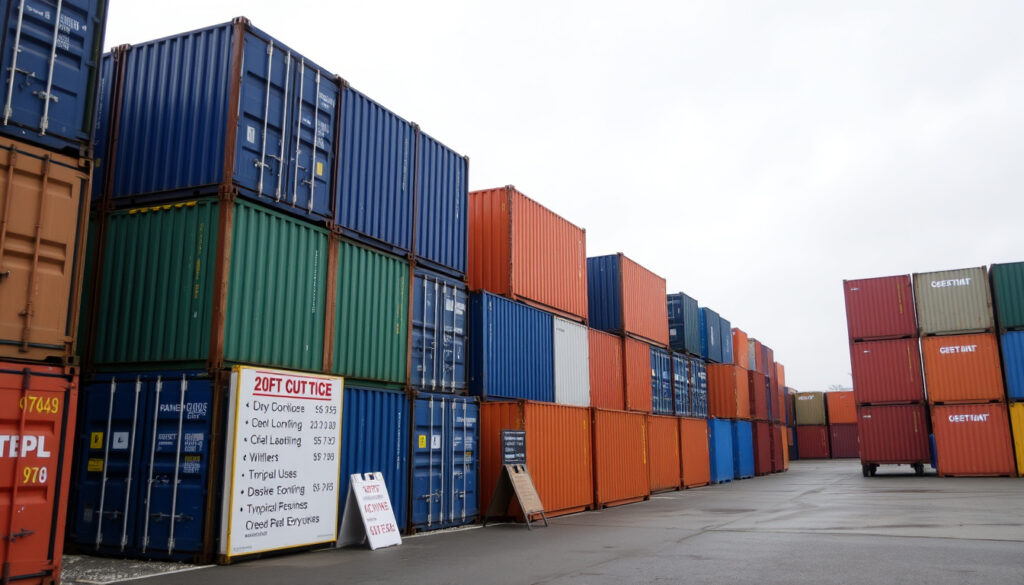
Shipping Containers – UK Sizes, Costs and Uses Explained
Shipping containers have evolved far beyond their original role in global trade. Today, they are just as likely to be found on a construction site, in a back garden, or converted into a mobile office as they are stacked on a cargo ship. For anyone in the UK looking to buy or hire one, understanding the different sizes, realistic costs, and potential uses is essential before making a commitment.
Prices vary significantly based on condition, location, and supplier. This guide covers the standard dimensions, current UK market pricing for both purchase and hire, common conversion projects, and how container tracking works for major shipping lines like Maersk, MSC, and COSCO.
What Are the Standard Shipping Container Sizes and Dimensions?
8ft, 10ft, 20ft, 40ft (standard & high cube)
£1,000–£3,500 depending on size and condition
Storage, Office, Workshop, Home, Classroom
Hire from ~£7.50/week; buy from £1,000
- Most UK buyers opt for used 20ft containers due to a balance of cost and space.
- Shipping container office conversions cost roughly £5,000–£15,000 including insulation and fittings.
- Container tracking is possible via carrier websites using the container number or booking reference.
- The shipping forecast is a marine weather broadcast, not a logistics tracking tool.
- Used containers are available in cargo-worthy (CW) or wind/water-tight (WWT) conditions.
- CSC plates certify a container for intermodal transport and are required for shipping use.
- Container prices can fluctuate with global steel costs and shipping demand.
| Fact | Detail |
|---|---|
| Standard length | 20ft (6.06m) or 40ft (12.19m) |
| Standard width | 8ft (2.44m) external, 7.7ft (2.35m) internal |
| Standard height (standard) | 8.5ft (2.59m) external |
| Standard height (high cube) | 9.5ft (2.90m) external |
| Maximum gross weight | 30,480 kg for 20ft; 32,500 kg for 40ft |
| Typical used container condition | Cargo worthy (CW) or wind/water tight (WWT) |
| CSC plate requirement | Valid safety approval plate for intermodal transport |
| Lifespan | 25+ years with maintenance; 10–15 years if used as storage |
| Top shipping lines | Maersk, MSC, COSCO, Hapag-Lloyd, ONE |
Shipping containers in the UK are sold and hired in common sizes including 8ft, 10ft, 20ft, 30ft, and 40ft, with the 20ft and 40ft units being the most common for both storage and shipping use. The dimensions follow ISO standards. For example, an 8ft container measures approximately 2.49m long, 2.00m wide, and 2.00m high, as listed by THS Containers. A standard 20ft container has external dimensions of 6.06m x 2.44m x 2.59m, while a 40ft unit measures 12.19m x 2.44m x 2.59m.
What are the dimensions of a 20ft shipping container?
A 20ft container is the most popular size for general use. According to Boxit, the approximate tare weight is 2,200 kg. The internal capacity provides roughly 28–33 m³ of space, based on figures from Moving Merchant.
How tall is a high cube container?
High cube containers stand about 9.5ft (2.90m) tall externally, offering significantly more headroom than standard units. This makes them a preferred choice for office conversions or any use requiring additional vertical space. A 40ft high cube container offers around 76 m³ of internal capacity.
Do containers come in 8ft or 10ft sizes?
Yes, smaller sizes like 8ft and 10ft are available and are often used when space is limited. The 10ft size offers approximately 14–15 m³ of storage, while 8ft units are more compact and commonly found in urban settings.
How Much Does a Shipping Container Cost to Buy or Hire in the UK?
Costs for shipping containers in the UK vary widely depending on size, condition (new, used, or one-trip), and supplier location. Understanding the baseline prices can help buyers and renters budget accurately.
What is the average price of a used shipping container?
Moving Merchant’s cost guide provides a broad UK market range: a 10ft used container runs roughly £700–£1,800, a 20ft used from £1,200–£2,500, and a 40ft used from £1,800–£3,800. CS Containers offers a used 20ft Grade A starting at £1,550 + VAT, and a used 40ft from £1,450.
How much does a new shipping container cost?
New or one-trip containers are more expensive. CS Containers lists a new 20ft from £1,850 and a new 40ft from £2,950. Buy A Shipping Container advertises a 20ft x 8ft unit at £2,375.00 + VAT. Moving Merchant’s estimates place new/one-trip units between about £2,000–£8,000 depending on size and specifications.
What are weekly hire rates for containers?
Hire rates offer flexibility for short-term needs. THS says hire starts from £7.50 + VAT per week with a minimum period of four weeks. Titan Containers advertises a 6ft hire from £1.50/day, a 10ft from £1.75/day, and a 20ft from £2.00/day. Billie Box lists 20ft hire at £10/week and 40ft hire at £15/week. Boxit indicates 20ft hire starts from £12.54 per container per week, with pricing varying by quantity and location.
Cleveland Containers notes that hire rates may only apply within 50 miles of their depots and can increase outside that radius. Lendon Containers states that London container hire starts from £12 per week for a standard 20ft storage container, highlighting that regional pricing can differ.
What Can You Use a Shipping Container For?
The robust construction of shipping containers makes them suitable for a surprising range of applications beyond simple cargo transport. The UK market has seen strong demand for converted and repurposed units.
Can a shipping container be used as an office?
Yes, this is one of the most common conversions. CS Containers explicitly advertises a 20ft storage container from £14/week and an office container from £49/week, indicating that office conversions are a mainstream product. Insite Portable Accommodation offers foam-lined storage units to reduce condensation, which is a key requirement for comfortable office spaces.
Is it legal to live in a shipping container home?
Living in a shipping container is possible, but it often requires planning permission from the local council. Factors like location, size, and how the container is integrated into a permanent structure all influence the legal status. The container itself is structurally sound, but insulation, plumbing, and electrical work must meet building regulations.
Can containers be used for secure storage?
Absolutely. The inherent strength and lockable doors of shipping containers make them ideal for secure storage. Many UK suppliers, including CS Containers, THS Containers, and S Jones Containers, provide units described as wind and watertight, which is sufficient for most storage needs.
Industry estimates suggest that converting a shipping container into a basic office or workshop typically costs between £5,000 and £15,000, covering insulation, flooring, electrical wiring, and windows. Specialist companies offer full conversion services.
How Do I Track a Shipping Container and Which Companies Move Them?
Tracking a container once it is in transit is a key concern for businesses involved in international trade. The process generally relies on the container number or a booking reference provided by the shipping line.
How to track a Maersk container?
Maersk provides a tracking portal on its website. You typically need the container number or the booking reference from your shipment documentation to access real-time location data. The Maersk tracking page is the official source for this information.
What is the MSC container tracking procedure?
Similar to Maersk, MSC offers a global tracking service. You can track MSC containers worldwide by entering the container number or bill of lading number on their official website.
How to track COSCO shipping containers?
The COSCO Shipping Lines website provides tracking information for its containers and vessels. The required information is generally the container number or the shipment reference number.
Where can I see live shipping movements at Southampton?
The Southampton Vessel Traffic Services (VTS) website publishes live shipping movements for the port of Southampton. This is a public authority resource, not a container-level tracking tool, but it provides visibility on vessel arrivals and departures.
The search results did not provide a single universal tracking service for all shipping containers. Live tracking typically requires a specific container number or booking reference from the carrier. Marine weather forecasts, like the BBC Shipping Forecast, are separate from logistics tracking.
What Are the Best Practices for Buying vs Hiring a Shipping Container?
Deciding whether to buy or hire a container depends on the duration of use, budget, and specific needs. Both options have distinct advantages.
Should I buy or hire a shipping container?
Hiring is often the best choice for short-term projects, typically lasting less than a year, as it avoids a large upfront capital outlay and includes maintenance in some cases. Buying is more cost-effective for long-term storage or permanent conversion projects, as the container becomes an asset.
What condition should a used container be in?
Used containers are generally sold as either cargo worthy (CW) or wind and water tight (WWT). A cargo-worthy container is structurally sound enough for shipping, while a WWT container may have minor cosmetic issues but is still suitable for secure storage on land.
How do I inspect a shipping container before purchase?
Look for significant rust, especially on the roof and floor. Check for dents that might compromise structural integrity, ensure door seals are intact, and inspect the floor for rot or soft spots. The CSC plate date indicates when the container was last certified for international transport.
Shipping Container Timeline: From Manufacturing to End Use
- 1956 – Modern intermodal container invented by Malcolm McLean.
- 1968 – ISO standards established for container dimensions.
- 1980s–2000s – Rapid growth of containerization; emergence of mega-ships.
- 2010s – Container repurposing for housing, offices, and pop-up shops.
- 2024–2025 – Record high container prices post-pandemic; increased interest in second-hand containers for storage.
What’s Clear and What’s Not About Shipping Containers
| Established Information | Information That Remains Unclear |
|---|---|
| Standard dimensions are defined by ISO 668. | Exact live pricing fluctuates with demand and steel costs. |
| Used containers are widely available in the UK. | True availability in remote areas may require longer delivery lead times. |
| Container tracking works via carrier portals with a valid container number. | Long-term durability in specific climates depends on maintenance. |
| Costs vary by size, condition, and location. | Shipping forecast accuracy is probabilistic, not guaranteed. |
Why Are Shipping Containers So Versatile Beyond Transport?
Shipping containers are built to withstand harsh sea conditions, including salt spray, high winds, and heavy stacking loads. This inherent ruggedness makes them ideal for rugged storage, modular construction, and mobile site units. The UK market has seen a particular surge in demand for container offices and classrooms.
Container prices are directly linked to global trade dynamics. When shipping demand weakens, such as during the post-pandemic normalization period, the supply of surplus containers increases, pushing prices down. Conversely, when supply chains tighten, costs rise. Interest in shipping forecasts and port movements suggests a crossover audience that tracks both the physical container and the industry context.
Major shipping lines like Maersk, MSC, and COSCO provide real-time tracking for containers in their networks. Platforms such as MarineTraffic show ship locations, and port authorities like Southampton VTS make vessel movements publicly available.
Where Can I Find Authoritative Information on Containers and Tracking?
Several official sources provide reliable information for different aspects of the shipping container industry.
“Defines series 1 freight containers — classification, dimensions and ratings.”
ISO 668 standard
“Track your container by entering container number or booking number.”
Maersk Tracking Portal
“Live shipping movements for Southampton port.”
Southampton Vessel Traffic Services
How Can I Stay Updated on Shipping Container Trends?
The shipping container market remains dynamic, with prices and availability influenced by global events. Staying informed through industry news and official port movement websites can help you make timely decisions. For example, new ISO amendments for reefer containers are expected in July 2025, and a potential price drop may occur in Q3 2025 as new container production ramps up in China.
You might also find our guide on Bar Stools – How to Pick the Right Height for Your Home useful for furnishing a container office, or our Stool Bar Buyer’s Guide for Kitchen Islands and Leather Seating for setting up a container canteen.
Frequently Asked Questions
Can I get a shipping container delivered to my address?
Yes, most UK suppliers offer delivery nationwide. Extra charges may apply for remote locations or difficult access.
Do I need planning permission for a shipping container on my property?
It depends on size, location, and use. Storage containers often require a permitted development check; office/home conversions likely need formal planning permission.
How do I know if a used container is worth buying?
Look for rust, dents, door seals, and floor condition. Check the CSC plate date. Cargo-worthy (CW) containers are in better structural shape.
What is the difference between a container ship and a container?
A container ship is the vessel that carries hundreds of containers. A shipping container is the individual metal box used for cargo.
Are shipping containers safe for storage of valuables?
Yes, they are robust and lockable. Many are used for secure storage. Adding a padlock or container alarm increases security.
What is the lifespan of a shipping container?
With regular maintenance, a shipping container can last over 25 years. When used for stationary storage on land, their lifespan may be 10–15 years depending on environmental conditions.
Are shipping containers weatherproof?
Wind and watertight (WWT) containers are designed to keep out rain and wind, making them suitable for storage. Cargo-worthy (CW) containers are built to withstand sea conditions.
How often do shipping container prices change?
Prices can change quarterly or even monthly, as they are tied to the global steel market, shipping demand, and availability of used units.
What does the shipping forecast include?
The shipping forecast is a marine weather broadcast issued by the Met Office, providing wind, weather, and visibility information for coastal and offshore areas around the UK.
Can I hire a container long-term?
Yes, many suppliers offer long-term contracts with reduced weekly rates after an initial minimum period, such as four weeks.
More related posts
 Diego Luna – Actor and Soccer Star Share the Same Name
 Leighton Meester – Biography, Career, Family and Net Worth
 Jack O’Connell – Biography, Movies, Height and Awards
 Lauren Holly – Age, Movies, Net Worth, and Marriages in 2025
 Lucy Beaumont – Biography, Age, Husband and More
 Skin Tag Removal Near Me – NHS, Private Costs and UK Options
 Support Mental Health – Complete Guide to UK Services and Helplines
 Catherine De Medici – The Serpent Queen Biography and Facts