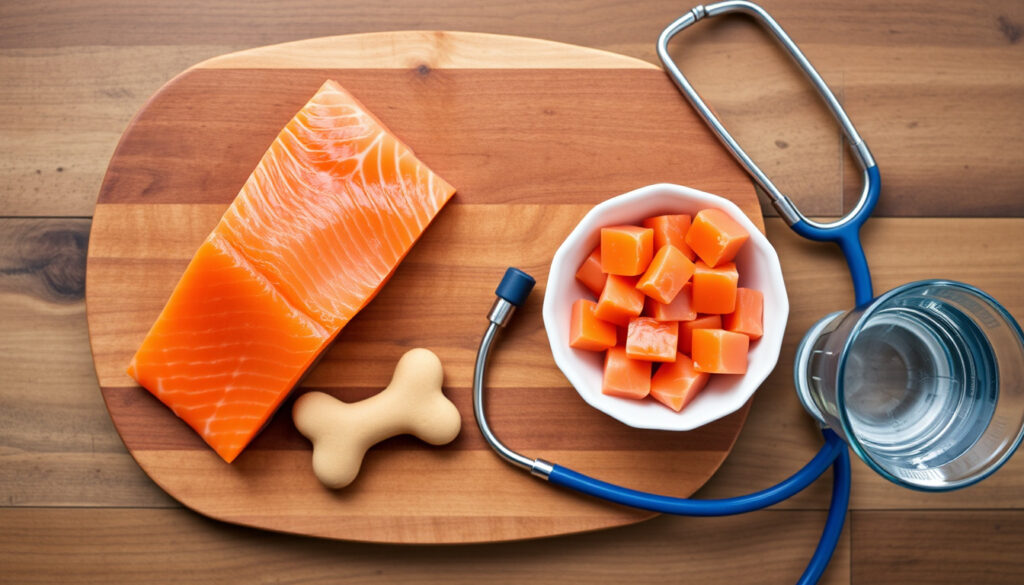
Can Dogs Eat Salmon – Vet-Approved Safety Guide
Salmon is a popular fish in many households, and it often appears in premium dog foods. But when a dog owner prepares salmon at home, the question is not just about nutrition — it is about safety. The answer depends entirely on how the salmon is prepared and served.
Fully cooked, plain, boneless salmon can be a healthy occasional treat for dogs. Raw or undercooked salmon, on the other hand, carries a serious risk of salmon poisoning disease, a condition that can be fatal without treatment. Understanding the difference is essential for every dog owner.
This guide covers the safety of different salmon forms, the risks of raw fish, and the best ways to prepare salmon for your dog, based on veterinary guidance and expert sources.
Can Dogs Eat Salmon? The Short Answer
Yes, dogs can eat salmon, but only under specific conditions. The salmon must be fully cooked, plain, and boneless. Any other form — raw, smoked, seasoned, or undercooked — introduces risks that range from digestive upset to life-threatening illness.
Salmon for Dogs: Quick Reference
- Safe ✓ (cooked, plain, boneless)
- Danger ✗ (raw, smoked, seasoned)
- Risk: Salmon poisoning from raw fish
- Best: Baked or poached, no additives
Key Insights for Feeding Salmon to Dogs
- Salmon is rich in omega-3 fatty acids which support coat and joint health.
- Raw salmon carries a real risk of Neorickettsia helminthoeca, causing salmon poisoning.
- Smoked salmon is high in salt and unsafe for dogs.
- Plain cooked salmon (no oil, salt, lemon, or spices) is the only safe form.
- Bones must always be removed before serving to prevent choking.
- Salmon should be an occasional treat, not a daily meal replacement.
- Always consult your vet before introducing new foods to your dog’s diet.
| Salmon Form | Safety for Dogs | Key Consideration |
|---|---|---|
| Cooked salmon | Safe in moderation | Must be plain and boneless |
| Raw salmon | Unsafe | Parasite risk (salmon poisoning) |
| Salmon skin (cooked crispy) | Safe if cooked | Raw skin carries same risk as raw salmon |
| Smoked salmon | Unsafe | High sodium content |
| Canned salmon (water packed) | Safe | No added salt, drain and rinse first |
| Salmon with lemon | Unsafe | Lemon can be toxic to dogs in quantity |
| Salmon dog food | Safe for daily feeding | Commercially balanced for nutrition |
| Undercooked salmon | Unsafe | Same risk as raw salmon |
Why Raw Salmon Is Dangerous for Dogs
Raw salmon poses a genuine threat to dogs, and it is not simply a matter of food poisoning. The danger comes from a specific parasite and bacterium that together cause salmon poisoning disease, a serious and potentially fatal infection.
What Makes Raw Salmon Unsafe?
Raw salmon can carry the fluke Nanophyetus salmincola and the bacterium Neorickettsia helminthoeca. According to VCA Hospitals, these organisms work together to cause salmon poisoning disease in dogs. The condition is not caused by bacterial spoilage — it is a genuine infection that requires veterinary treatment.
Spot & Tango notes that freezing, curing, or smoking salmon does not reliably eliminate the parasite. Only thorough cooking destroys the threat.
Salmon poisoning disease is a serious infection, not simple food poisoning. Without treatment, it can be fatal. VCA Hospitals states that most untreated dogs die within two weeks of symptom onset. The Humane Society describes a very high fatality rate if the disease is left untreated.
Symptoms of Salmon Poisoning in Dogs
Signs of salmon poisoning disease usually appear about one week after a dog eats infected raw salmon. According to VCA Hospitals and the Humane Society, symptoms include vomiting, diarrhea, fever, weakness, loss of appetite, enlarged lymph nodes, and weight loss. Any dog that has consumed raw salmon and develops these signs needs immediate veterinary attention.
What to Do If a Dog Eats Raw Salmon
If a dog eats raw salmon, PetMD and VCA Hospitals both advise contacting a veterinarian immediately. Early diagnosis and treatment greatly improve the chances of survival. Do not wait for symptoms to appear before seeking help.
One source notes a potentially lower risk with Atlantic salmon from reputable suppliers in the UK, particularly in raw pet food contexts. However, the broader veterinary guidance from VCA, PetMD, and other experts is to avoid raw fish altogether. Raw or undercooked salmon can still pose serious parasite and bacterial risks regardless of the source.
How to Cook Salmon for Dogs Safely
Cooking salmon for dogs is straightforward, but the rules differ from human preparation. Dogs cannot tolerate the seasonings, fats, and additives that people commonly use.
Safe Cooking Methods
Baking, boiling, broiling, or grilling salmon until fully cooked is considered safe for dogs. Spot & Tango and PetMD both confirm that thorough cooking destroys the parasite responsible for salmon poisoning disease. The internal temperature should reach 145°F (63°C) for safety.
What to Avoid Adding
Salmon must be served without salt, garlic, onion, butter, sauces, marinades, or spices. These ingredients can be harmful to dogs. Garlic and onion, in particular, are toxic and can damage red blood cells. Even small amounts of seasoning can cause digestive upset.
Can Dogs Eat Salmon Skin?
Yes, but only if the skin is cooked until crispy. Raw or undercooked salmon skin carries the same parasite risk as raw salmon. If the skin is fully cooked and free of seasoning, it is generally safe in small amounts. However, the high fat content means it should only be given occasionally.
Can Dogs Eat Salmon with Lemon?
Lemon is not safe for dogs in significant amounts. The citric acid can cause digestive irritation, and the psoralen compounds found in citrus can be toxic. Salmon with lemon should be avoided entirely. Stick to plain, unseasoned fish.
The best way to serve salmon to a dog is to bake or poach a plain fillet, remove all bones, break it into small pieces, and offer it as a treat or food topper. Keep portions small — a few tablespoons for a medium-sized dog is usually enough.
Can Dogs Eat Canned, Smoked, or Salmon Dog Food?
Not all salmon products are created equal. The form and preparation method determine whether a salmon product is safe for canine consumption.
Canned Salmon
Canned salmon can be safe if it is packed in water with no added salt or oil. Drain and rinse the fish before serving to reduce sodium content further. Avoid salmon packed in oil or brine, as these additives are not suitable for dogs.
Smoked Salmon
Smoked salmon is not safe for dogs. The smoking process does not reliably eliminate parasites, and the product is typically very high in salt. According to Spot & Tango, smoking does not eliminate the risk of salmon poisoning disease. The high sodium content can also lead to salt toxicity in dogs.
Salmon Dog Food
Commercially prepared salmon dog food is an entirely different category. These products are formulated to meet canine nutritional requirements and are safe for daily feeding. Unlike plain cooked salmon, which should be an occasional treat, salmon-based dog food provides balanced nutrition. Many premium brands use salmon as a primary protein source because of its omega-3 fatty acid content.
What to Watch For After Feeding Salmon
Timing matters when monitoring a dog after it eats salmon. Different reactions occur on different schedules, depending on whether the salmon was raw, spoiled, or simply too rich.
- 0–2 hours: Possible vomiting if too much was eaten or if the salmon was raw.
- 6–12 hours: Diarrhea or lethargy from spoiled or improperly stored salmon.
- 1–7 days: Onset of salmon poisoning disease symptoms including fever, vomiting, diarrhea, and swollen lymph nodes.
- 14 days: Without treatment, salmon poisoning disease can be fatal within this window.
What Is Proven and What Remains Uncertain About Salmon for Dogs
The available evidence separates clear facts from areas where individual variation and limited data leave room for uncertainty.
| Established Information | Information That Remains Unclear |
|---|---|
| Raw salmon is not safe for dogs due to the risk of salmon poisoning disease caused by Neorickettsia helminthoeca. | The exact amount of cooked salmon that counts as “too much” varies depending on the dog’s size, weight, and overall health. |
| Salmon poisoning disease is a documented, serious condition that can be fatal without veterinary treatment. | Smoked salmon is generally considered unsafe, but a tiny nibble may not cause visible harm in every case. However, the risk remains. |
| Properly cooked, boneless, unseasoned salmon is not harmful when fed in moderation. | Individual dogs may have allergies or sensitivities to fish protein, which cannot be predicted in advance. |
Why This Matters: Understanding the Bigger Picture
Salmon is a popular protein in premium dog foods because of its nutritional profile. It provides omega-3 fatty acids that support skin, coat, and joint health. However, home feeding mistakes often arise from confusion between human-grade preparation and canine-safe preparation.
The primary risk is not the fish itself but how it is prepared or preserved. Parasites in raw salmon and high sodium in smoked salmon are the main dangers. When owners understand this distinction, they can safely incorporate salmon into their dog’s diet as an occasional treat.
For those interested in exploring other healthy food options, you may also want to read about Are Chia Seeds Good For You – Benefits, Risks & Daily Intake as a complementary topic in canine and human nutrition.
What Trusted Sources Say About Dogs and Salmon
Veterinary experts and pet nutrition organizations have published clear guidance on this topic. Their conclusions are consistent across multiple sources.
“Raw salmon is not safe for dogs. It can carry parasites, such as Neorickettsia helminthoeca, which causes salmon poisoning.”
— AKC Expert Advice, Dr. Smith
“Yes – dogs can absolutely eat salmon. As a fish protein, salmon is rich in a wide range of nutrients.”
— Fish4Dogs Blog
“Yes, dogs can eat salmon safely when it is fully cooked, plain, and served in moderation.”
— Tuggs UK Vet-Backed Guide
Additional detailed information on safe fish preparation can be found in this guide on How to Cook Chicken Breast – 4 Methods for Perfect Juicy Results, which offers techniques that can be adapted for salmon as well.
What Is the Bottom Line for Dog Owners?
Cooked, plain, boneless salmon is generally safe for dogs in moderation. Raw or undercooked salmon must be avoided entirely due to the risk of salmon poisoning disease, a serious and potentially fatal condition. When preparing salmon at home, skip the seasoning, remove all bones, and keep portions small. For daily feeding, choose a commercially balanced salmon dog food instead of plain fish. Always consult a veterinarian if you have concerns about your dog’s diet or if your dog has eaten raw salmon.
Frequently Asked Questions
Can dogs eat salmon every day?
No. While salmon is healthy, it should be given as an occasional treat, not a daily meal, to avoid nutritional imbalances or excess fat.
Can dogs eat salmon dog food every day?
Yes. Commercially prepared salmon dog food is balanced for daily feeding, unlike plain cooked salmon.
Is salmon poisoning in dogs fatal?
Yes, if left untreated. Salmon poisoning disease can be fatal within 14 days. Veterinary treatment is highly effective if caught early.
Can dogs eat salmon skin?
Yes, but only if it is cooked until crispy. Raw or undercooked skin poses the same parasite risk as raw salmon.
Can dogs eat canned salmon?
Yes, if it is packed in water with no added salt or oil. Drain and rinse before serving.
What should I do if my dog ate raw salmon?
Contact a veterinarian immediately. Early diagnosis and treatment greatly improve the chances of recovery.
Can dogs eat smoked salmon?
No. Smoked salmon is high in salt and the smoking process does not reliably eliminate parasites.
Can dogs eat salmon with lemon?
No. Lemon can cause digestive irritation and contains compounds that may be toxic to dogs in larger amounts.
Can puppies eat cooked salmon?
Yes, in very small amounts as an occasional treat, but always check with a veterinarian first for puppy-specific dietary advice.
Is salmon better than chicken for dogs?
Both are good protein sources. Salmon provides more omega-3 fatty acids, while chicken is leaner. The best choice depends on your dog’s specific health needs.
More related posts
 Donna Preston – Biography, TV Roles and Personal Life
 Conor Gallagher – The Chelsea Midfielder Worth Watching
 Gustav Klimt – Biography Paintings Death and Complete Guide
 Jade Thirlwall – Biography, Net Worth, and Solo Career Update 2025
 Skin Tag Removal Near Me – NHS, Private Costs and UK Options
 Nico Williams – Euro 2024 Star and Athletic Bilbao Winger
 How to Make a GIF – Free Online Tools Guide