Everest Base Camp Trek – Cost Duration Altitude and Itinerary
The Everest Base Camp trek is one of the most iconic journeys in the world, drawing thousands of trekkers each year to the foot of the highest mountain on Earth. Planning this adventure requires understanding the costs, the time commitment, the physical demands, and the altitude involved. This guide provides a fact-based overview of everything you need to know before you go.
The trek to South Base Camp in Nepal is a non-technical route through the Khumbu region, offering dramatic scenery and a deep immersion in Sherpa culture. While no climbing experience is necessary, the trek demands good physical fitness and careful preparation for the high altitude.
Whether you are considering a guided package or planning independently, knowing the key numbers — cost, duration, distance, and altitude — is the first step toward a successful journey.
How Much Does the Everest Base Camp Trek Cost?
The cost of the Everest Base Camp trek varies significantly depending on the level of service, the season, and the agency you choose. A standard guided package typically ranges from $1,200 to $1,800, while budget options can be found for $800 to $1,050, and luxury packages start at $2,400 and can exceed $4,500.
$1,200 – $2,500 (guided group trek)
Excludes international flights and tips
12–18 days
Includes acclimatization days
130 km (80 mi) round trip from Lukla
Additional if starting from Jiri
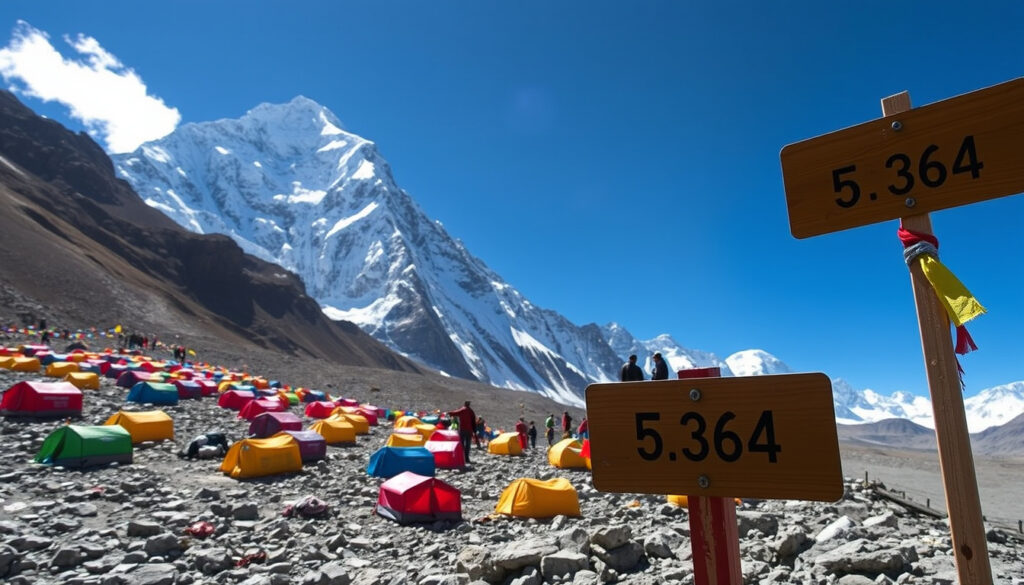
5,364 m (17,598 ft)
South Base Camp (Nepal side)
Several factors influence the final price, including the choice of agency, the number of trekking days, and the level of comfort desired. Below are the key insights and a detailed cost breakdown.
- Most trekkers choose a 15-day itinerary to allow proper acclimatization.
- Guided packages typically include permits, lodging, meals, and guides; budget treks can cut costs by 40% if organized independently.
- Altitude sickness is the #1 risk; trekkers should plan extra days for rest and descend immediately if symptoms appear.
- The Everest Base Camp trek does not require technical climbing skills, but good physical fitness and mental preparation are essential.
- Since 2023, a licensed guide is mandatory for all trekkers on the EBC route.
- Lukla flights are prone to delays; a 16-day itinerary provides a useful buffer.
- Tips for guides and porters typically add $200–$300 to the total budget.
| Category | Price Range (USD) | Notes |
|---|---|---|
| Standard Package | $1,200–$1,800 | Includes flights, permits, teahouses, meals, guide, porter |
| Budget Package | $800–$1,050 | Basic lodges, fewer services |
| Luxury Package | $2,400–$4,500+ | Better lodges, helicopter options, premium meals |
| Permits | ~$40–$50 | Sagarmatha National Park + Khumbu Pasang Lhamu |
| Guide | $25–$35/day | Licensed guide required |
| Porter | $20–$25/day | Carries main bag |
| Tips | $15–$20/day/person | Water, snacks, hot showers |
Solo private treks start around $1,595, while international agencies charge $1,400–$1,800. Local Nepali agencies are generally the most cost-effective option, with packages ranging from $1,250 to $1,800.
Peak season (October–November and March–April) sees higher prices. Off-season treks from June to September are cheaper but face monsoon rains. Budget an additional $200–$300 for tips to guides and porters.
How Many Days Does the Everest Base Camp Trek Take?
The shortest possible itinerary from Lukla to Everest Base Camp and back is 12 days. However, the most common and recommended duration is 14 days, which includes two dedicated acclimatization days. A 16-day plan offers additional flexibility for flight delays or slower pacing.
The total trekking distance is approximately 130 kilometers (80 miles) round trip from Lukla. Daily hikes range from 5 to 8 hours, covering between 4 and 10 kilometers depending on the terrain and altitude gain.
What Is the Total Distance to and From Base Camp?
The round-trip distance from Lukla to Everest Base Camp and back is roughly 112 to 130 kilometers (70 to 80 miles). The variation depends on the specific route taken and any side hikes, such as the climb to Kala Patthar for panoramic views of Everest.
How Many Trekking Days vs Rest Days Are Needed?
A standard 14-day itinerary includes 12 trekking days and 2 full rest days for acclimatization. The rest days are typically spent in Namche Bazaar (Day 3) and Dingboche (Day 6), with short acclimatization hikes to higher elevations.
Most trekkers find a 15-day itinerary ideal. It provides enough time for proper acclimatization and a buffer for weather-related delays, especially for flights in and out of Lukla.
What Is the Altitude of Everest Base Camp?
The South Base Camp in Nepal sits at an elevation of 5,364 meters (17,598 feet). This is the primary base camp used by commercial expeditions and trekkers. The highest point reached during the standard trek is Kala Patthar at 5,555 meters (18,225 feet), which offers the best close-up view of Mount Everest.
For context, the summit of Mount Everest stands at 8,848 meters (29,029 feet). Base Camp is therefore roughly 3,500 meters below the summit — a significant difference that underscores the scale of a full summit attempt.
What Are the Risks of Altitude Sickness at EBC?
Altitude sickness, including Acute Mountain Sickness (AMS), High Altitude Pulmonary Edema (HAPE), and High Altitude Cerebral Edema (HACE), is the primary health risk on the trek. The risk is individual and cannot be predicted with certainty. Proper acclimatization, a slow ascent, and staying hydrated are the best preventive measures. Severe symptoms require immediate descent.
Altitude sickness is the #1 risk on the EBC trek. Trekkers should plan extra days for rest and descend immediately if symptoms such as severe headache, nausea, or confusion appear. The World Health Organization provides guidelines on prevention and treatment.
What Is the Best Everest Base Camp Trek Itinerary?
A well-planned itinerary balances trekking distance with proper acclimatization. The most common route follows a 14-day schedule, but many trekkers prefer a 15- or 16-day plan for added safety and comfort.
How Do You Hike to Everest Base Camp?
The trek begins with a flight from Kathmandu to Lukla, a short but scenic 35-minute journey. From Lukla, the trail follows the Dudh Koshi River valley, passing through pine forests, suspension bridges, and Sherpa villages. The route ascends gradually, with key stops at Namche Bazaar, Tengboche, Dingboche, Lobuche, and Gorak Shep before reaching Base Camp.
What Is a Typical Day-to-Day Itinerary for EBC?
A typical 14-day itinerary is outlined below. This schedule includes two acclimatization days and allows for a safe, steady ascent.
| Day | Route | Distance | Duration | Altitude |
|---|---|---|---|---|
| 1 | Lukla → Phakding | 6.2 km | 3–4 hrs | 2,610m |
| 2 | Phakding → Namche Bazaar | 10 km | 6–7 hrs | 3,440m |
| 3 | Acclimatization (Namche) | – | Hike to Everest View | 3,440m → 3,880m |
| 4 | Namche → Tengboche | 9.2 km | 5–6 hrs | 3,810m |
| 5 | Tengboche → Dingboche | 9.1 km | 4–5 hrs | 4,441m |
| 6 | Acclimatization (Dingboche) | – | Hike to 5,000m | 4,441m |
| 7 | Dingboche → Lobuche | 7.9 km | 4–5 hrs | 4,910m |
| 8 | Lobuche → Gorak Shep | 4.1 km | 3–4 hrs | 5,140m |
| 9 | Gorak Shep → EBC → Gorak Shep | 3.5 km | 3–4 hrs | 5,364m |
| 10 | Gorak Shep → Kala Patthar → Pheriche | – | 7–8 hrs | 5,555m → 4,240m |
| 11–13 | Return to Lukla | ~25 km/day | 7–8 hrs/day | Descending |
| 14 | Fly to Kathmandu | – | 35 min flight | – |
What Is the Altitude of Everest Base Camp?
The South Base Camp on the Nepal side is located at 5,364 meters (17,598 feet) above sea level. This is the destination for trekkers. The highest point on the standard trek is Kala Patthar, at 5,555 meters (18,225 feet), which provides the most famous panoramic view of the Everest summit.
To put this in perspective, the summit of Mount Everest is 8,848 meters (29,029 feet) high. Base Camp is therefore about 3,500 meters below the summit — a distance that underscores why summit attempts require weeks of additional climbing, technical skills, and supplemental oxygen.
How Does Base Camp Altitude Compare to the Summit?
The difference in elevation between Everest Base Camp and the summit is roughly 3,484 meters (11,431 feet). This vertical distance is greater than the height of many entire mountain ranges. Reaching the summit from Base Camp involves climbing the Khumbu Icefall, the Western Cwm, the Lhotse Face, and the South Col, all of which require technical mountaineering experience.
What Are the Risks of Altitude Sickness at EBC?
Altitude sickness is a serious concern at elevations above 2,500 meters. At Base Camp’s altitude of 5,364 meters, the risk of AMS, HAPE, and HACE is significant. Symptoms can include headache, nausea, dizziness, and shortness of breath. The best prevention is a slow ascent with proper acclimatization days. If severe symptoms develop, immediate descent is the only reliable treatment.
The standard itinerary includes two full acclimatization days — one in Namche Bazaar (3,440m) and one in Dingboche (4,441m). On these days, trekkers hike to higher elevations and return to sleep lower, following the “climb high, sleep low” principle.
What Is the Best Everest Base Camp Trek Itinerary?
The best itinerary depends on your fitness level, available time, and budget. A 14-day itinerary is the most common, but many experienced trekkers recommend a 15- or 16-day plan for better acclimatization and a more relaxed pace.
How Do You Hike to Everest Base Camp?
The hike begins with a flight from Kathmandu to Lukla. From there, the trail follows the Dudh Koshi River, crossing several suspension bridges and passing through rhododendron forests. The route gains elevation steadily, with the most significant climbs occurring between Phakding and Namche Bazaar, and again between Tengboche and Dingboche.
No technical climbing is required. The path is well-defined and used by hundreds of trekkers daily during peak season. The main challenges are the altitude, the length of each day’s hike, and the variable weather conditions.
What Are the Acclimatization Stops?
Two full acclimatization days are built into the standard itinerary. The first is in Namche Bazaar (3,440 meters), where trekkers hike to the Everest View Hotel at 3,880 meters. The second is in Dingboche (4,441 meters), with a hike to a ridge at approximately 5,000 meters. These days are critical for allowing the body to adjust to the thinning air.
What Is the Timeline for the Everest Base Camp Trek?
A complete timeline for the Everest Base Camp trek, from preparation to return, typically spans about three weeks. Below is a typical sequence of events.
- Pre-trek preparation (2-3 months before): Physical training, gear purchase, and permit booking.
- Arrival in Kathmandu (Day 1-2): Flight preparation, gear check, and orientation.
- Fly to Lukla (Day 3): 35-minute scenic flight, then start trek to Phakding.
- Trek to Namche Bazaar (Days 4-6): Includes acclimatization in Namche (3,440 m).
- Acclimatization day (Day 7): Hike to Everest View Hotel or rest day.
- Continue to Base Camp (Days 8-12): Via Tengboche, Dingboche, Lobuche, Gorak Shep, reaching Base Camp.
- Base Camp day (Day 13): Explore the glacier, then begin descent.
- Return trek (Days 14-16): Retrace steps via Tengboche and Namche back to Lukla.
- Fly to Kathmandu (Day 17): Reserve day for flight delays and buffer.
What Is Certain and What Remains Uncertain About the EBC Trek?
Some aspects of the Everest Base Camp trek are well established, while others depend on individual circumstances and external factors.
| Established Information | Information That Remains Unclear or Variable |
|---|---|
| Base Camp altitude is established at 5,364 m (South Camp). | Exact itinerary length depends on individual fitness, weather, and trail conditions. |
| Minimum trek duration is 12-14 days with adequate acclimatization. | Cost estimates vary widely by season, group size, and agency. Budget figures are averages. |
| Permits are mandatory and can be obtained in Kathmandu or at entry points. | Flight delays from/to Lukla are common; at least one buffer day is recommended. |
| No technical climbing is required for the trek itself. | Acute Mountain Sickness (AMS) risk is individual; no predictor of severity exists. |
Why Is the Everest Base Camp Trek So Popular?
The Everest Base Camp trek offers a non-technical route to the foot of the world’s highest mountain. It combines breathtaking Himalayan scenery, rich Sherpa culture, and a profound sense of personal achievement. The trail passes through Sagarmatha National Park, a UNESCO World Heritage site, and offers close-up views of peaks like Lhotse, Nuptse, and Ama Dablam.
Nepal’s tourism economy relies heavily on trekkers. Package prices reflect local wages, logistics, and permit fees. Post-pandemic, costs have risen by approximately 15%, driven by increased demand and higher operational expenses.
Environmental concerns, including overcrowding, waste management, and the impact of climate change on glaciers, are growing challenges. Trekkers are encouraged to follow Leave No Trace principles to help preserve the region for future visitors.
What Do Sources Say About the Everest Base Camp Trek?
“The base camps are rudimentary campsites at the base of Mount Everest that are used by mountain climbers during their ascent and descent.”
— Wikipedia – Everest base camps
“Trekking to Everest Base Camp is one of the world’s great adventures, and with careful planning, it is achievable for anyone with a good level of fitness.”
— Lonely Planet – How to Trek to Everest Base Camp
“Itineraries should take between 15 and 18 days depending on acclimatization, trekking route, and individual pace.”
— Ian Taylor Trekking – What I Wish I Knew
What Happens After Reaching Everest Base Camp?
After reaching Everest Base Camp, many trekkers choose to hike to Kala Patthar (5,644 meters) for spectacular sunrise views of Everest. Others extend their trip to explore the Gokyo Lakes via the Gokyo Ri trek. Some combine the Everest Base Camp trek with a Chitwan National Park safari or a visit to Pokhara. For those interested in the broader context of the trek, the Everest Base Camp Trek Costs and Duration guide provides additional planning details, while the Everest Base Camp Difficulty and Altitude Guide offers more on physical preparation and altitude management.
Frequently Asked Questions About the Everest Base Camp Trek
When is the best time to trek Everest Base Camp?
The best seasons are pre-monsoon (March to May) and post-monsoon (September to November). Winter is cold and summer has heavy rain and flight cancellations.
Do I need a guide or can I trek independently?
Independent trekking is allowed, but a guide is highly recommended for safety, route knowledge, and cultural immersion. Permits are still required.
What is the level of fitness required?
You should be comfortable hiking 5-8 hours a day with a backpack. Cardiovascular training and some altitude preparation help significantly.
What gear do I need for the Everest Base Camp trek?
Essential gear includes sturdy boots, warm layers (down jacket, base layers), sleeping bag (rated -10°C), trekking poles, sunglasses, sunscreen, and water purification.
Is altitude sickness a major risk?
Yes, but most trekkers experience only mild symptoms. Proper acclimatization, slow ascent, and staying hydrated reduce the risk. Descending immediately for severe symptoms is critical.
Can I charge electronics on the trek?
Most tea houses charge for electricity (solar or hydro). Expect to pay $2-5 per device. Power banks are recommended.
Do I need a guide or can I trek independently?
Independent trekking is allowed, but a guide is highly recommended for safety, route knowledge, and cultural immersion. Permits are still required.
What is the difference between EBC and the summit?
EBC is at 5,364 m, while the summit is at 8,848 m. Reaching the summit requires technical climbing, supplemental oxygen, and weeks of additional effort beyond the trek.
Can you summit Mount Everest from Everest Base Camp?
No. The trek to Base Camp is a non-technical hike. Summiting Everest requires technical climbing skills, experience with high-altitude mountaineering, and a separate expedition permit.
What permits are needed for the EBC trek?
You need a Sagarmatha National Park Entry Permit and a Khumbu Pasang Lhamu Rural Municipality Permit. Total cost is approximately $40–$50.
More related posts
 Fisher-Price Little People – Figures Farm Disney Playsets Guide
 Jack Savoretti – Biography, Songs, Tour 2026 and More
 Israel Adesanya – Next Fight, Record, Net Worth, Age and Height 2026
 Irina Shayk – Relationships, Daughter, and Career Facts
 Tony Robbins – Biography, Net Worth, Books, and Key Facts
 Patsy Palmer – Full Biography from EastEnders to Malibu
 Two Child Benefit Cap Scrapped 2026 – What Families Get Now
 Doki Doki Literature Club – Free Download and Android Guide